
The ants come back because you never reached the colony. In most National City homes the trail on the counter is a supply line running from a nest outside, and wiping the counter or spraying the line removes workers without touching the queens. That is why the same trail returns in the same spot a week later.
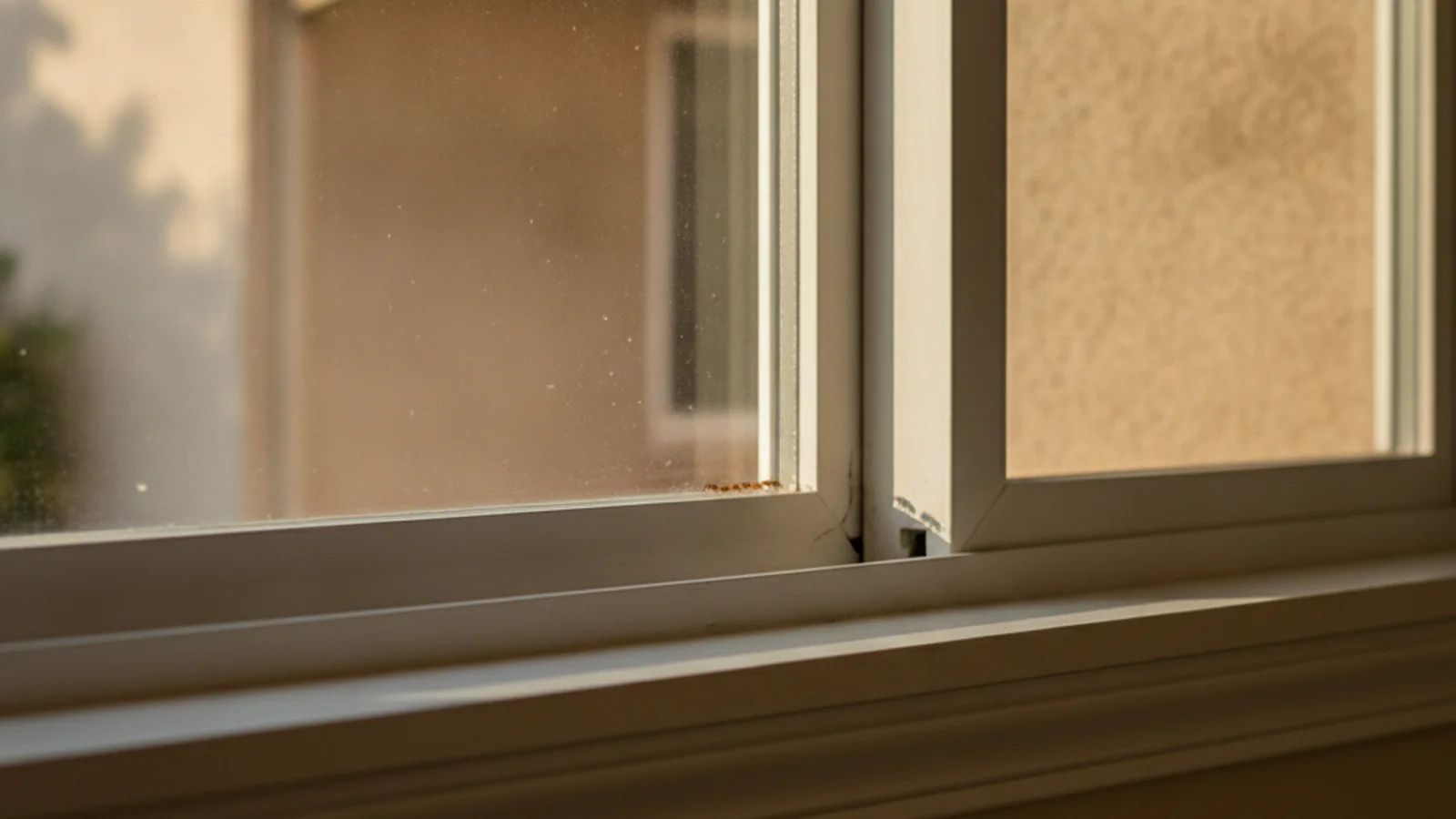
Why indoor sprays may miss the colony
Start with the species, because it explains almost everything about the recurrence. UC IPM calls the Argentine ant the most common ant in and around the house and garden in California. Workers run about 1/8 inch long, are dull brown rather than black, and have one node between the thorax and abdomen.
The structure of those colonies is the real problem. UC IPM states that Argentine ant colonies “aren’t separate but linked to form one large ‘supercolony’ with multiple queens,” and that newly mated queens are accompanied by workers rather than leaving on their own. A single home’s trail can be one thread of something spanning several yards on the block.
An indoor spray acts on the ants it contacts. It does not reach a nest under a planter three doors down, and it does not remove the queens producing replacements. So the visible trail disappears, the source keeps producing, and the route reopens.
Repellent residue can make the picture worse rather than better. UC IPM’s guidance on fire ants makes the same point about disturbing a nest: spraying a nest may cause the colony to disperse, which can make control more difficult. For ants that recruit along scent trails, breaking the trail without reaching the nest often just moves the entry point to a different gap.
The southern fire ant is worth knowing about here too, because it is native and present in San Diego County, in coastal and inland regions alike. Workers vary in size from about 1/8 inch to more than 1/4 inch, with an amber head and thorax and a mostly black abdomen. If you’re being stung rather than just seeing trails, that identification changes the plan. The red imported fire ant is a quarantined pest in California administered by the California Department of Food and Agriculture, but San Diego County is not in the regulated area. A suspected find here is worth reporting to CDFA rather than assumed.
The full argument against reaching for a can first is laid out in our guide on why spraying Argentine ants makes it worse.
How moisture, landscaping, and entry routes interact
Argentine ants nest shallow. UC IPM describes nests extending just below the soil surface, sited under rocks, logs and flower pots, in cracks in concrete pavement, and in wall voids. It also notes that moist areas are particularly attractive nesting sites, and that under dry conditions the ants nest deeper in the soil.
That single detail explains the National City summer pattern. Through the long dry stretch of the year, the only reliably damp soil on a property is wherever the irrigation runs. Drip lines in a raised planter, a leaking hose bib, the strip of soil beside a patio slab, a potted lemon tree on a concrete pad: those become the wet islands, and the nests concentrate there while everything around them bakes.
National City’s geography adds its own pressure. The city sits on San Diego Bay between southeastern San Diego and Chula Vista, with the Sweetwater River channel along its southern edge and the bayfront and marina to the west. Marine-influenced nights hold humidity longer than they do inland in El Cajon or Santee, and canyon and channel edges put landscaped yards directly against undeveloped vegetation. Argentine ants have been documented displacing native ants in San Diego County canyon habitat, including Rice Canyon in the South Bay, where researchers recorded them raiding southern fire ant nests.
Landscaping contact is the bridge from that soil to your kitchen. Shrubs and vines touching stucco give workers a route that skips the ground entirely. UC IPM notes that Argentine ants tend honeydew-producing insects, protecting scales and aphids from their natural enemies, so an infested hedge or citrus tree is both a food source and a highway.
Then look at where the highway enters. Utility penetrations, hose bib collars, weep screeds at the stucco base, gaps under a worn door sweep, and the seam where a slab meets a patio addition. In multi-unit and duplex layouts, a shared wall or a common water line gives a trail a path your neighbor’s spray schedule controls as much as yours. Our guide to keeping ants out permanently in San Diego walks through the exclusion side of this.
What a licensed pro checks before choosing treatment
A licensed company should inspect before it treats, and the inspection has a shape you can follow along with. Knowing what they’re looking at makes it much easier to tell a real assessment from a quick perimeter spray.
They start with identification. Body size, color, the single node, and the way the trail behaves separate an Argentine ant problem from a fire ant, carpenter ant or odorous house ant problem. Those species do not respond to the same bait, so guessing wrong wastes the whole visit.
Next they follow the trail outward. The point of interest is not the counter, it’s the gap the trail uses and the soil on the other side of it. Expect them to lift pots, check pavement cracks, look under the meter box and pull back mulch along the foundation.
Then they read the moisture. Irrigation timing and coverage, hose bib drips, condensate lines, planter drainage, and any spot where water pools against the slab. A treatment that ignores the wet island the nest depends on gets undone by the next watering cycle.
Only then does treatment selection make sense. Bait is the documented approach for this species, because slow-acting bait lets foraging workers carry the material back to the colony instead of dying at the trail. UC IPM says sweet liquid baits attract Argentine ants year-round, and for severe infestations it recommends liquid borate bait in refillable bait stations. That’s a professional recommendation, not a recipe for you to mix. Product choice, placement and rates belong to the licensed applicator and the product label.
None of this comes with a guarantee that the colony is gone. With a supercolony structure, honest companies talk about suppression and monitoring over a season, not a single-visit cure. We match homeowners with licensed, insured companies through our ant control referral service, and the matched company inspects first and quotes in writing before any treatment begins.
How to compare National City ant control companies
Comparing companies gets easier when you ask about the process rather than the price. Four questions separate the serious bids from the rest.
- Do they inspect before quoting? A quote issued over the phone without seeing the yard is a guess about where the nest is.
- Do they use bait for Argentine ants? Ask what they’ll place and why. A plan that is only a perimeter spray hasn’t accounted for the colony.
- Do they address moisture and landscaping? Ask what conditions they’ll ask you to change. If the answer is nothing, expect the trail back.
- Are they licensed and current? General household pest work is California Branch 2. Verify the company and its field representative in the Structural Pest Control Board license search. Cancelled licenses don’t appear in that search, so confirm status rather than assuming.
Get the follow-up terms in writing from the company itself. Re-treatment windows, monitoring visits and what triggers a return trip are theirs to define, and they vary between companies. We don’t set those terms and no article should tell you what yours are.
Language matters in National City, one of the county’s main Spanish-speaking communities alongside Chula Vista and San Ysidro. A technician who can explain in Spanish where the nest is and what needs to change in the yard gets better cooperation than one who leaves a paper invoice. That’s covered in our page on bilingual pest control in National City.
Watch for a few specific red flags. A company that won’t name the species. A price quoted before anyone looked at the exterior. A promised elimination date. Any figure presented as a standard local rate rather than a written quote for your property.
When to call us
Bring in a licensed pro when the trail keeps returning after you’ve sealed the obvious gaps, when the ants are stinging rather than just foraging, or when the nest is somewhere you can’t safely reach, like a wall void or a shared utility chase. Colony-level work on a supercolony species needs professional bait placement and a plan that runs longer than one visit. Call us at (858) 400-6561 and we’ll match you with a licensed local pro.