Wasp and bee removal in San Diego
UC IPM says yellowjackets are by far the most troublesome group, especially ground- and cavity-nesting ones such as the western yellowjacket, which tend to defend their nests vigorously when disturbed. Paper wasps are a different story: they are much less defensive and rarely sting humans, and mostly matter when a nest sits over a doorway or another high-traffic spot. Honey bees are a different call again, since they often nest inside cavities in trees or houses and are unlikely to sting unless trapped or stepped on. UC IPM's advice on nests is short: if wasp nests must be eliminated, it is easiest and safest to call for professional help.
Last updated: 2026-04-23
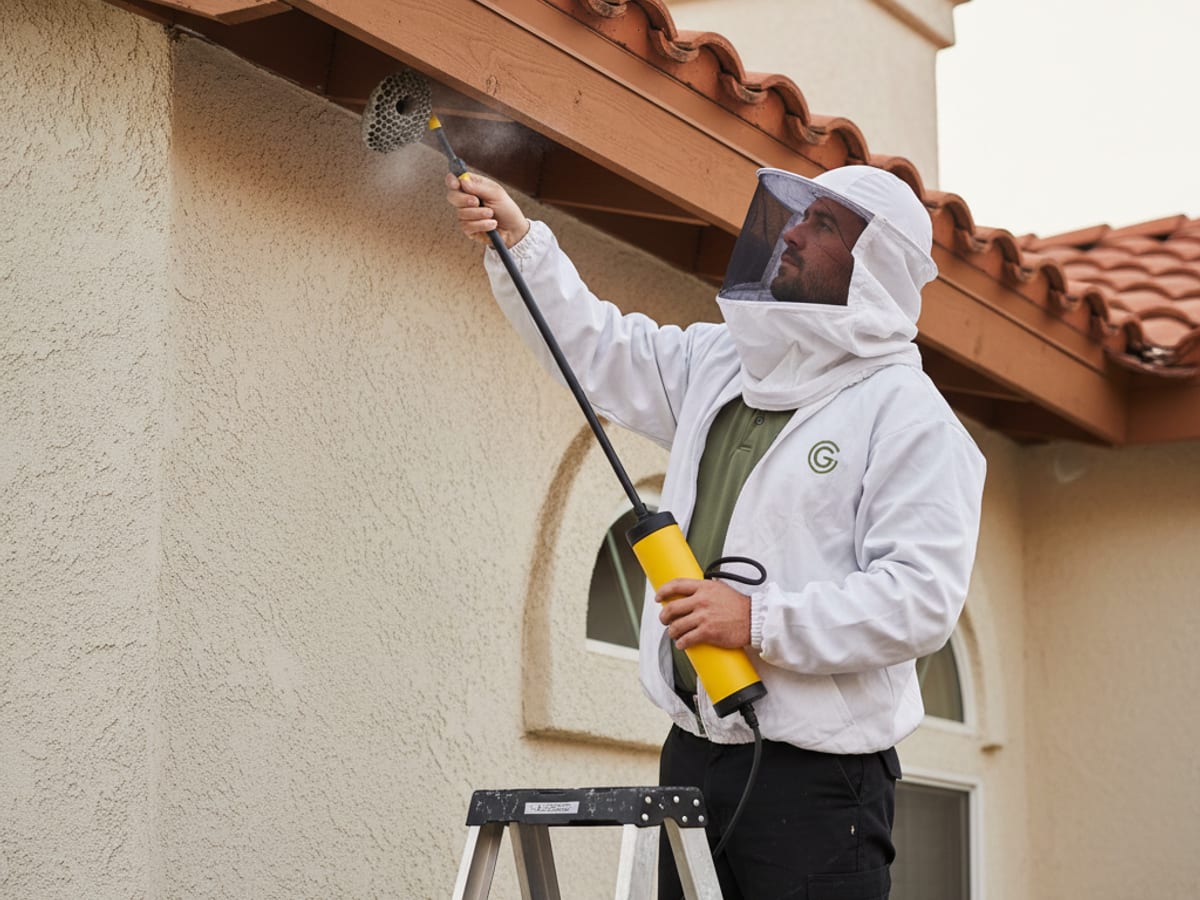
What's included in wasp & bee removal in San Diego County?
- Yellowjacket and paper wasp nest treatment, done in clothing that covers the entire body, including a veil and gloves
- Ground nests, which UC IPM says yellowjackets commonly build in rodent burrows
- Honey bee swarm assessment and beekeeper referral for live removal when feasible
- Honey bee structural removal coordination with licensed structural pest contractors
- Mud daubers identified rather than sprayed, since UC IPM says they rarely sting and winter nests can be removed safely
- Tell the company at booking if anyone in the household reacts badly to stings
- Eave, attic vent, and irrigation-box inspection for hidden nests
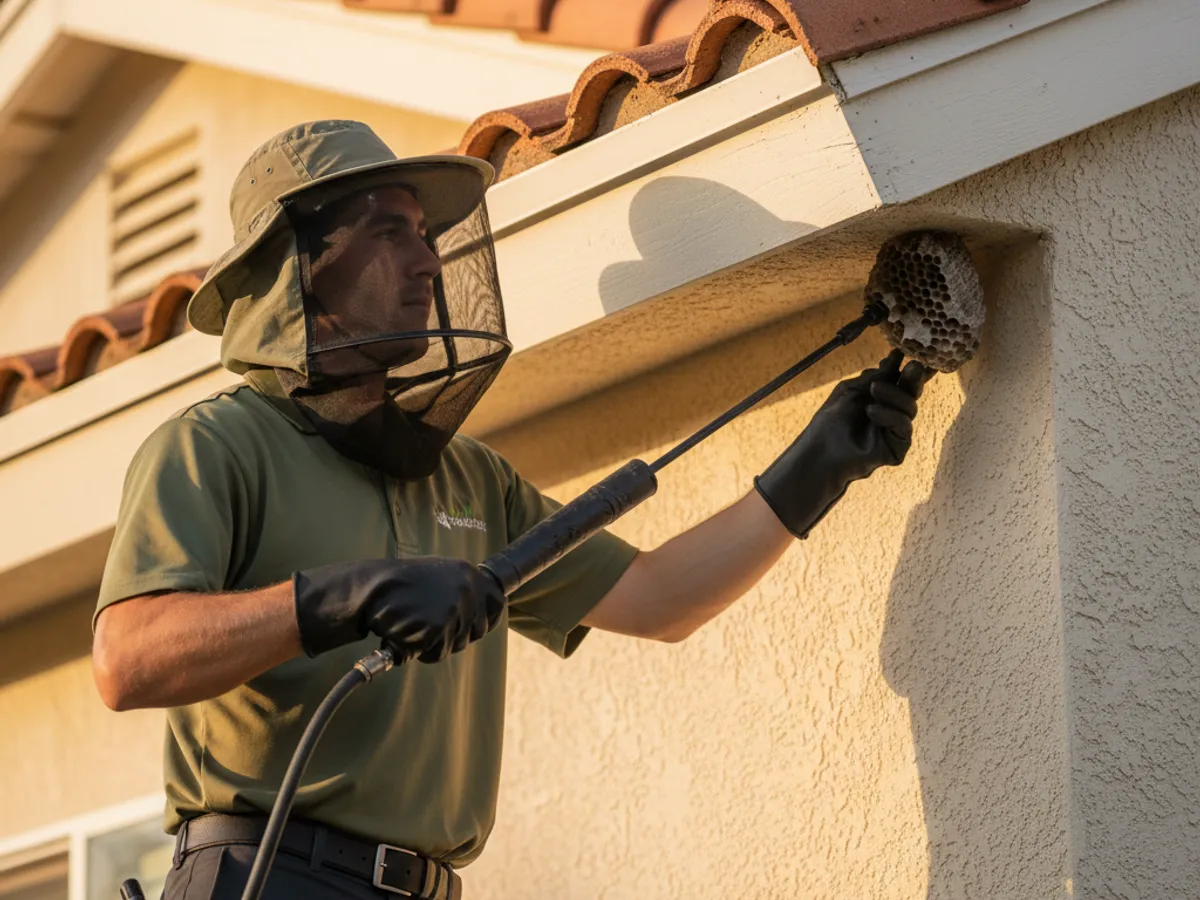
When do you need wasp & bee removal in San Diego County?
- A nest sits close to an entry, a deck, or where children play
- Wasps are flying in and out of an eave, attic vent, or wall void
- Yellow jackets are emerging from a hole in the lawn or under decking
- A honey bee swarm has clustered on a tree, fence, or eave and stayed for more than a day
- Someone in the household has a wasp or bee allergy and needs the area cleared
What do homeowners ask about wasp & bee removal in San Diego County?
Is wasp control the same as wasp nest removal?
Yes, it's one job. Wasp control, wasp pest control, pest control for wasps, pest removal for a wasp, and pest control for a wasp nest all describe the same visit: find the nest, identify the species, and treat it directly. Getting rid of a wasp nest properly means treating the nest itself, not the wasps flying around it. Spraying foraging wasps around a patio does nothing lasting, because the nest keeps producing. A beehive exterminator call is different again, since honey bees get relocated where that's possible rather than treated.
Do yellowjacket traps actually get rid of them?
They reduce, they do not eliminate. UC IPM says lure traps can help reduce the number of localized foraging workers, but they don't eliminate large populations, and that trapping isn't suggested for other social wasp species. Placement matters: put traps away from areas where people gather, such as picnic tables, and in a backyard place them along the edge of the property line as far away from the patio as possible. If what you actually have is a nest rather than foragers at the barbecue, trapping will not touch it.
Do you do hornet removal in San Diego, or only wasps and bees?
Hornet removal is the same call here. What people find and call a hornet nest in San Diego is usually a yellowjacket or a paper wasp. UC IPM describes aerial-nesting yellowjackets, Dolichovespula arenaria and D. maculata, that build paper nests attached to the eaves of a building or hanging from the limb of a tree, with the entrance normally a hole at the bottom, and says these aerial nesters are extremely defensive when their nests are disturbed. That is the insect most people mean by baldfaced hornet. The licensed company identifies the species on site before it treats anything, and nest shape is the giveaway: an enclosed grey paper nest hanging in a tree against a paper wasp's open umbrella of cells under an eave.
Can't I just spray the nest with a store-bought can?
You can, and UC IPM spells out the risk. Aerosol formulations labeled for use on wasp and hornet nests can be effective, but the products must be used with extreme caution, wasps will attack if they sense a poison being applied to their nests, and even the freeze-type products aren't guaranteed to stop all wasps that come flying out. It says to wear protective clothing that covers the entire body, including a veil over your face and gloves. For a ground nest it warns that underground nests can be quite a distance from the visible entrance, so the spray might not get back far enough to hit the wasps. Its own conclusion: if wasp nests must be eliminated, it is easiest and safest to call for professional help.
Do you kill honey bees?
Not as a first move. UC IPM says honey bees often nest inside cavities in trees or houses and are unlikely to sting unless trapped or stepped on, so a swarm or a hive is a relocation question before it is a treatment question. Ask the company whether it refers honey bee work to a beekeeper, and ask before you book rather than on the day. A colony established inside a wall is the harder case, because the comb has to come out or it causes problems of its own, and those options should be put to you before anything is decided.
How do I know if it's yellow jackets, wasps, or bees?
UC IPM's quick version does most of the work. Yellowjackets are 1/2 to 1 inch long with jagged bright yellow and black stripes, their narrow waists are barely visible, and unlike other common wasps they scavenge on food. Paper wasps have long slender waists, build paper nests with many open cells under eaves, and are rarely aggressive. Mud daubers are dark-colored and thread-waisted, build small hard mud nests, and rarely sting. Honey bees are less brightly striped than yellowjackets and have more hair. A photo is usually enough to sort it out before anyone schedules a visit.
How long until the nest is dead?
No source on file puts a clock on it, and UC IPM's own caution runs the other way: partially intoxicated, agitated wasps are likely to be encountered at some distance from the nest entrance, even the day after an insecticidal treatment. So treat the area as live for at least a day, and keep children and pets clear of it. Ask the company what it expects, and what happens if traffic has not stopped when it said it would.
Where can you get wasp & bee removal in San Diego County?
Wasp & Bee Removal is available in every city and community in San Diego County. Pick your city for local climate notes and service specifics.
See wasp & bee removal in all 67 cities
Need wasp & bee removal in San Diego County?
Call and we match you with a licensed local pro who quotes the job after inspecting.