Ant control across San Diego County
UC IPM calls the Argentine ant the most common ant in and around the house and garden in California, and says Argentine ant colonies aren't separate but linked to form one large supercolony with multiple queens. That is why killing the trail you can see changes nothing. UC IPM's advice is blunt: use baits outdoors to control the ant colony, pesticide sprays only provide temporary control, and if you hire a pest control company, ask them to use baits and spot treatments rather than perimeter treatments or monthly sprays. We match you with a licensed local company, and that is the approach to ask for.
Last updated: 2026-04-23
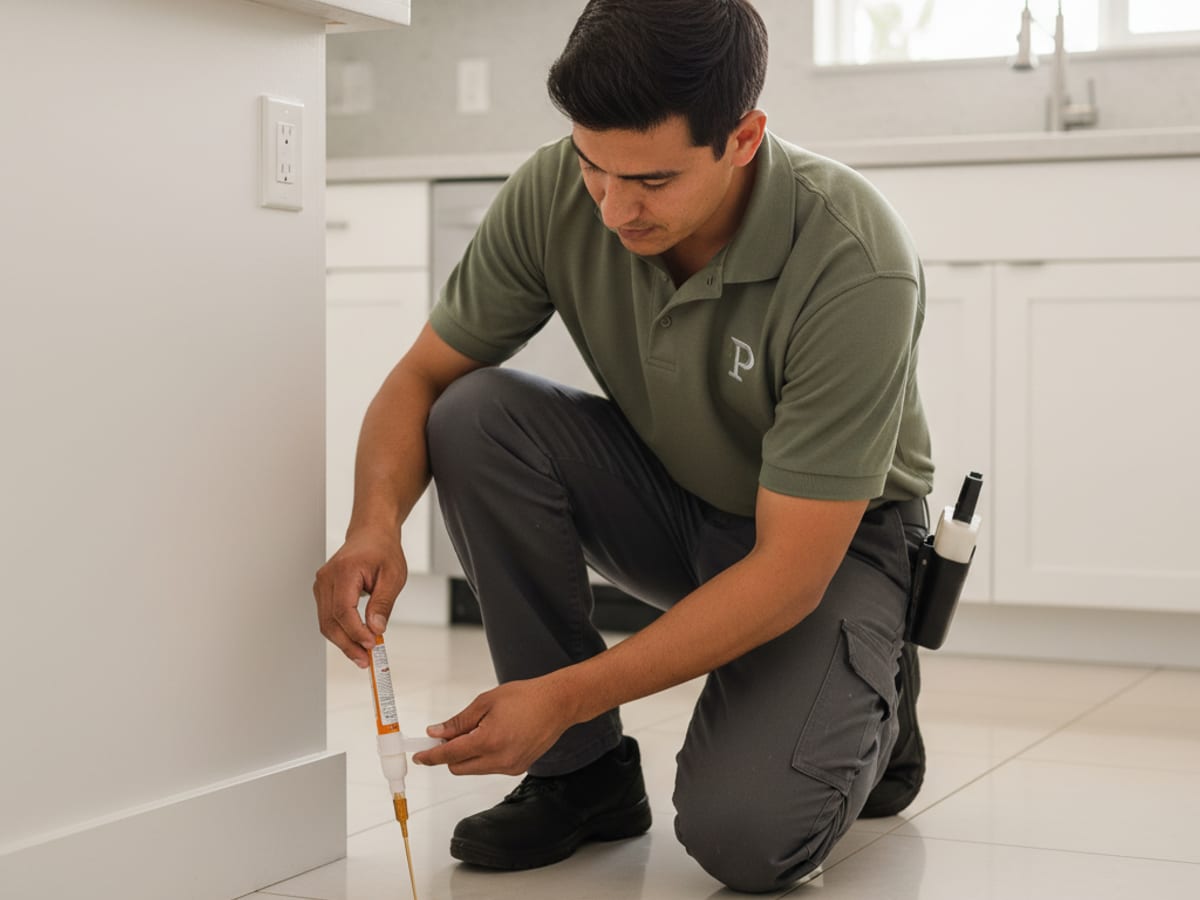
What's included in ant control in San Diego County?
- Identification of ant species, different ants need different treatment approaches
- Bait stations placed near ant trails and nest openings outdoors, which is what UC IPM recommends
- Liquid borate bait in refillable stations, which UC IPM says is best for severe Argentine ant infestations
- Carpenter ants handled separately, since UC IPM says they hollow wood out to nest rather than eat it
- Work kept outdoors where the colony is, since UC IPM says most ants live outdoors
- Removal of attractants and entry-point sealing (caulking around plumbing, weatherstripping)
- A follow-up, since UC IPM says it can take 5 to 10 days to see fewer ants
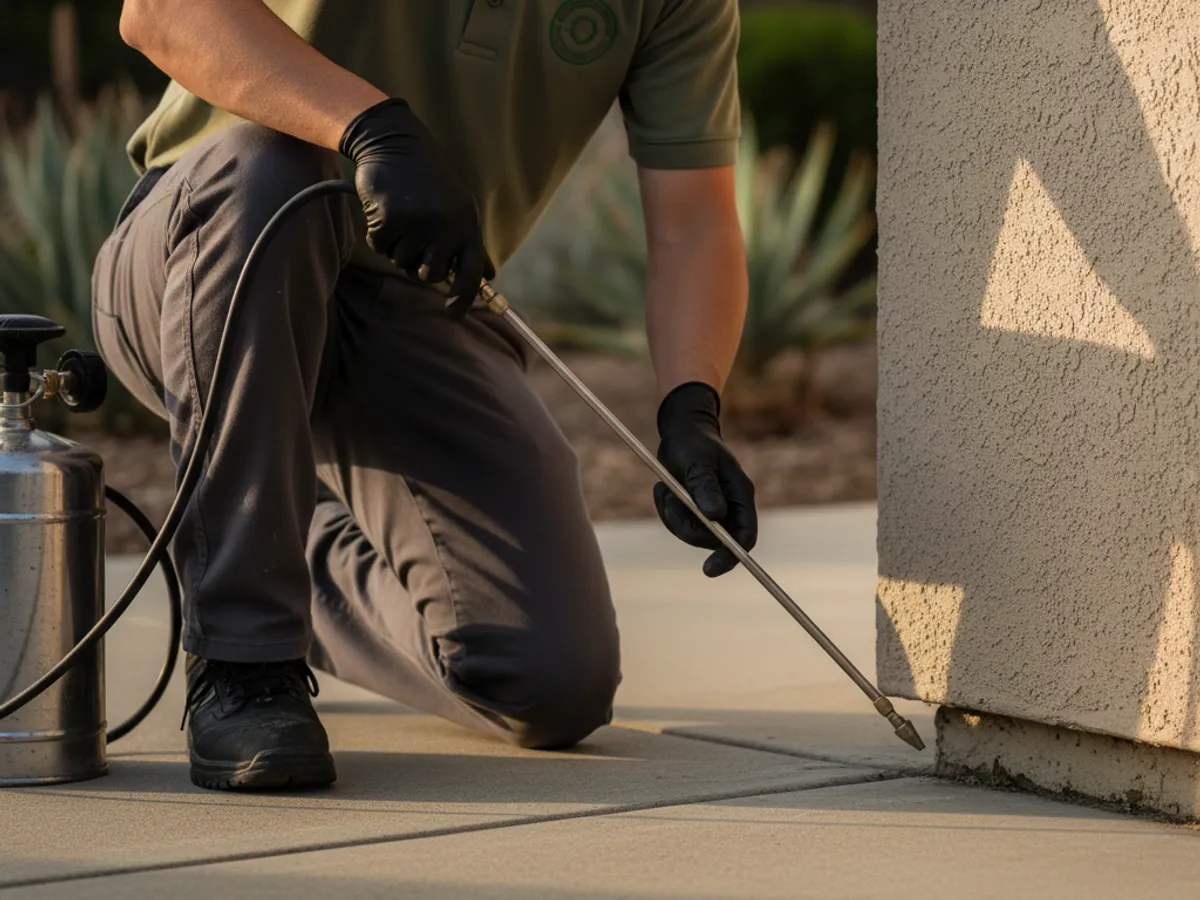
When do you need ant control in San Diego County?
- Trails of small dark ants appear in the kitchen, bathroom, or along baseboards
- Sugary or greasy food on the counter draws ants within hours
- Sawdust-like piles appear near doorframes or window sills (carpenter ant sign)
- Winged ants are emerging indoors and you need them told apart from termite swarmers
- Spraying store-bought products has only made the trails wider or moved them to a new location
What do homeowners ask about ant control in San Diego County?
Is an ant exterminator the same as ant control?
Yes, it's the same job. Ant extermination, ants pest control, an exterminator for ants, ant exterminators near you, pest control for ants, and ant control all describe the same visit: identify the species, then bait the colony instead of killing the trail you can see. UC IPM is blunt about why: pesticide sprays only provide temporary control, and spraying ants indoors with pesticides will not prevent more ants from entering.
Why doesn't spraying the trail fix it?
Because the ants you can see are a fraction of the colony, and the colony is outdoors. UC IPM says most ants live outdoors, that spraying ants indoors with pesticides will not prevent more ants from entering, and that pesticide sprays only provide temporary control and may not be safe to use indoors. It also warns against spraying pyrethroids outdoors on hard surfaces such as driveways or sidewalks or around the foundation of buildings, because those products pollute waterways. Baits work for the opposite reason: the ants take the product back to the nest where the entire colony, including queens, can be killed.
How can I tell if I have carpenter ants or Argentine ants?
Size and damage. UC IPM puts carpenter ant workers at 1/4 to 1/2 inch, black or bicolored red and black, nesting in tree stumps, firewood, fence posts, hollow doors or window frames, and depositing sawdust-like frass outside the nest. Argentine ants it puts at 1/8 inch, dull brown. Carpenter ants don't eat wood as termites do, but they hollow it out to nest and may cause considerable damage, so the treatment target is the nest rather than the trail.
Do home remedies like vinegar or cinnamon work?
They clear the trail for a while and nothing more. UC IPM does tell you to vacuum trails, wipe them with soapy water, or spray with window cleaner, but it puts that alongside baiting rather than instead of it, noting that baits take time to work, so continue to clean up trails. None of it reaches the nest, and the colony keeps sending workers until the bait does its job.
Are the ant baits safe around food and pets?
Ask the company to show you every placement before it leaves, and read the label with the applicator. UC IPM says prepackaged or refillable bait stations or stakes are the safest and easiest to use, and that active ingredients in baits may include boric acid or borate, fipronil, avermectin, or hydramethylnon. Baits work by being carried back to the nest rather than by contact, which is why they sit in cracks, behind appliances, and along baseboards instead of on open surfaces. The product label sets the rules around food and pets, and a California licensee has to follow it.
Where can you get ant control in San Diego County?
Ant Control is available in every city and community in San Diego County. Pick your city for local climate notes and service specifics.
See ant control in all 67 cities
Need ant control in San Diego County?
Call and we match you with a licensed local pro who quotes the job after inspecting.