
Finding a shiny black spider with a distinct red marking can stop you in your tracks. In San Diego County, this is often a female black widow, a spider whose reputation for a venomous bite is well-earned. Understanding where they hide and how to deal with them is key to keeping your home and family safe.
Identifying black widows in San Diego
While many spiders are harmless, the black widow is one to take seriously. Luckily, the female is easy to identify. She has a distinctive shiny, black, globular body about half an inch long (not including the legs). The most famous feature is the red hourglass-shaped marking on the underside of her abdomen. Young females might have additional red or white markings on top, which fade as they mature.
Male black widows are much smaller, lighter in color, and generally harmless to humans. You’re far more likely to encounter the female, as she’s the one who builds the web and stays put.
Their webs are another key identifier. Unlike the neat, geometric webs of orb-weavers, black widow webs are messy, tangled, and irregular. They feel surprisingly strong and sticky to the touch. You’ll typically find these webs close to the ground in dark, sheltered locations. According to the UC Statewide IPM Program, these spiders are not aggressive and will only bite in self-defense, such as when their web is disturbed or they feel trapped.
Common black widow hiding spots around your property
San Diego’s mild climate allows black widows to thrive year-round. They prefer dark, dry, and undisturbed areas where they can build their webs and catch prey. A thorough inspection of your property should focus on these common hotspots.
Outdoors, check these areas carefully:
- Under patio furniture and barbecue grills: The dark undersides are perfect shelters.
- In and around woodpiles or stacked lumber: Voids between logs are ideal nesting sites.
- Behind air conditioning units and pool equipment: The warmth and clutter offer protection.
- Inside water meter boxes or irrigation control boxes: These provide dark, rarely disturbed enclosures.
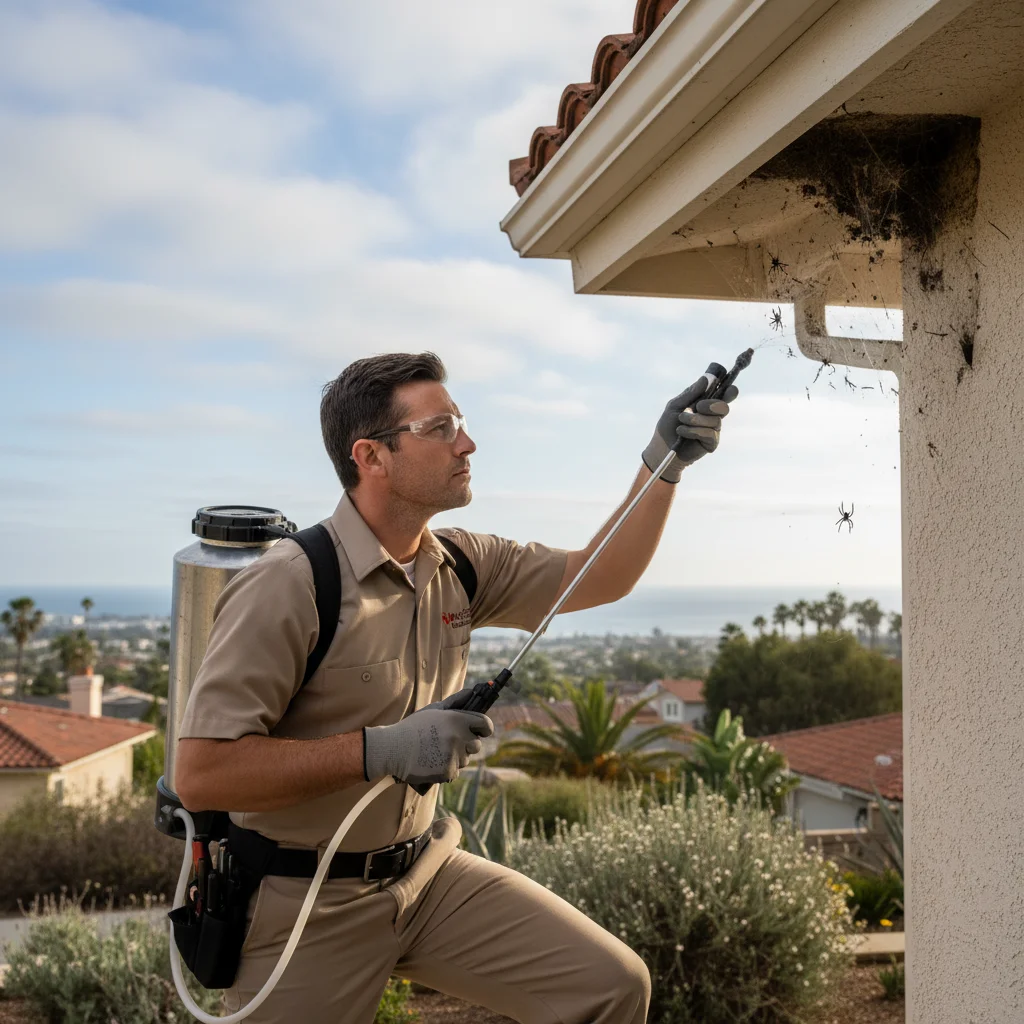
- Under the eaves of your house, especially in corners.
- Among dense, low-lying shrubbery or ivy.
Indoors, they are less common but can be found in cluttered, quiet spaces:
- Corners of garages and sheds: Especially where boxes, tools, or old equipment are stored.
- Crawl spaces and basements: These areas are often dark and undisturbed.
- Wall voids and behind appliances that are rarely moved.
Those same woodpiles and cluttered garage corners are where scorpions in San Diego hide too, so clearing them helps against both. Regularly clearing clutter and debris from these areas makes your property less attractive to black widows. Wearing heavy gloves when moving items that have been sitting for a long time is always a good safety precaution.
The risks of a black widow bite
A black widow bite is a serious medical event. The venom is a neurotoxin that can cause significant pain and other symptoms. While fatalities are extremely rare, especially for healthy adults, the experience is unpleasant and requires medical attention.
Initial symptoms often include a sharp, pinprick-like pain at the bite site, which may or may not be visible. Within an hour, more severe symptoms can develop. These include intense muscle pain and cramping, especially in the abdomen and back, causing the muscles to become rigid. Other potential symptoms are nausea, vomiting, tremors, and difficulty breathing.
Children, the elderly, and individuals with compromised immune systems are at a higher risk for a severe reaction. If you suspect you or a family member has been bitten by a black widow, seek medical help immediately. If possible and safe to do so, try to capture the spider for positive identification. The UC IPM black widow spider guide covers identification and the medical importance of widow spiders in California, and stresses professional medical evaluation after a bite.
DIY black widow removal: a step-by-step guide (with cautions)
If you find a single black widow and feel confident handling it, you can attempt to remove it yourself. However, this approach comes with risks and must be done with extreme caution. The primary goal is to avoid being bitten.
Safety first: Always wear thick leather gloves, long sleeves, pants, and closed-toe shoes. Keep children and pets far away from the area while you work.
Here’s a common method for physical removal:
- Get a vacuum: Use a vacuum cleaner with a long hose attachment. This allows you to maintain a safe distance.
- Locate the spider and egg sacs: Black widow egg sacs are small, off-white or tan spheres, often suspended in the web. It’s crucial to remove these as well, as one sac can contain hundreds of spiderlings.
- Vacuum them up: Carefully vacuum the spider, the web, and any visible egg sacs. Be thorough.
- Seal and dispose: Immediately after, remove the vacuum bag. Seal it tightly in a plastic garbage bag and dispose of it in an outdoor trash can. If you have a bagless vacuum, empty the canister into a sealable bag and dispose of it the same way.
Important Cautions: Never try to crush the spider with your hand or foot, as this increases the risk of a bite. Be aware that there may be more than one spider in the area. This DIY method only addresses the spiders you can see; it doesn’t prevent new ones from moving in.
Why professional black widow control is often the safer choice
While a vacuum can handle a single spider, a true infestation requires a more comprehensive approach. Professional spider control is the safest and most effective option when you find multiple black widows or want long-term peace of mind.
A licensed pest control technician brings expertise and equipment that homeowners simply don’t have. A pro can accurately identify the extent of the problem, locating not just active spiders but also their hidden nesting sites and egg sacs. This is crucial for breaking the life cycle and preventing a new generation from hatching on your property.
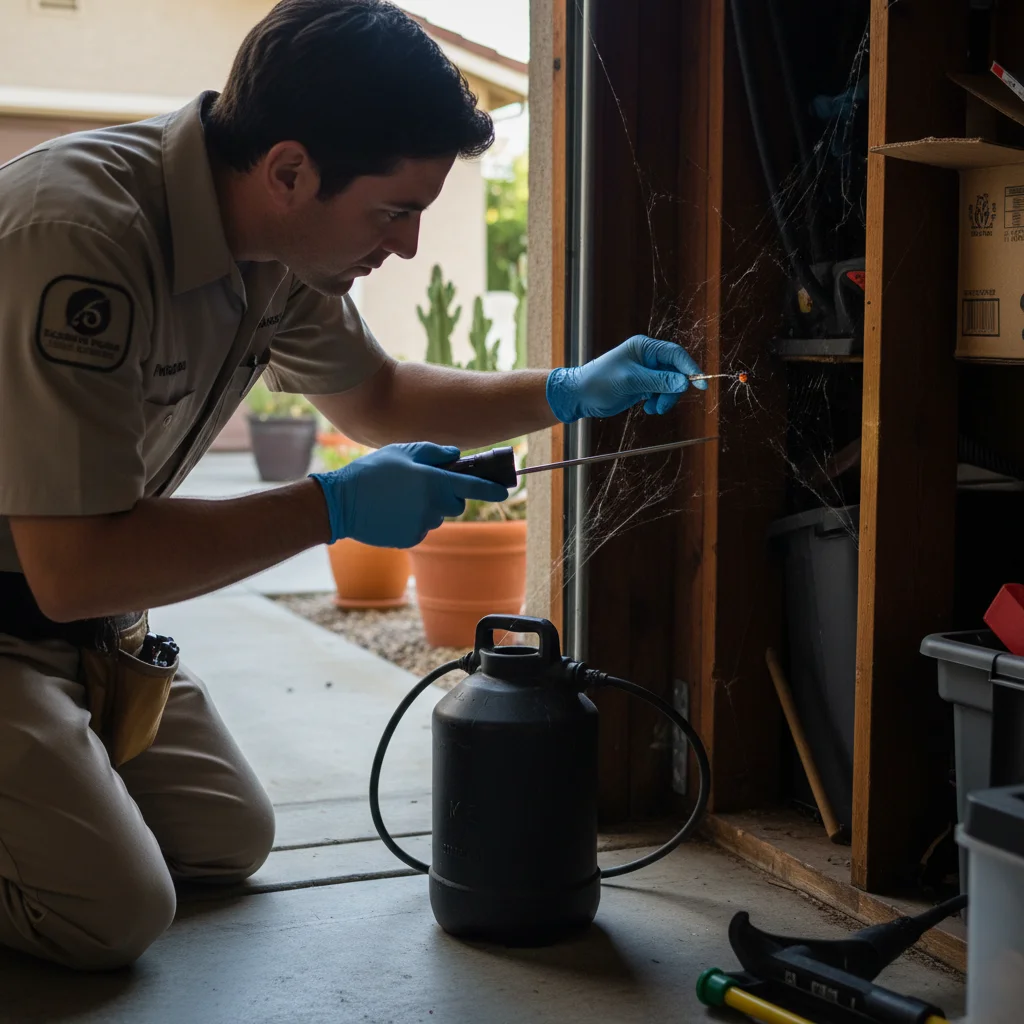
Professionals also have access to and are trained in the proper application of residual insecticides. When applied correctly to cracks, crevices, and common harborage areas, these products create a protective barrier that eliminates spiders on contact and deters new ones from settling in. This is a level of control that DIY methods can’t match. Choosing a pro over a DIY solution ensures the problem is handled thoroughly and safely, which is a key consideration we cover in our guide to DIY vs. professional pest control.
How black widow infestations are treated
The approach to black widow control is thorough and designed for lasting results. A vetted pro doesn’t just eliminate the spiders you see; they disrupt the entire habitat.
Treatment begins with a detailed inspection of your property. A licensed technician examines all the high-risk areas, garages, sheds, crawl spaces, woodpiles, and patio areas, to identify all spider activity and contributing conditions like clutter or other insect populations that serve as a food source.
Based on the inspection, a targeted treatment plan is created. This typically involves:
- Direct Treatment: Targeted products eliminate live spiders and their egg sacs.
- Residual Barrier: Professional-grade residual products around the foundation, in wall voids, and other key harborage areas provide ongoing protection.
- Web Removal: Accessible webs are swept down, which cleans up the area and removes the spiders’ primary tool for catching food.
- Preventative Recommendations: Specific advice on how to make your property less inviting to spiders, such as sealing entry points and managing outdoor lighting.
This integrated approach is part of a standard general pest control service, ensuring your home is protected from black widows and other common San Diego pests.
Frequently asked questions
Are there black widows in San Diego?
Yes, they’re established across the county. They favour undisturbed, sheltered spots: garage corners, meter boxes, woodpiles, the underside of patio furniture, and stacked pots on shelving. Their webs are tangled and irregular rather than the neat wheel shape people picture, and unusually strong to the touch.
How dangerous is a black widow bite?
It’s a serious medical event and warrants immediate medical attention, though deaths are extremely rare in healthy adults. The venom is a neurotoxin, and the pattern is a sharp pinprick pain at the site followed within about an hour by intense muscle pain and cramping, especially in the abdomen and back, sometimes with nausea, vomiting, tremors, or difficulty breathing. Children, older people, and anyone immunocompromised are at higher risk of a severe reaction. If it’s safe, capture the spider for identification.
Can local exterminators treat black widows?
Yes, and it’s routine work in San Diego. The treatment targets the harborage rather than the individual spider: knocking down webs and egg sacs, treating the sheltered spots widows actually use, and reducing the insects they feed on, since a food supply is what keeps drawing them back. Removing an egg sac matters as much as removing the adult.
How do I keep black widows out of the garage?
Cut down the harborage. Store boxes off the floor and away from walls, clear woodpiles and clutter from against the structure, seal gaps around doors and vents, and knock down webs regularly so nothing gets established. Wear gloves when moving anything that has sat undisturbed, because that’s exactly where they sit.
When to call us
If you’re seeing multiple black widows, finding them in high-traffic areas, or simply aren’t comfortable dealing with them yourself, it’s time to call a professional. The vetted local pros in our network have the training and equipment to handle black widow infestations safely and effectively. Call us at (858) 400-6561 to get matched with a licensed local pro.
Not sure if what you found is actually a black widow? Brown widows are far more common around San Diego homes these days and look similar at a glance. See our guide to brown widow vs. black widow spiders in San Diego for the quickest way to tell them apart.