
San Diego homes deal with subterranean termites and with the western drywood termite, Incisitermes minor. UC IPM describes the castes you might actually see. This page stays on appearance. The three-feature ant-versus-termite checklist lives on flying ants vs. termite swarmers. Signs such as tubes and pellets live on signs of termites in San Diego.
Castes: workers, soldiers, reproductives
UC IPM: colonies contain larvae, workers, soldiers, nymphs, and reproductives. Those forms differ by physical traits. This article does not publish inch measurements for those castes. The sourced notes describe shape and color, not a tape-measure chart.
Workers. Wingless, soft-bodied, and light caramel in color. They are the caste you usually find when infested wood is opened. They forage, feed nestmates, and maintain tubes and galleries. They are reproductively undeveloped.
Soldiers. Generally larger, amber or brownish heads and larger mandibles than workers. They guard the colony. For subterranean species, UC adds: soldiers are wingless, with light caramel-colored bodies and long, narrow amber-colored heads with no eyes. Workers are slightly smaller than reproductives, wingless, and have a shorter head than soldiers.
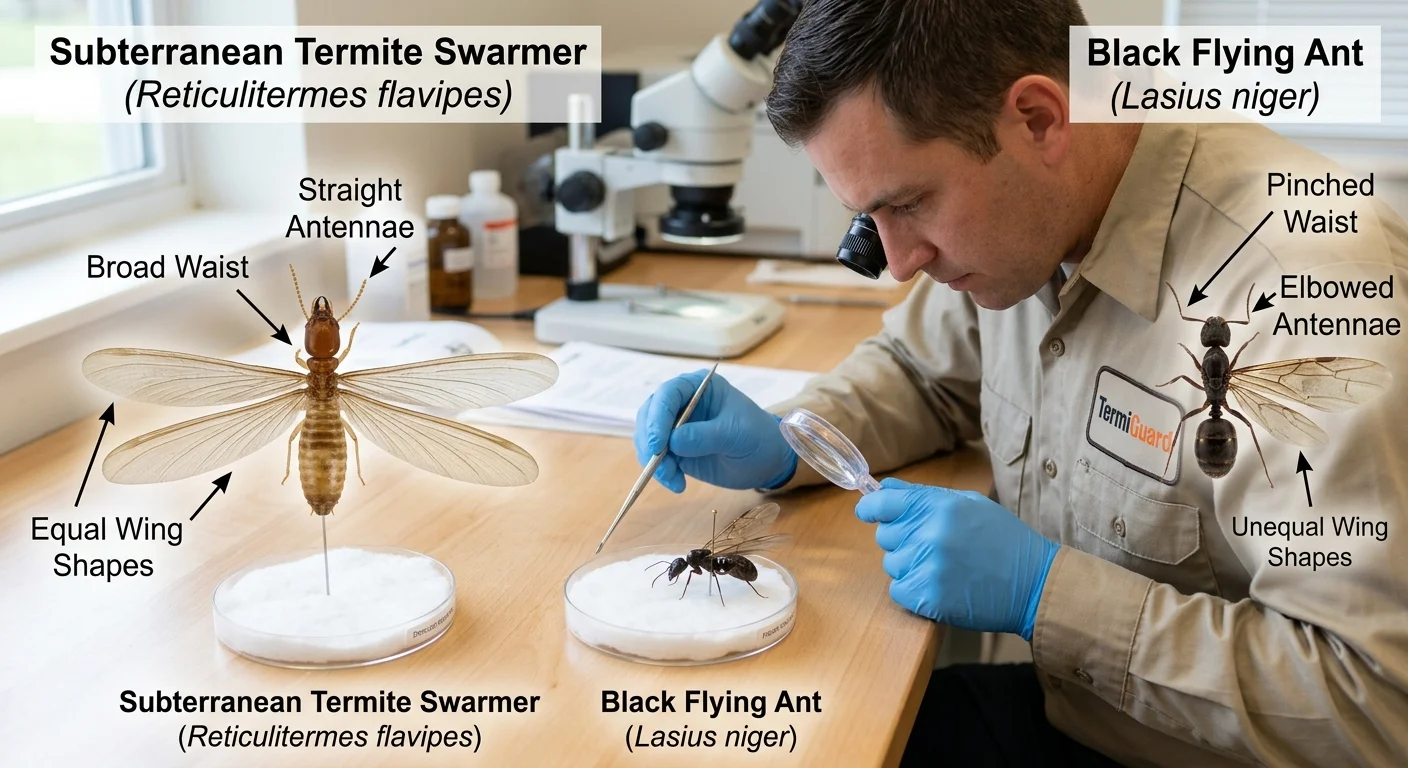
Reproductives (alates). Yellow-brown or black bodies. At maturity they have two pairs of wings of equal size. After the swarming flight they shed the wings. Subterranean winged forms are dark brown to brownish-black with brownish-gray wings. UC: Reticulitermes species swarm during the afternoon in spring or fall on clear days after a soaking rain. UC also notes that in buildings with heated basements, termites occasionally fly indoors during winter.
Western drywood termites live deep inside wood and are rarely seen until they swarm. UC: flying adults occur during daytime in summer and fall. Drywood and dampwood termites nest in wood, not soil, and do not require soil contact. Incisitermes minor is California’s most common drywood species and its second most important termite pest after subterranean termites. UC places it along the Pacific coastal region and into the Central Valley and Southern California deserts. That is a species range, not a rule that coastal San Diego houses are drywood and inland houses are subterranean.
Habits and treatment differences: drywood vs. subterranean termites in San Diego.
What you see when you do not see the insect
Do not use this section as a second signs article. Two field marks are part of visual ID.
Drywood fecal pellets have six hexagonal sides and come out through kick-out holes smaller than 2 mm. Pellets alone do not prove the infestation is active or how far it extends.
Subterranean shelter tubes are earth-hardened tunnels of saliva, soil, and wood. Winged termites are easy to confuse with flying ants. If you have a winged specimen, use the sibling checklist rather than repeating it here.
When identification needs a Branch 3 inspection
UC: inspecting and determining the extent of a drywood infestation requires experience and is best done by a professional. Products needed to control drywood termites are not available to the general public. California’s minimum inspection is a visual search of accessible areas. Hidden damage can sit behind walls and stucco.
A matched licensed company can confirm the caste and species from a specimen or from the wood itself. Under California law the written inspection report is prepared and delivered to whoever requested the inspection and to the property owner within 10 business days from the start of the inspection, whether or not any work is quoted, and the property address is what gets filed with the board. See termite treatment.
Frequently asked questions
What do termites look like in San Diego?
Workers are pale, soft-bodied, and wingless, and they stay in wood or tubes. What people usually see are dark-bodied reproductives with two pairs of equal wings, or the tubes and hexagonal pellets those colonies leave.
How do I tell a termite from a flying ant?
UC notes the confusion and that termite alates have two pairs of wings of equal size. The full three-feature checklist is on flying ants vs. termite swarmers.
What is the difference between drywood and subterranean termites here?
Drywood colonies nest in wood and do not need soil contact. Subterranean colonies live in soil and build shelter tubes to reach wood. UC does not split San Diego houses into a coastal-drywood versus inland-subterranean rule.
Does seeing one termite mean there is an infestation?
A swarmer means reproductives have flown. A worker in wood is, per UC, a sure sign of an active infestation. Neither sighting maps the colony by itself. That is the inspection.
When to call us
If you have a specimen or damaged wood and need a name before anyone quotes treatment, get a Branch 3 inspection. Call (858) 400-6561 to get matched with a licensed local company.