
Termite damage can stay hidden behind walls and under floors until a homeowner notices swarmers, tubes, pellets, or blistered wood. Those signs are reasons to get a wood-destroying organism inspection, not a cue to start treating.
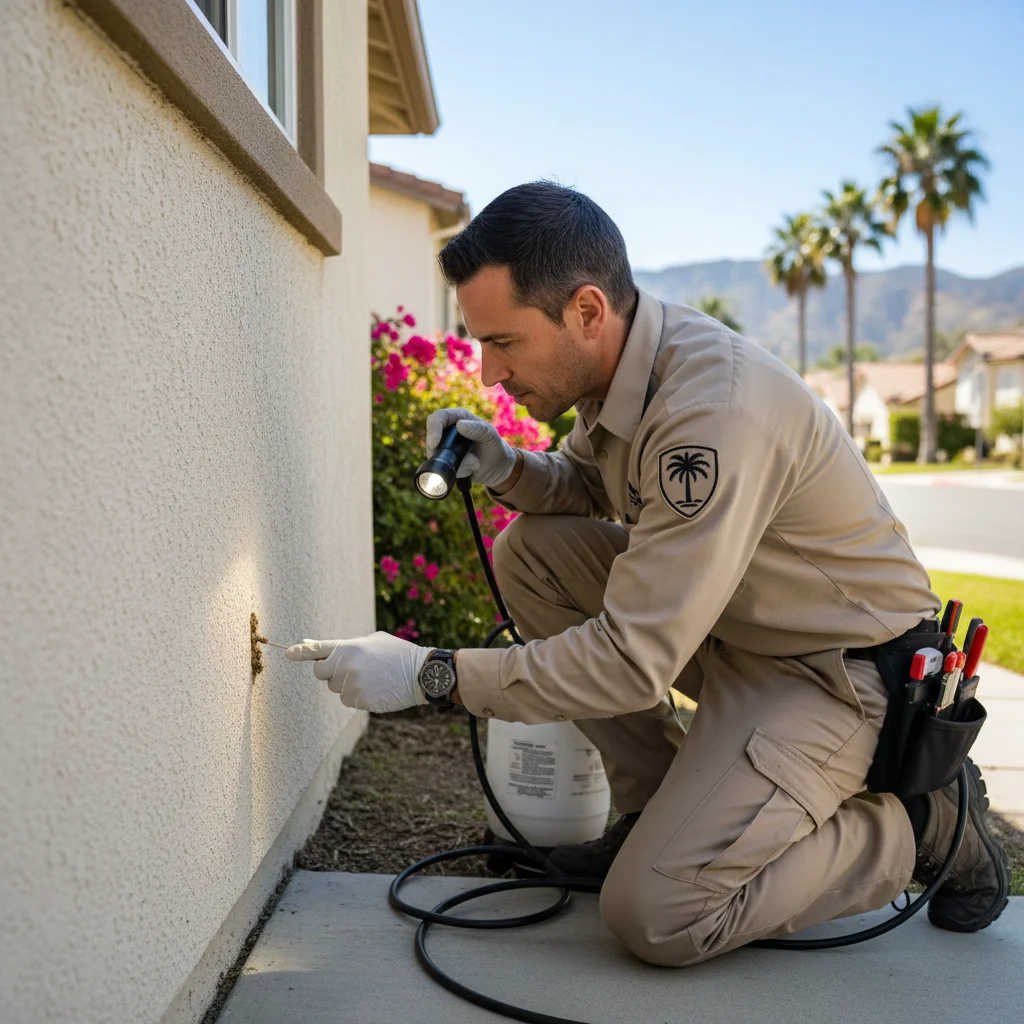
Swarmers, tubes, pellets, and hollow wood
University of California IPM lists three common signs of subterranean termites: swarms of winged reproductives, shelter tubes, and tunneling in wood. Winged reproductives, called alates, have two pairs of wings of equal size. After the flight they shed those wings. UC notes that winged termites are easy to confuse with flying ants. Use the dedicated flying ant versus termite swarmer checklist if you have a specimen. Do not treat from a guess.
Shelter tubes are earth-hardened tunnels workers build with saliva mixed with soil and bits of wood or drywall. UC describes them as the most commonly seen evidence of a subterranean infestation. Look along foundations, crawl spaces, support wood, and utility lines. Do not break tubes open to check for workers. Leave that to a Branch 3 inspection so the evidence stays intact.
Drywood termites nest in wood, not soil, and do not need soil contact. UC IPM’s drywood note says homeowners often first notice a swarm or fecal pellets. Inspectors look for feeding damage, shed wings, pellets, and kick-out holes smaller than 2 mm. The pellets have six hexagonal sides and are diagnostic for drywood termites. Pellets alone do not prove the infestation is still active or how far it runs. Compare pellets with ordinary sawdust on termite droppings or sawdust. Species photos live on what termites look like.
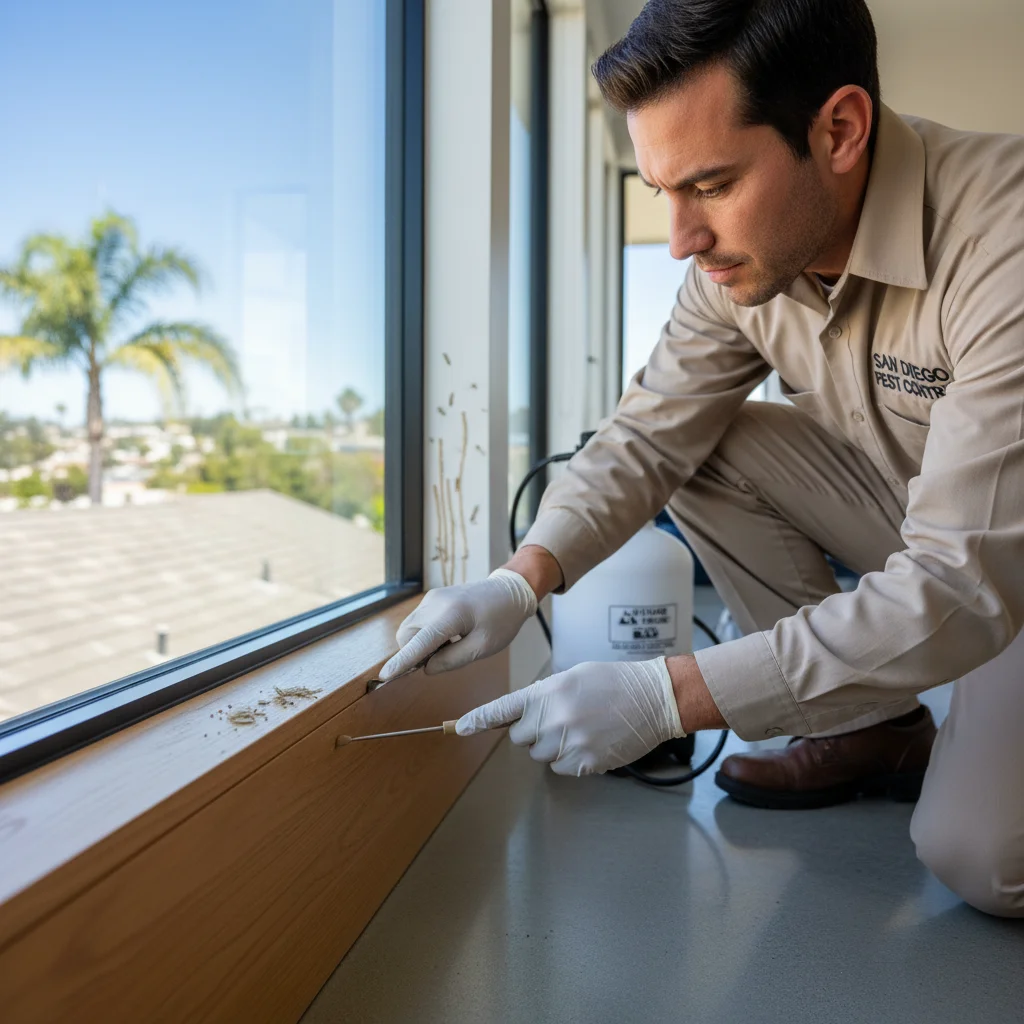
What damaged wood can look like
UC IPM says darkening or blistering of structural wood can indicate subterranean activity. Damaged wood is often thin at the surface and easy to puncture with a knife or screwdriver. Excavations are hollow, enclosed, more or less longitudinal cavities. Feeding generally follows the grain: softer springwood is eaten and harder summerwood is left. Finding live termites foraging in wood is a sure sign of an active infestation. Those wood signs are inspection triggers. They are not a species ID and they are not a treatment plan.
Drywood and subterranean termites need different work. That split, and why a quote should follow a report, is on drywood versus subterranean termites in San Diego.
When a WDO report is the next step
A determined colony can stay out of sight in inaccessible wood. California’s Structural Pest Control Board notes that most lending institutions require a wood-destroying organism inspection before financing a home loan. You can search whether a WDO report is already on file through the Board’s WDO property search. Civil Code section 1099 addresses delivery of a report when the contract or financing requires one.
Schedule a Branch 3 inspection if you see swarmers, shed wings indoors, mud tubes, hexagonal pellets, or blistered wood. Buying or selling a home is the other common WDO trigger. There is no sourced two-year inspection cadence on this page. Ask the matched company what the visit includes and whether the report will be filed.
Frequently asked questions
What are the first signs of termites in a San Diego home?
UC IPM names swarms of winged reproductives, shelter tubes, and wood tunneling for subterranean termites. Drywood evidence is often a swarm, shed wings, hexagonal fecal pellets, or kick-out holes. Any one of those is a reason to book a WDO inspection rather than to start treating.
What does termite wood damage look like?
Subterranean feeding generally follows the grain and can leave hollow, enclosed cavities. Wood may darken or blister and feel thin at the surface. Drywood work is confirmed in inspection by pellets and damage inside the wood itself. Which pattern you have changes the quote, so identification belongs on the report.
Are discarded wings a sign of an infestation?
They are a sign that reproductives have flown. UC: after their swarming flight, alates shed their wings and establish new colonies. Shed wings do not tell you the species or how far any infestation runs. That is what the inspection is for.
Should I treat termites myself if I spot the signs?
No. UC states that products needed to control drywood termites are not available to the general public, and that figuring out the extent of an infestation is best done by a professional. Drywood and subterranean termites also need different methods. An inspection names the organism and produces the report any treatment should be quoted against.
When to call us
If you have found swarmers, mud tubes, hexagonal pellets, or blistered wood, get a Branch 3 inspection before anyone treats. Timing of flights is covered on when termites swarm in San Diego. Inspection scope and cost context live on termite inspection cost in San Diego.
Call (858) 400-6561 to get matched with a licensed local company. The matched company inspects, writes the report, and quotes any work.