
Discovering drywood termites can be stressful, especially when professionals suggest whole-structure fumigation, also known as termite tenting. The process sounds intimidating. UC IPM rates whole-structure fumigation with sulfuryl fluoride as highly effective if it’s correctly applied, and its advantage over spot treatment is that it reaches infestations hidden from view. Understanding what to expect can help ease your concerns and prepare you for a smooth treatment.
What termite fumigation actually is and when you need it
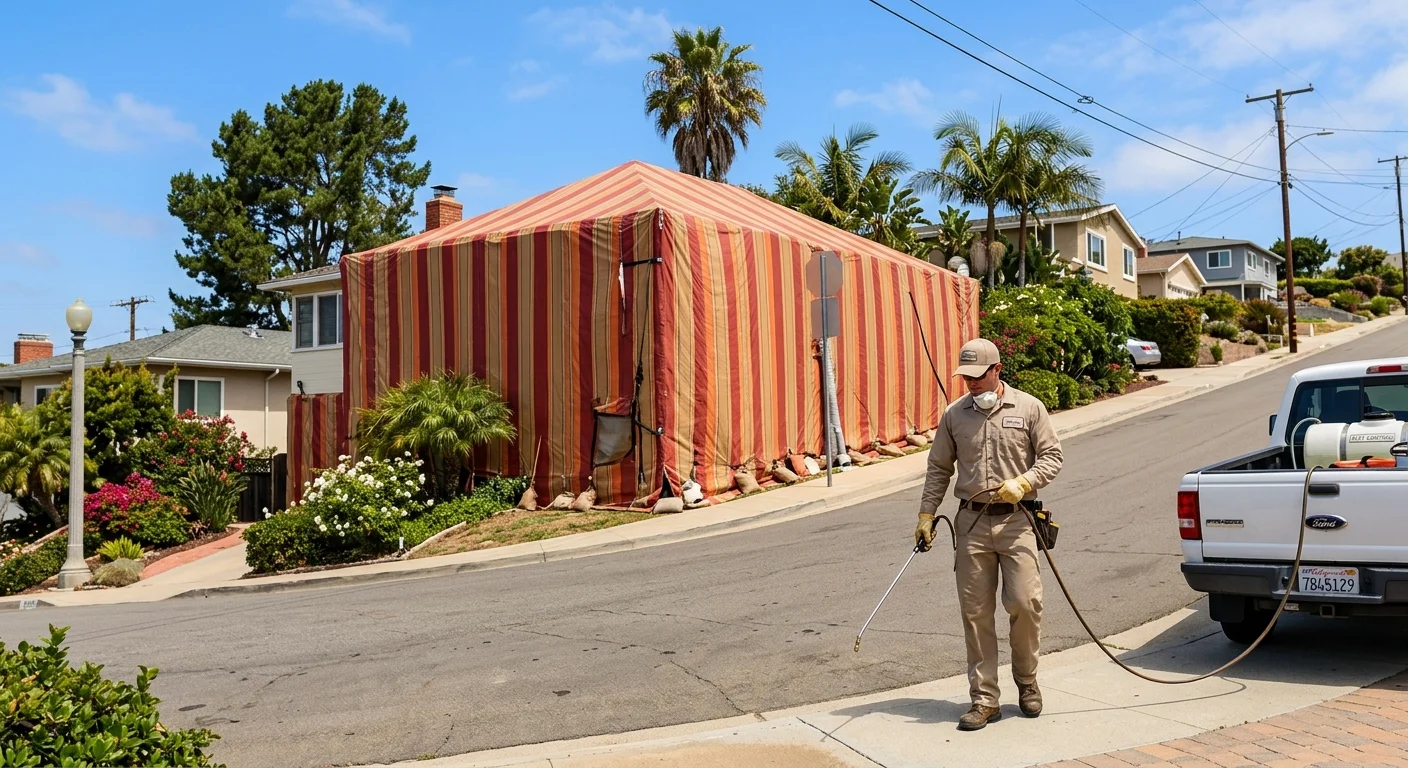
Termite fumigation is a highly effective pest control method that involves sealing an entire structure, usually with large tarpaulins or “tents,” and introducing a gaseous pesticide (fumigant) to eliminate drywood termites. Unlike localized treatments, a whole-structure fumigation treats every infestation in the building at the same time, including hidden ones inside wall voids or deep in structural timbers. How well it works depends on how it is done. UC IPM reports that sulfuryl fluoride treats all infestations simultaneously and has high levels of efficacy if correctly applied, that a monitored fumigation, meaning one with gas monitoring lines installed inside the structure, has the highest rate of treatment success, and that a nonmonitored fumigation may not reach a high enough gas concentration to kill the infestation, so failures may occur. That makes “will this fumigation be monitored” a question worth taking to every quote.
You primarily need fumigation for widespread drywood termite infestations. These termites live entirely within the wood itself, making them difficult to reach with surface sprays or bait stations. If an inspection reveals multiple active colonies across different parts of your home - perhaps in the attic, wall voids, or wooden beams - fumigation becomes the recommended course of action. Its advantage over localized treatment, in UC IPM’s terms, is that it should eliminate infestations hidden from view. For more localized issues or different types of pests like subterranean termites, other termite treatment options, such as spot treatments or baiting systems, may be more suitable. Pest Pros San Diego isn’t a licensed operator and performs no inspections or treatments. We match you with a registered company, and its licensed inspector is the one who identifies the species, works out how far the accessible evidence extends, and recommends the approach. Start with a termite inspection.
How to prepare your home for tenting
Preparation matters for both the treatment and your family’s safety. Your pest control company will provide a detailed checklist, but here are the key tasks. First, remove all people, pets, and plants from the property. This includes fish tanks, birds, and even garden plants close to the foundation. You’ll need to arrange alternative accommodation for several days, and the fumigating company’s schedule tells you exactly how many. This temporary relocation is non-negotiable for safety.
Next, food and medications. The fumigant manufacturer’s California planning guide says to remove or double-bag unsealed food and medicines, using the special Nylofume bags available from your pest management professional, and it counts pet food and animal feed in bags and boxes among the items to bag or remove. Open operable internal doors, furniture with large voids, cabinets, drawers, closets and appliances such as washers, dishwashers, dryers and ovens, so the gas can circulate. Prune any plants or trees touching or encroaching the outside of your home. Extinguish all pilot lights, such as those on water heaters, ranges, ovens and dryers, and turn off electrical heating elements in heaters, computers, pianos, organs and pet habitats. In California the gas utility handles the shut-off, and you’ll want the restoration appointment booked before you leave. Work from the company’s own written checklist, item by item.
What happens during the fumigation
Once your home is fully prepped, the precise and carefully executed fumigation process begins. The licensed fumigation crew will arrive to meticulously seal your entire house with large, heavy tarpaulins, often brightly colored, that resemble giant “tents.” The tarps are weighted down along the ground so the gas stays inside the structure while it works. Ask the company how it seals your particular roofline, and note UC IPM’s warning that roofs could be damaged as a result of having tarpaulins dragged across them.
After the structure is fully sealed, prominent warning signs are posted, and the fumigant gas, typically sulfuryl fluoride, is introduced into the enclosed space. The manufacturer’s technical summary describes sulfuryl fluoride as nonflammable, noncorrosive, causing no undesirable odors, and quickly penetrating structural materials, and says it is odorless at the concentrations used to fumigate structures. That is why it reaches termites behind drywall and deep inside timbers. How long the tent stays on depends on the structure and the dosage the job requires. Ask the company what dosage it has calculated and on what basis. Fixr, a national cost reference, describes whole-structure tenting as requiring you to vacate for several days, with the home not enterable for about four days while the chemicals disperse. The exact hours are not set by a calendar: the crew measures the air and the clearance reading decides when re-entry is allowed. Throughout this entire time, your home remains uninhabitable. Whether gas levels are actively tracked during exposure depends on whether the job is a monitored fumigation, which is worth confirming in writing. Fumigation contractors are required by California to hold a Branch 1 SPCB license and follow strict regulatory protocols set by the California Structural Pest Control Board (SPCB) and the EPA. You can always verify the licensing of any pest control company with the California Structural Pest Control Board (SPCB).
Re-entry, safety, and what to expect after
After the required exposure time for the fumigant, the crew returns to carefully remove the large tarpaulins and begin the crucial aeration process. The manufacturer’s guidance describes what that involves: the fumigator will use fans and open cabinets and windows to speed the process of aeration. Then comes clearance testing. One part per million is the Permissible Exposure Limit set by the EPA for this fumigant, and the fumigator must aerate the structure so the concentration in the air is 1 ppm or less before anyone reoccupies it, measured with an approved clearance device. Frequently, after the aeration procedures are completed, concentrations are nondetectable. The manufacturer’s California planning guide is blunt about the homeowner’s part: don’t re-enter your home until it has been tested and certified for re-entry by a licensed fumigator. Leave the clearance notice on the gas meter, because the gas company needs it to turn the service back on.
Once you receive the “all clear” from the licensed fumigation crew, you can safely return. You won’t notice any lingering odors, since the fumigant is odorless at the concentrations used. You also won’t need to wash dishes, linens or clothing: the manufacturer states it does not form toxic surface residues, so dishes, clothes, cooking utensils, equipment and other items do not need to be washed following fumigation. Open any Nylofume-bagged items in a well-ventilated area. What you should watch for instead is whether new signs of activity appear, such as fresh pellet piles building up beneath the same kickout holes. UC IPM is clear that efficacy depends on correct application and that failures do occur, particularly where a fumigation was not monitored, so it’s worth asking the company to come back and look if you see new activity. California law requires the report and any contract to state specifically whether a guarantee is made, its terms, and how long it runs, so read that section before you sign rather than assuming one exists. Fumigation targets the termites living in the structure at the time, and it leaves no residual protection against future infestations. Termites could potentially re-infest your home years down the line. For this reason, follow-up inspections and preventative measures are commonly recommended, especially for San Diego homes located in high-risk areas prone to drywood termite activity.
Cost factors and how to get an accurate quote
Whole-structure fumigation is priced by size, so the useful figure is a per-square-foot one. Fixr puts whole-structure termite fumigation at $1 to $4 per square foot as of its most recent update, which works out to roughly $1,800 to $7,200 on an 1,800 square foot home. Treat that as a starting reference, not a quote: several factors directly influence the final price. The primary driver is the physical size of your home, specifically its total cubic footage, as this directly dictates the precise amount of fumigant needed and the sheer scale of the tenting operation required. The overall layout and accessibility of your property also play a crucial role; homes with steep roofs, multi-level designs, dense landscaping, or attached structures may require more specialized equipment and labor, thereby increasing costs.
The specific type of termite you’re dealing with is another critical factor. Fumigation is almost exclusively reserved for extensive drywood termite infestations, where colonies are widespread and inaccessible. For other types, like ground-dwelling subterranean termites, or for very localized drywood issues, spot treatments or baiting systems are usually more targeted and cost-effective. The extent and severity of the drywood termite infestation also influence the required exposure time for the fumigant, which can impact labor costs. Finally, the specific pest control company you choose will affect the price. To get an accurate quote for termite control in your San Diego home, schedule a professional, on-site termite inspection. Ask the matched company to inspect first, then to put the scope and the price in writing, including whether a localized treatment would do the job instead.
Frequently asked questions
How long does termite fumigation take, and when can I go back in?
Plan on being out of the house for several days. Fixr, a national cost reference, describes the home as not enterable for about four days after treatment while the chemicals disperse. The structure is tented and sealed, the fumigant is introduced and held for a set exposure period, then the tent comes off and the building is aerated. Re-entry happens only after the company measures the air and clears it, and that clearance is what the timing hinges on, not the calendar.
Is fumigation always necessary for drywood termites?
No. Fumigation is the answer when activity is spread through the structure and localised work can’t reach it. A contained infestation can often be handled with localised injection or heat, quoted separately. Which applies is decided by the inspection report rather than over the phone.
What do I need to do to prepare for fumigation?
Remove or double-bag food, medicine, and anything else meant for consumption using the bags the company supplies, arrange for people and pets to be elsewhere, and take care of plants near the structure. The company gives you a written preparation list, and following it exactly matters because a missed item can delay the whole job.
Does fumigation prevent termites from coming back?
It clears what is in the structure at the time. It leaves no residue, so it does not stop a new colony from arriving later. That is why prevention work, cutting wood-to-soil contact and keeping moisture away from the foundation, and periodic re-inspection both still matter afterwards.
When to call us
If you’re noticing any tell-tale signs of drywood termites - such as small, sand-like piles of fecal pellets (frass), discarded termite wings near windowsills, or hollow-sounding damaged wood - it’s crucial to act quickly. Ignoring a termite problem will only allow the infestation to grow, potentially leading to significant structural damage and costly repairs. Pest Pros San Diego connects you with experienced local termite pros who handle termite inspections and termite treatment across all of San Diego County. They’ll identify the species and extent of the infestation and recommend whether whole-structure fumigation or a more targeted approach is right for your situation. Call us at (858) 400-6561 to get matched with a licensed local pro.