
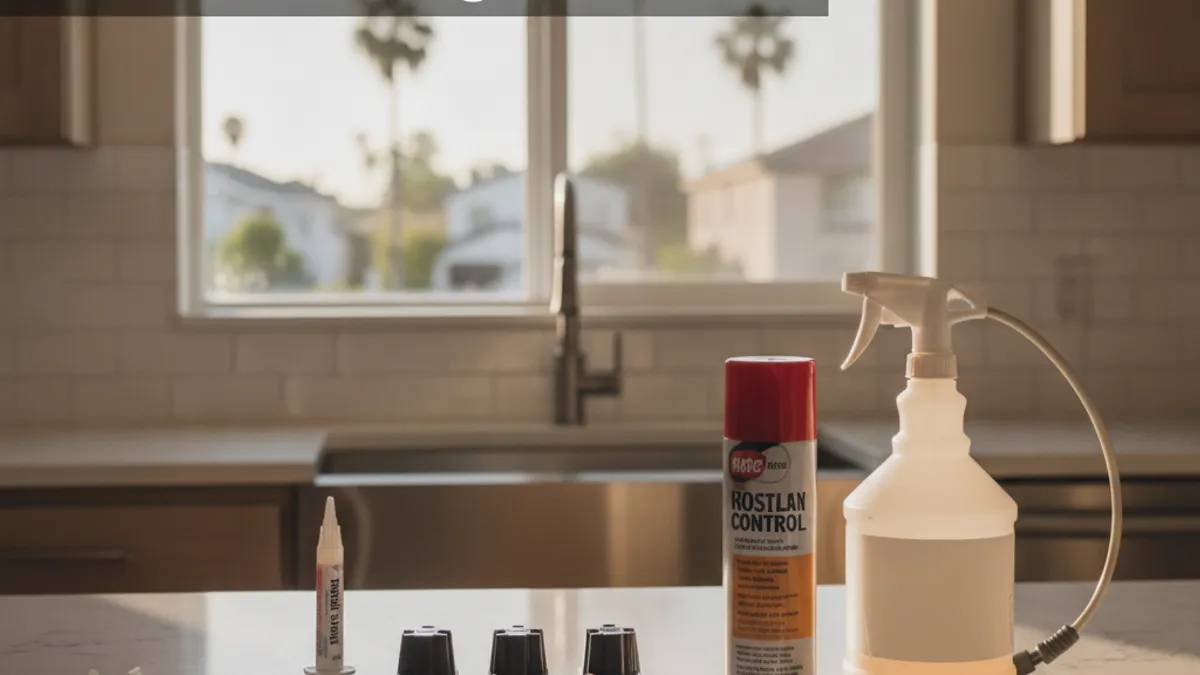
It depends on the product category. UC IPM calls the German cockroach the most common indoor species in California, and the one that lives and breeds in kitchens and bathrooms. Contact sprays and foggers tend to scatter an established infestation. Gel baits and bait stations, used on the label, are the store products UC IPM ranks above sprays.
Why the product matters more than the brand
Nearly every “best roach killer” question is really a question about German cockroaches. UC IPM: they are the most common indoor species in California, especially in multi-unit housing, and the most persistent. They hide in cracks as narrow as 1/16 inch, and they have become resistant to many insecticides in common sprays and aerosols. That biology is why the product category matters more than the brand on the shelf. Two products with the same active ingredient can perform differently depending on whether they kill on contact or get carried back to harborage.
Aerosol contact sprays: fast, but usually counterproductive
Spraying visible roaches directly feels productive, and it does kill the roaches it actually hits. The problem is everything it doesn’t hit. Most aerosol sprays contain repellent compounds that roaches can detect before contact, which triggers a scatter response instead of a kill. A roach that senses the spray retreats deeper into a wall void or moves to an untreated room rather than walking through it, which can spread a contained kitchen problem into other parts of a home or, in an apartment or duplex, into a neighboring unit. Our cockroach control guide covers why this dispersal effect is one of the main reasons DIY spraying backfires on established infestations.
Gel baits: usually the most effective store product
Gel bait is the store product UC IPM ranks above sprays. A roach that feeds on bait later dies. UC: an effective bait program does not give immediate results and may take 7 days or longer. UC also says to skip foggers, bombs, or aerosol sprays, which can repel and disperse cockroaches without killing them. That is why bait is the store category that can still reach German cockroaches hiding in cracks a spray never hits. This page does not claim a secondary-kill path through droppings or remains.
Placement matters more than quantity. Small dots near appliance edges, under sinks, behind outlet covers, and along the tracks a roach actually travels work better than large amounts in visible spots roaches avoid. Follow the product label for how much to use and where, since formulations differ and using more than directed doesn’t speed up results, it just gets ignored by roaches that prefer to feed elsewhere.
Bait stations: slower, but useful where gel isn’t practical
Enclosed bait stations use the same feed-and-return mechanism as gel bait but contain it inside a covered housing, which is a reasonable option in kitchens with young kids or pets where an open gel dot isn’t ideal. They tend to work more slowly than placed gel since the roach has to find and enter the station rather than encountering bait along its normal path, but they’re a legitimate part of a broader control plan, especially for maintaining control after an initial treatment has knocked numbers down.
Boric acid: works, but application is the whole game
Boric acid dust kills roaches that walk through it and later groom themselves, but it only works as a thin, barely visible layer. A visible pile or heavy application isn’t more effective, it just gets avoided the same way an obvious spray does. It also needs to stay dry to keep working, which makes it a poor fit for damp areas like under a sink with an active leak. Boric acid products carry their own label instructions for where and how they can be used around a household; follow those directions rather than estimating an amount, and keep any boric acid product out of reach of kids and pets per the label.
Foggers and bug bombs: the product to skip
Foggers release insecticide into open air, which settles on exposed surfaces, floors, and countertops. German cockroaches spend the overwhelming majority of their time inside wall voids, under appliances, and in cracks that a fogger’s mist never reaches. The result is a product that kills almost nothing living in the actual harborage while leaving residue across surfaces that then have to be cleaned before food prep resumes. Foggers are widely considered one of the least effective options against an established German cockroach population, and repeated use compounds the resistance problem the species is already known for.
When store products aren’t enough
A light, early sighting, one or two roaches near a specific appliance, often responds to gel bait placed on the label. UC IPM: baits may take seven days or longer before you see fewer cockroaches. An infestation that’s spread across rooms, keeps reappearing after store products, or shows up during the day is a reason to get a licensed Branch 2 inspection (household pests, not fumigation). Pest Pros San Diego matches you with that company. We don’t bait, spray, or inspect. Species ID: types of cockroaches in San Diego. Visit framing: cockroach control.
Frequently asked questions
Why do sprays seem to work at first but the problem comes back worse?
A spray kills the roaches it directly contacts, which can look like real progress for a day or two. But the scatter response it triggers in the rest of the colony pushes surviving roaches deeper into hiding or into new areas, so the visible improvement often masks a population that’s just relocated rather than shrunk.
Is gel bait safe to use if I have kids or pets in the house?
Every bait product has its own label instructions for placement around households with children or pets, and those instructions vary by formulation and active ingredient. Read and follow the specific product’s label for placement guidance, and consider enclosed bait stations instead of open gel dots in areas kids or pets can access.
How long does it take for gel bait to clear an infestation?
A light, contained sighting can show real improvement within one to two weeks of correct placement. A larger or longer-established infestation usually takes several weeks, since the feed-and-return mechanism has to cycle through the colony rather than delivering an instant kill.
Why do roaches seem immune to the spray I’ve used before?
German cockroaches are well documented for developing resistance to insecticides they’re repeatedly exposed to, especially in situations where surviving roaches pass that resistance to offspring over successive generations. A product that worked a year ago may simply no longer be effective against the population currently in a given home.
If store products haven’t cleared the problem or you’re seeing roaches during the day, call (858) 400-6561 to get matched with a licensed Branch 2 company. Ask them to inspect harborage before they quote bait or crack-and-crevice work.