
Finding cockroaches in a San Diego home is unpleasant. The useful work is naming the species, cutting food and water, and deciding whether a licensed inspection is next. Pest Pros San Diego matches you with licensed companies. We don’t send technicians or promise lasting relief.
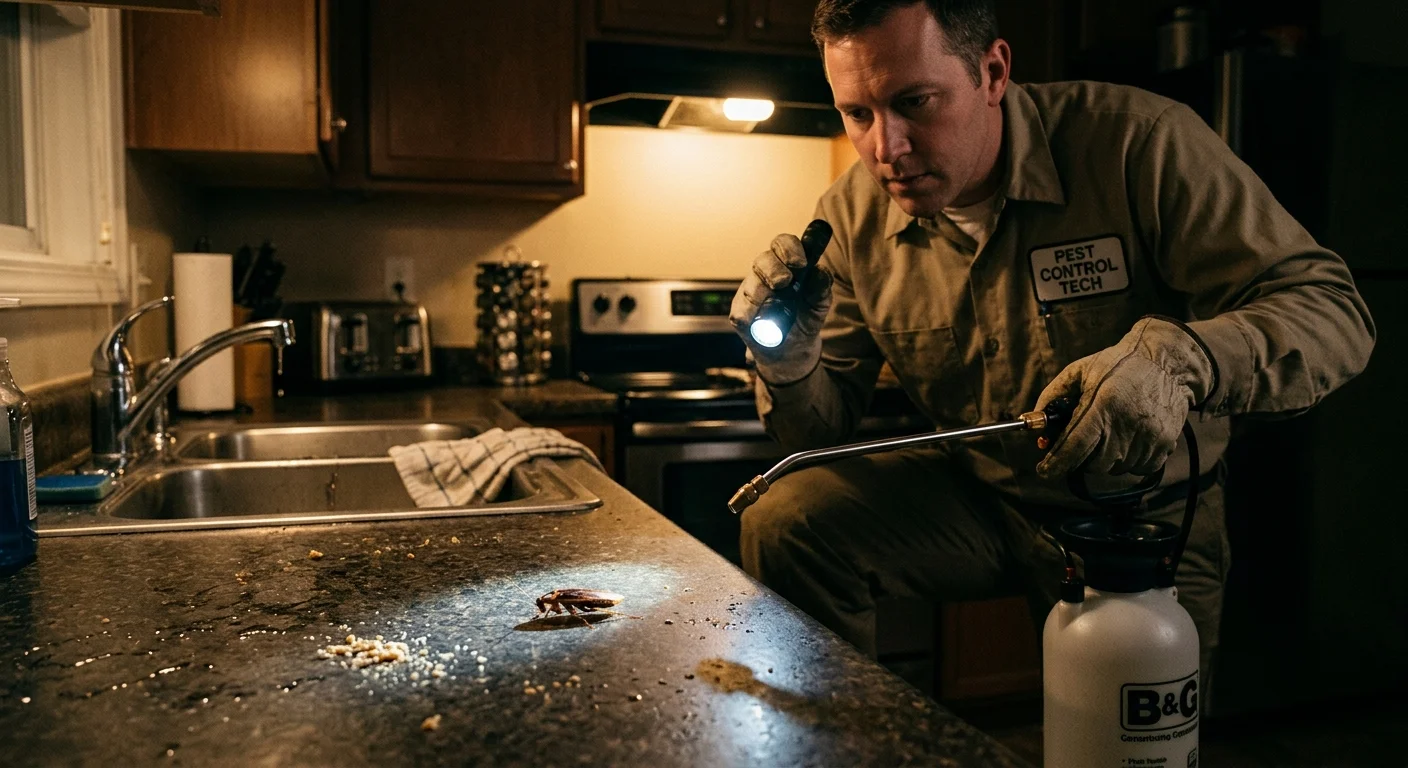
Warm weather supports several cockroach species here. A large outdoor roach on a patio is a different job from small German roaches in a kitchen appliance void.
Which cockroaches San Diego homes get
UC IPM lists five household pest species in California: German, brownbanded, Oriental, American, and Turkestan. German and brownbanded live and breed indoors. American, Oriental, and Turkestan live outdoors and invade.
German cockroaches are the main indoor problem, especially in multi-unit housing. They’re light brown indoor breeders. They prefer kitchens and bathrooms, about 70°F to 75°F, near food, water, and tight harborage. UC IPM: an adult German can hide in a crack 1/16 inch wide. Females carry the egg case for most of a 30-day incubation, then drop it near hatch. That’s why killing the adults you see doesn’t finish the job.
American cockroaches are larger and reddish-brown. They live in sewers, drains, and landscaping and walk inside for food or shelter.
Oriental cockroaches are dark, prefer cool damp places, and are poor climbers. Lower levels, crawl spaces, and plumbing leaks are typical.
Turkestan cockroaches are outdoor insects of water meter boxes, compost, leaf litter, potted plants, cracks between poured-concrete blocks, and sewers.
Brownbanded cockroaches account for about 1% of indoor California infestations in UC IPM’s figure. They like warmer spots and clutter, not only kitchens.
For visuals, see cockroach types in San Diego and what cockroaches look like.
Why German roaches are hard to kill
UC IPM calls the German cockroach the most persistent indoor species. They hide in cracks you can’t spray. Females carry the egg case until it’s close to hatch, so many consumer sprays miss the next generation. UC IPM also states that cockroaches have become resistant to many insecticides in common sprays and aerosols that used to work, and that sprays alone won’t eliminate them. Baits plus sanitation and exclusion are the IPM core. Baits may take seven days or longer before you see fewer cockroaches.
The numbers move fast. UC IPM says the German cockroach has the fastest reproductive cycle of all the common pest cockroaches, and that a single female and her offspring can produce over 30,000 individuals in a year. Each egg case holds about 30 young, and a female may produce a new one every few weeks.
UC IPM says German cockroaches may pose health concerns due to contamination of food and production of indoor allergens. It also says they’re believed capable of transmitting certain disease-causing organisms. That’s UC’s wording. It isn’t a Pest Pros diagnosis of your kitchen, and it isn’t a reason to panic-spray.
Why DIY sprays often make German jobs harder
UC IPM: insecticide sprays alone will not eliminate cockroaches. Cockroaches have also become resistant to many insecticides in common sprays and aerosols that formerly controlled them. An effective bait program does not give immediate results. It may take seven days or longer.
What a licensed plan can include
A Branch 2 inspection identifies species, harborage, and spread. For German cockroaches, UC IPM centers baits plus sanitation and exclusion. Bait programs may take seven days or longer before you see fewer cockroaches. Follow-up is common because one visit rarely ends an indoor breeding population. Bait products are slow on purpose, and the matched company sets the follow-up schedule after it inspects.
Pest Pros doesn’t build that plan. The matched company does. Read the written scope. Don’t treat “lasting relief” as a result we sell.
See cockroach control for the service type.
Frequently asked questions
Why don’t store-bought sprays work on cockroaches?
They kill the ones you see and miss egg cases that females still carry. UC IPM: sprays alone won’t eliminate cockroaches, and many common aerosols face resistance. Baits plus sanitation and exclusion are the IPM core, and bait programs may take seven days or longer.
How long does professional cockroach treatment take to work?
UC IPM notes that baits may take seven days or longer before you see fewer cockroaches. Baits can be quite effective for long-term control, but the timeline depends on how established the population is. Follow-up is set by the licensed company after inspecting.
Does having roaches mean my house is dirty?
No. UC IPM: German cockroaches are especially common in multi-unit housing. They prefer kitchens and bathrooms around 70°F to 75°F, near food, water, and tight harborage. A clean kitchen with a warm appliance void is still habitat. Sanitation affects how fast a population grows. It does not prove a unit cannot get German cockroaches.
When to call
If DIY methods failed, or you’re seeing cockroaches often (including during the day), get a licensed inspection. German infestations in apartments rarely end with a store can.
UC IPM: German cockroaches are especially common in multi-unit housing. That is a housing pattern, not a Pest Pros job count. Service-area pages: El Cajon and Chula Vista. Call (858) 400-6561 to get matched with a licensed local pro.