
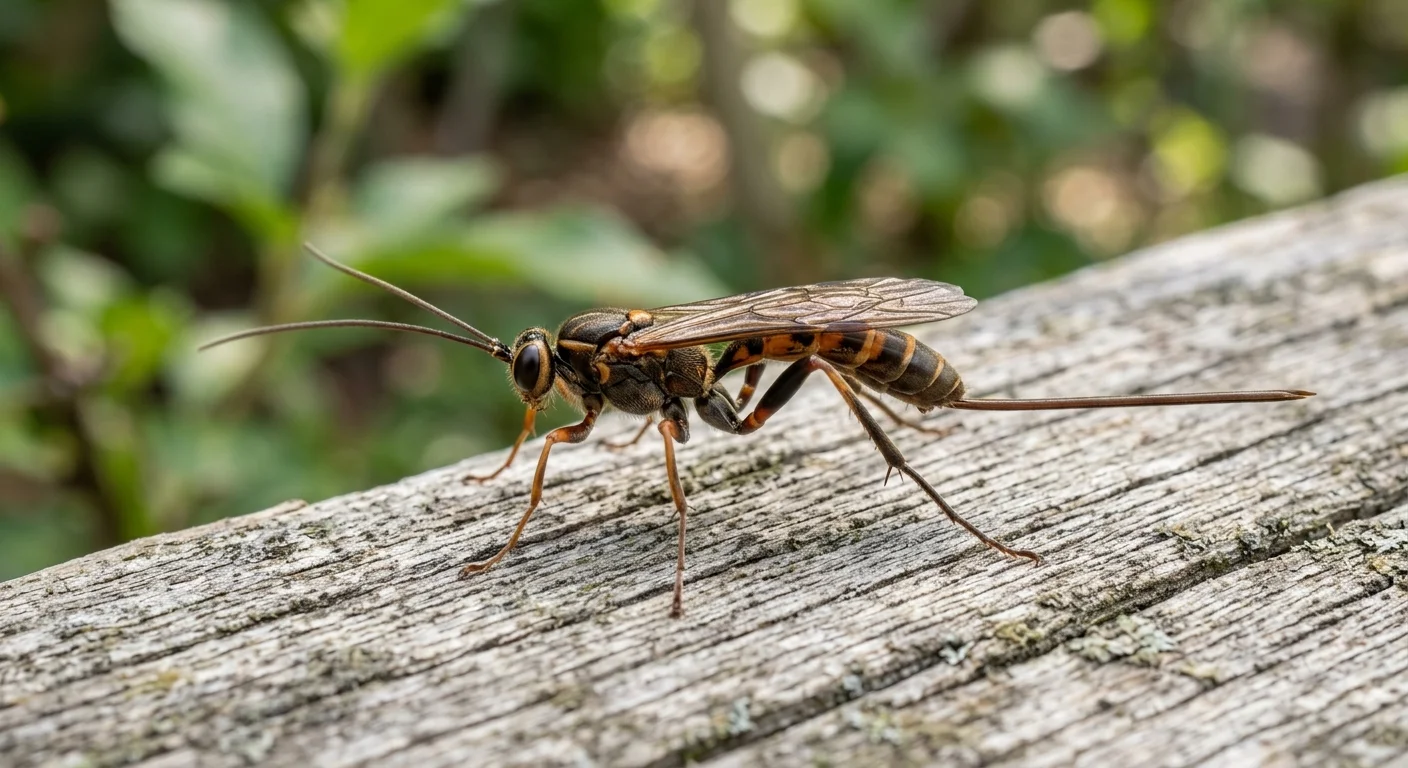
A slender insect with a long, tail-like appendage may resemble an ichneumon wasp. That appearance alone doesn’t confirm the identification, especially from one distant photo. The safest answer is to document the insect, its location, and any repeated activity before choosing what to do.
Why one long-bodied wasp isn’t a certain identification
A long body isn’t enough for a reliable ichneumon wasp identification. Camera angle, folded wings, shadows, and a blurred background can hide important features. A narrow object behind the insect may also look attached when it isn’t.
Start by separating identification from treatment. A single insect resting on a wall doesn’t establish a nest or infestation. It also doesn’t show where the insect came from. Record what you can see without handling it or disturbing the area.
The words “long-tailed wasp” can describe an appearance, not a confirmed identity. An expert may need to examine the antennae, wings, waist, legs, body markings, and the apparent tail-like structure. The insect’s size and discovery location also matter.
Check whether the insect is connected to a visible nest. An open paper structure calls for a different comparison. Our guide to a paper wasp or yellow jacket explains what to document in that situation. A clay or mud structure points toward another identification path. Compare it with these mud wasp nest examples.
Don’t force a name because an online image looks similar. Many photographs omit scale or location. Some show insects from other regions. A tentative identification should stay tentative until a qualified source reviews useful evidence.
Which body features and locations to photograph
Good photographs give an identifier more than one clue. Take several images from a comfortable distance. Use natural light when possible, and keep the insect centered. Avoid placing your hand or another body part near it for scale.
Try to capture these details:
- The full body from above
- A clear side view
- The head and antennae
- The wings, including how they rest
- The connection between the middle and rear body sections
- The legs and any visible color bands
- The complete tail-like appendage
- A nearby fixed object for scale
- The surface where the insect was resting
Write down the setting immediately. “Outside in San Diego” isn’t specific enough. Note whether you found it inside a house, beneath an eave, beside a window, on a fence, near stored firewood, or around landscaping.
San Diego County covers very different settings. A sighting near a coastal Encinitas garden isn’t the same record as one from an El Cajon garage. The same applies to a canyon-edge property near Mission Trails, a Chula Vista patio, or an outbuilding near Ramona. Those place names don’t confirm a species. They give an expert useful context.
Also record whether you saw one insect or recurring activity. Note where insects enter and leave. Photograph any structure they approach, but don’t disturb it. If you find a nest-like object, include both a close view and a wider image showing its placement.
Save the original files. Cropped screenshots can remove scale and camera detail. A short video may also show flight, landing, and entry behavior that still photographs miss.
How to get the identification confirmed
A long, tail-like appendage describes an appearance, not a settled identity. Don’t attach a species name to it from one photo. Work the question in order, starting with the people who can actually answer it.
Start with the UC Statewide Integrated Pest Management Program. Compare your photographs with university identification material. Look for a page that matches the insect’s visible features and geographic scope. If the resource doesn’t document San Diego County, don’t treat a statewide or national image as local confirmation.
For a difficult identification, ask a university entomology contact or local natural-history organization whether it accepts photographs. Send the original images and your notes together. Include the date, neighborhood or community, indoor or outdoor setting, estimated size, and observed activity. Ask the reviewer how certain the identification is.
A pest control company can also inspect the structure and activity pattern. That can be useful when insects repeatedly enter an attic vent, wall gap, eave, garage, or commercial building. The inspection should determine what evidence is present before treatment is discussed.
If someone recommends pesticide work, verify the company through the California Structural Pest Control Board. General household pest work falls within California’s Branch 2 structure. Pest Pros San Diego doesn’t hold that license or perform treatments. We match customers with licensed local pest control companies.
Keep the identification honest. “Possible ichneumon wasp” is more useful than an unsupported species name.
When recurring activity needs a licensed inspection
One photographed insect may only require documentation and a careful identification request. Recurring activity changes the decision. Multiple insects using the same opening, repeated indoor sightings, or activity around a nest-like structure gives a licensed company more to inspect.
Don’t assume the long-bodied insect created every nearby hole or structure. Photograph each item separately. Track where the insects travel and whether their activity returns to one point. This helps the company distinguish a passing insect from activity connected to the building.
A licensed inspection is also sensible when access is difficult. Roof edges, high eaves, wall voids, and tight attic areas can hide the evidence needed for identification. The company you’re matched with can inspect the accessible area and explain what it can confirm.
Before approving work, ask for the identification and proposed service in writing. The matched company should inspect first and provide its own written quote before treatment begins. Any warranty or return-service terms belong in that company’s agreement.
Our wasp and bee removal referral service can connect you with an appropriately credentialed local company. You can also review when to call a wasp exterminator before deciding whether the pattern needs professional attention.
When to call us
Call when long-bodied insects keep returning, enter the building, or gather around one location. We can match you with a licensed local company that can inspect the evidence and discuss the next step.
Call us at (858) 400-6561 and we’ll match you with a licensed local pro.