
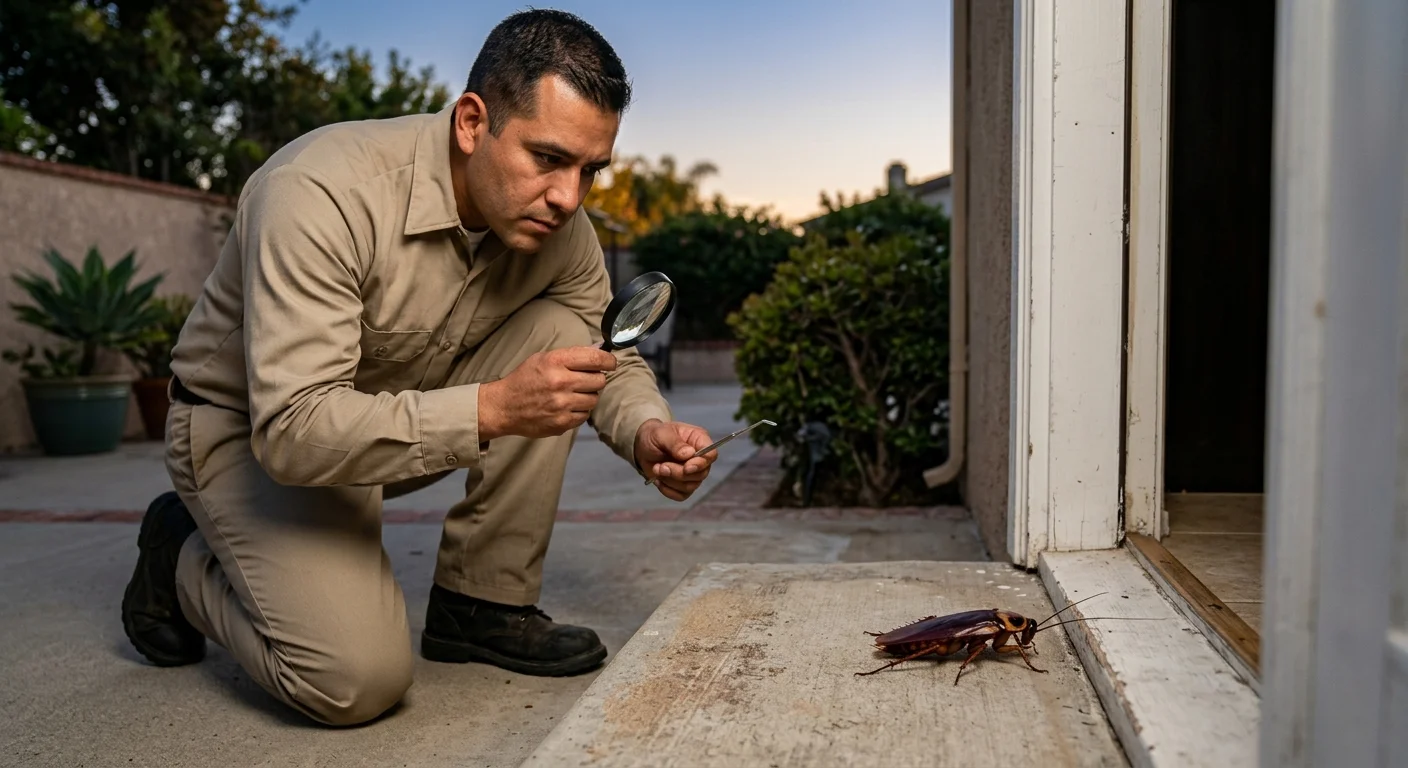
A large brown insect on a National City stoop at dusk is not a mystery beetle. Most San Diego County callers name it a palmetto bug. Pest control for palmetto bugs starts with that name, then with the species hiding behind it.
What people mean by palmetto bug in San Diego
Palmetto bug is a nickname, not a species. People in the Southeast coined it for large cockroaches they found in palmetto trees. The name traveled west with movers, landlords, and late-night kitchen stories. In San Diego County it now sticks to the big outdoor roaches that show up on patios, in garages, and around water heaters.
When someone here says palmetto bug, they usually mean the American cockroach. That is the working ID behind palmetto bug pest control in this county. It is still a working ID, not a lab result. A flashlight photo from a Mira Mesa kitchen does not prove the species. Color, size, and a shiny back get you close. A licensed inspector confirms it on site.
The other common nickname is water bug. That phrase has its own page: water bug or cockroach in San Diego. This page stays on palmetto bug, and on the American cockroach San Diego homeowners usually have in mind.
San Diego is not Charleston or Tampa. We do not run on palmetto-forest ecology. We run on irrigated stucco, slab foundations, canyon edges, and a marine layer along the coast. Encinitas stays damp from fog and sprinkler overspray. El Cajon runs hotter and drier, then the same foundation gets soaked every evening. Both patterns pull large cockroaches toward the house.
Palm and palmetto plantings in Chula Vista or La Jolla can hide outdoor roaches. So can ivy on a North Park retaining wall, a leaf pile against a Spring Valley fence, and a dumpster corral behind a City Heights fourplex. The plant is not the pest. Moisture and harborage are.
If you want a visual pass at body shape and size classes, start with what cockroaches look like in San Diego and the cockroach types roundup. Use those as orientation. Leave the final call to someone who can see the live insect, the droppings, and the harborage in the same visit.
How American cockroaches differ from German cockroaches
The mix-up that wastes the most time is size. Palmetto bug talk is about a large outdoor cockroach. German cockroaches are a different animal, and they need a different plan.
UC IPM describes the German cockroach as the most common indoor species in California, especially in multi-unit housing. Adults are about half an inch long and light brown, with two dark stripes on the shield behind the head. Females carry a light beige egg case, about a quarter inch long, until close to hatch. UC IPM puts incubation at about 30 days, with about 30 young per case. It also calls this species the fastest breeder among the common pest cockroaches. One female and her offspring can produce over 30,000 individuals in a year.
That is why a kitchen in a Chula Vista apartment can look empty on Monday and busy by the next weekend. German cockroaches live with people. They want warm rooms, 70 to 75°F in the UC IPM note, plus humidity, food, and dark cracks. Kitchens and bathrooms are the usual map. Pesticides alone will not solve that problem. UC IPM is plain on that point.
American cockroaches, the ones people here call palmetto bugs, trend larger and more outdoor. They show up around drains, water heaters, garages, and patio doors. They forage where organic debris, irrigation, and sewer moisture collect. A single adult on a Carlsbad lanai after a warm night is a different case than a drawer full of small, light-brown nymphs in a downtown studio.
People ask how long palmetto bugs live in a house. UC IPM’s cockroach note says the egg-to-adult cycle varies by species, from a few months to more than a year. It does not give a house-specific lifespan for the American cockroach that we can cite here. A wanderer that walked in from the yard is one problem. A breeding indoor population is another.
People also ask for the most effective pesticide. There is no consumer spray that we can name as the answer. Product choice belongs to a licensed Branch 2 company after it identifies the species and the harborage. UC IPM notes that gel baits work well when they sit in the paths cockroaches already use, and that bait results can take 7 days or longer. That is guidance for a licensed plan, not a mixing recipe. The EPA’s consumer pesticide-safety page is the place to read label rules if a product is already in the house.
If the insects are small, pale, and concentrated around food prep, read them as German until a pro says otherwise. If they are large, reddish brown, and tied to a patio, drain, or water heater, palmetto-bug language is closer. Either way, cockroach control starts with identification, not a can from the hardware aisle.
Which indoor and outdoor signs to document
Write down what you see before anyone treats. The notes help the matched company skip guesswork. A phone photo can support the visit. It still does not close the ID.
Indoors
Check at night, when large cockroaches move. Look under the kitchen sink, behind the refrigerator, around the dishwasher line, in the water-heater closet, and along the bathroom vanity. Laundry rooms on slabs in Mission Valley and older bungalows in Ocean Beach collect the same moisture. Note live insects, shed skins, egg cases, and dark specks along baseboards or in cabinet corners.
German egg cases, per UC IPM, are light beige and about a quarter inch long. Other species drop different cases. If you find one, bag it in a clear container or photograph it next to a coin. Do not crush it into a smear and hope the picture still helps.
Count what you can. One large adult near a floor drain is a data point. A dozen small nymphs in a toaster drawer is a different data point. Daytime sightings of many insects usually mean the hiding spots are packed. Sticky monitors along those paths are a fair homeowner step. UC IPM includes monitoring in its cockroach approach. They tell you where traffic is. They do not finish the job.
Also note leaks, sweating pipes, pet bowls left out, and grease on the stove edge. American cockroach San Diego calls often start with water. German calls often start with food plus water. Both still need the same honest list.
Outdoors
Walk the foundation at dusk. In coastal north county, look at irrigation overspray on stucco, ivy against the wall, and gaps under garage doors. In East County, look at mulch piled against the foundation, woodpiles, and the shaded side of a block wall. In the South Bay, check dumpster pads, patio drains, and the strip between the unit and the alley.
Leaf litter, compost, and thick groundcover hold moisture after a marine-layer morning or a Santa Ana-week watering binge. Large cockroaches use that cover, then follow the cool, damp line into a utility penetration. Door sweeps, screen tears, and unscreened vents are the usual doors.
A sudden burst after rain is common. Water moves insects out of yard harborage and, in some buildings, out of drain lines. That is one reason people feel they “all of a sudden” have palmetto bugs. Another reason is a German population that finally spilled out of a cabinet. Your notes on size, room, and weather help separate those two stories.
Skip homemade powders, essential-oil mixes, and unlabeled dusts. They clutter the evidence and they can contaminate the surfaces a licensed applicator needs clean. Sanitation and a dry foundation are the useful homeowner work. Keep food sealed, empty indoor trash, fix the drip under the sink, and pull mulch back from the wall.
When a licensed cockroach inspection should come first
Call for a licensed inspection when you see repeat activity, when you see nymphs, or when the insects show up in food areas. One adult on a patio after a hot inland evening can wait for a written plan. A kitchen that keeps producing insects cannot.
Inspection should come first in multi-unit housing. German cockroaches move through shared plumbing and wall voids in National City, City Heights, and older La Mesa courtyards. Treating one unit while the neighbor’s sink stays wet rarely holds. The company you are matched with can map that. A store-bought spray cannot.
Inspection should also come first in restaurants, break rooms, and any place food sits out. Branch 2 is the California Structural Pest Control Board category for household pests, including cockroaches. Branch 1 is fumigation. Branch 3 is wood-destroying work. Cockroach jobs sit in Branch 2. You can confirm a company’s standing on the Structural Pest Control Board license search.
Huge palmetto bugs look like a one-and-done problem. Killing the adult you can see leaves the harborage, the moisture, and any egg cases you missed. That is why cockroach control in San Diego is built around inspection, sanitation, exclusion, and a product plan the licensee chooses. The matched company inspects first and quotes in writing before treatment begins.
Do not wait on a follow-up calendar you invent. This brand does not set visit schedules. The licensed company on the job sets those after it sees the property. UC IPM’s bait timeline is a reminder that fewer insects can take a week or longer to show, even when the plan is sound.
If you are comparing companies, ask what they found, which species they named, and how they will handle moisture and entry points. Ask them to show their SPCB license. We match you with licensed, insured pest pros who hold the appropriate California credentials for the service. We do not apply the treatment, and we do not carry a product list of our own.
When to call us
If large cockroaches keep showing up at a San Diego County drain, patio, or water heater, or if small kitchen roaches are turning up with them, a licensed Branch 2 inspection is the next step. Call us at (858) 400-6561 and we’ll match you with a licensed local pro. The company you are matched with inspects first, names the species on site, and quotes in writing before any treatment starts.