
You set a bed bugs trap because you want a yes or no. An interceptor under a bed leg, or a sticky monitor along a baseboard, can catch a crawler that walks into it. That catch is useful. An empty trap is not a clearance. In San Diego County homes, bed bugs hide in more places than a cup can cover.
What a bed bug trap can and cannot prove
A trap is a monitor. It is not a treatment, and it is not a whole-room test.
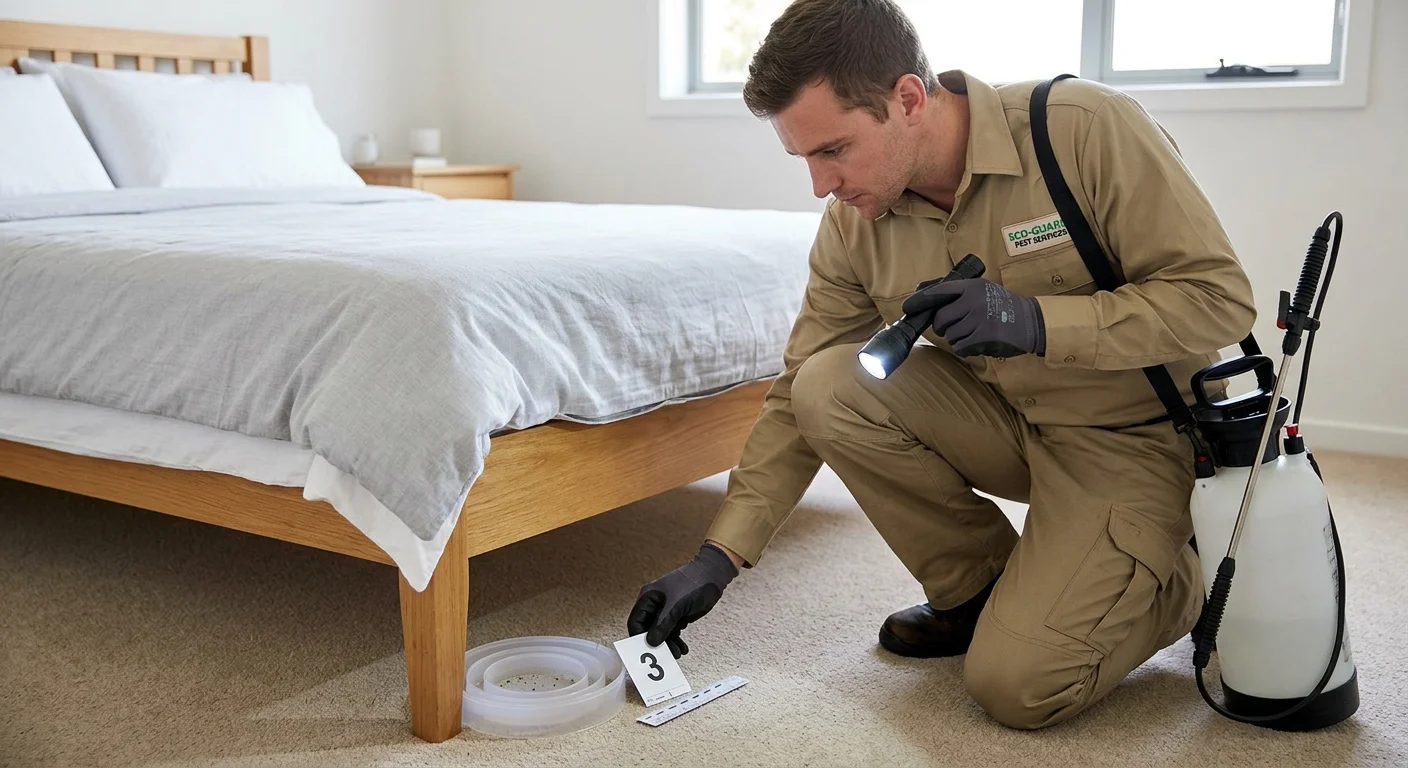
The devices people mean by bed bugs trap usually fall into a few groups. Pitfall interceptors sit under bed or sofa legs. Insects climb a rough outer wall, drop into a slick well, and stay there. Glue monitors catch anything that crawls across a sticky pad. Some monitors add a lure such as heat or carbon dioxide. Those lures try to pull insects toward the device. None of those designs search a closet, a nightstand drawer, or the seam of a headboard.
A catch can prove one thing. At least one bed bug was alive, on that travel path, after you set the trap. Photograph it in place before you empty the cup. Keep the date, the room, and which furniture leg it sat under. That record helps a licensed inspector later.
An empty trap cannot prove the opposite. Bed bugs do not have to cross a bed leg to feed. In a Pacific Beach studio, the mattress often sits against the wall. Bedding often pools on the floor. In a North Park bungalow, a fabric headboard and a cluttered nightstand give them a path that never touches the interceptor. In a Chula Vista apartment, insects can live in a shared wall void and never visit your bed on the nights you check the cup.
Traps also cannot confirm that an infestation is gone. A leftover population can sit still, then move again. Dust, pet hair, and grit from coastal windowsills fill wells and glue pads. A dirty interceptor stops working as a pitfall. A dusty glue board stops holding anything. Checking the device does not replace looking at the furniture.
Mattress encasements are a different tool. A well-fitted cover can isolate bugs already in a mattress. It does not monitor traffic on the floor. If you are weighing covers against cups, read what a mattress cover can and cannot stop. Do not treat either product as a stand-in for bed bug treatment by a licensed company.
Homemade cups of soapy water or tape on bed legs have the same limit. They only sample the path you chose. They do not map the unit. They do not tell you the sofa, the kids’ bunk, or the guest room is clear.
Why traps don’t replace a room inspection
A licensed inspection looks at harborage, not just a travel cup. The inspector works the seams, tufts, piping, and folds where bed bugs rest. That includes the mattress, box spring, bed frame, headboard, nightstands, baseboards, and nearby upholstered chairs. Outlets, picture frames, and curtain pleats get checked when the layout calls for it. A trap never opens those sites.
San Diego housing makes that difference concrete. Downtown and Mission Valley condos stack bedrooms over shared corridors. A monitor under your bed says nothing about the sofa in a studio that is also the living room. East County houses in El Cajon or Lakeside often have more furniture and more carpet edge. South Bay rentals in National City and San Ysidro may share walls, plumbing chases, and laundry rooms. A negative cup in one bedroom does not speak for the unit next door.
Coastal north county has its own pattern. Carlsbad and Encinitas guest rooms turn over with visitors. Luggage sits in closets that never touch a bed-leg interceptor. Inland bedrooms in Escondido run warmer at night with the A/C off. Indoor activity does not pause for a San Diego winter the way it might in a cold-weather city. Waiting for a quiet season does not clear a room.
Travel adds another miss. A suitcase from a Gaslamp hotel, a Convention Center stay, or a flight through San Diego International can drop insects in a closet or on a luggage rack. Those bugs may not walk to a bed leg for a long stretch. Waiting on a trap while they settle is how a small introduction spreads through a small apartment.
Visual signs still need a trained eye. Dark spotting along a sheet hem can look like dirt. A cast skin can look like lint. Live nymphs are small. If you want a structured list of what a pro actually checks, use our professional bed bug inspection checklist. Bring your trap photos to that visit. Do not skip the visit because the cup was empty.
The companies we match hold the appropriate California credentials for the work. Household pest work sits under Structural Pest Control Board Branch 2. You can confirm a company on the SPCB license search. Pest Pros San Diego does not inspect, trap, or treat. We connect you with licensed, insured local pros who do.
UC Statewide IPM is the public reference those companies work from on identification and integrated control. Start at UC IPM if you want the university notes, not a product page.
Which evidence to document besides a catch
A live insect in a well is only one exhibit. Inspectors also work from stains, skins, eggs in seams, and where you found them.
Photograph bed bug signs on sheets before you wash. Blood smears and fecal spots on fitted sheets, mattress piping, and pillowcases are location evidence. Wash after you have photos. Heat from a household dryer is a laundry step many families use on bedding. It is not a whole-home clearance, and it does not replace inspection of the frame and room.
Look, without tearing the room apart, at mattress seams, the box-spring facing, and the rear of a wood or fabric headboard. Cast skins look like empty, pale shells. Live insects cluster in tight cracks. Do not diagnose bites from skin marks alone. Many things leave welts. Skin findings without insects or spotting are not a confirmed infestation. If you have marks and no bugs, still document dates and rooms, then have a licensed inspector look at the furniture.
Keep a simple log. Room, date, what you saw, and whether anyone slept there. In a Hillcrest or City Heights rental with roommates, note who used which bed. In a Carlsbad guest room that sits empty most weeks, note that vacancy. Empty rooms change how useful a host-seeking trap is, because the pull of a sleeping person is missing.
If you are a tenant, California Civil Code rules from AB 551 apply to rentals. Landlords must give written bed bug information. A landlord shall not show, rent, or lease a vacant unit the landlord knows has a current bed bug infestation. After a pest control operator inspects, the landlord must notify tenants of those inspected units in writing within two business days of receiving the findings. The law also bars specified retaliatory acts for 180 days after a tenant gives notice of a suspected infestation. Report in writing. Keep copies. A trap photo can support that notice. It does not replace it.
Do not spray first and document later. Over-the-counter aerosols can drive insects deeper into baseboards and adjoining rooms. The EPA’s consumer pesticide safety page is the right place to read label rules. A licensed company chooses products. You should not apply a professional product yourself.
Military and student moves deserve the same paper trail. Oceanside and Midway-area apartments turn over with PCS orders. SDSU-adjacent rentals turn over every August. A cup under one bed frame does not cover a stack of totes in the hallway.
When a licensed bed bug inspection should come first
Call for an inspection before you build a retail trap grid if you already have a live insect, a cluster of stains, or bugs in more than one room. Waiting on monitors while the population spreads through a two-bedroom in Ocean Beach wastes time. The same is true in a Mira Mesa townhouse with kids’ bunks, or a La Jolla guest suite that turns over every weekend.
Inspection should also come first in multi-unit buildings. Hillcrest, Downtown, Chula Vista, and campus-adjacent rentals share walls. A monitor in your bedroom cannot speak for a neighbor’s sofa. Property managers need a licensed report, not a cup count, before they plan unit-by-unit work. For the treatment path after that inspection, see how to get rid of bed bugs in San Diego.
Come in after travel if you found insects in a suitcase or hotel. Do not wait two quiet weeks on a glue board to decide. Have the luggage, closet, and sleep area checked.
Pregnancy, infants, and pets change prep, not the need for a real inspection. Do not self-treat with foggers. Do not hunt for a product that “100% kills” bed bugs. No consumer trap, spray, or cover carries that proof on this site, and we will not invent one. Talk with your own doctor about health questions. The matched company inspects first, then quotes in writing, then treats under its own license and label. Ask that company how occupants should leave the room, what comes out of the home, and how follow-up monitoring will work. Their written plan governs. Ours does not.
Traps can still sit under legs after a licensed job, as monitors the company placed or approved. That is a follow-up tool. It is not how you decide you are done. Clearance is the inspector’s finding on later visits, plus the absence of new evidence in the sites they named. An empty interceptor is one data point. It is never the whole file.
San Diego’s mild indoor climate does not give you a winter reset. Bedrooms stay warm enough year-round for indoor activity. A plan to wait and see if the trap stays empty until January is a poor fit here.
When to call us
If a trap caught a bed bug, or you have stains and skins and still no clear picture, stop guessing from the cup. A licensed inspection should map the rooms before anyone treats. Call us at (858) 400-6561 and we’ll match you with a licensed local pro.