
You bought a zippered cover because you want the bed locked down before bugs move to the kids’ room. A bed bugs mattress encasement can enclose a mattress if the zipper and fabric stay intact. It does not stop bed bugs already in a nightstand, baseboard, sofa, or suitcase from last week’s trip through SAN.
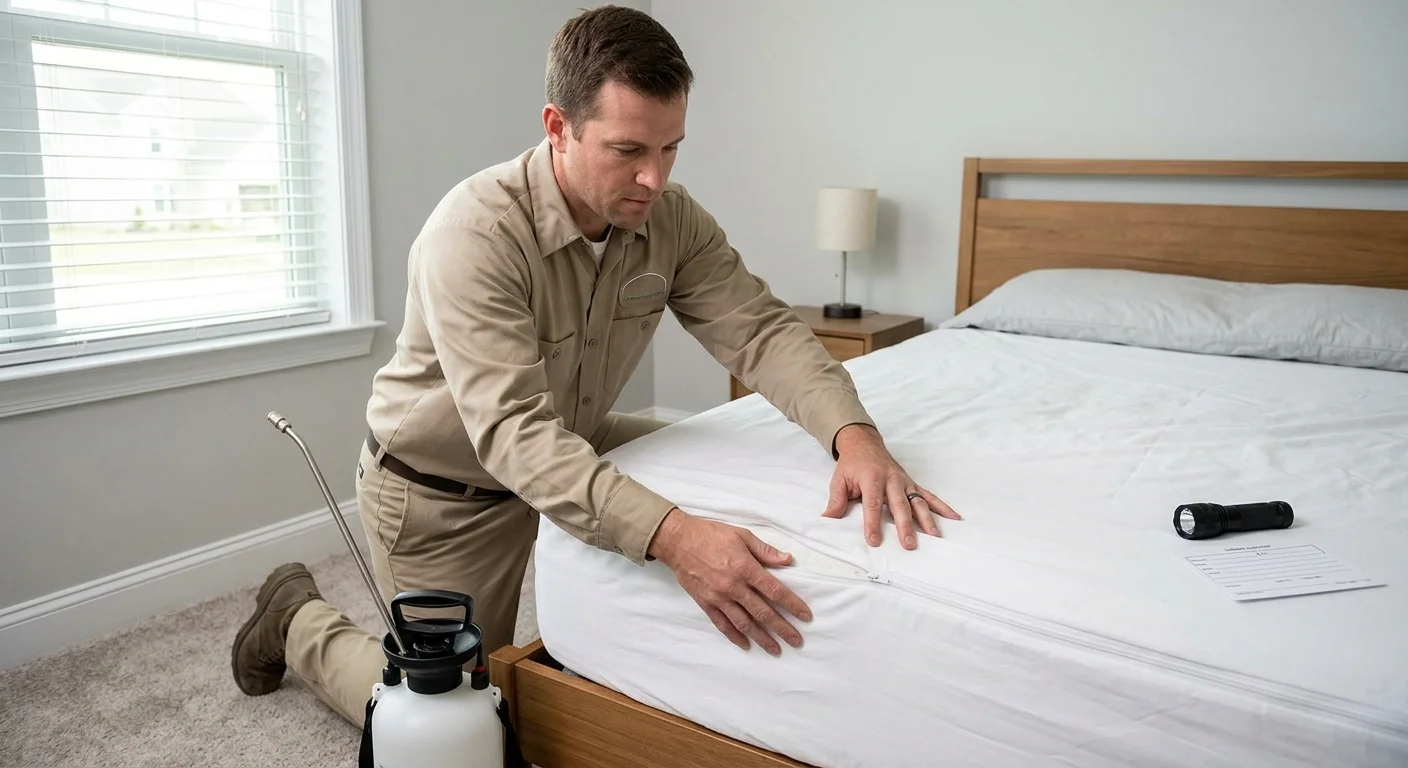
What an encasement can and can’t contain
A true encasement is a six-sided bag with a zipper. It wraps the top, bottom, and sides. A fitted mattress protector is different. That product sits on top like a deep sheet and leaves the underside open. Bed bugs use that open edge. If the search you typed was “bed bugs bed covers,” start by checking which product you actually have.
When the zipper closes fully and the fabric has no tears, an encasement can do two useful jobs. It can keep bugs already inside the mattress from walking out onto the sheets through the old seam. It can also keep bugs in the room from crawling into the inner layers of that mattress. That is containment of one object. It is not control of a unit in Pacific Beach, a condo in Mission Valley, or a house in El Cajon.
Here is what it cannot do. It cannot clear the headboard, the bed frame, the outlet plate, the baseboard, or the recliner in the living room. It cannot stop a bite from a bug sitting on the outside of the cover after you make the bed. It cannot replace bed bug treatment by a licensed company. It cannot tell you whether the live insect you saw was even a bed bug.
People ask if bed bugs can get through a mattress encasement. Through a hole, a popped stitch, or a zipper that does not seat, yes. Those are openings. Through intact fabric, product makers often claim a barrier. We do not have a verified pore size, bite-proof rating, or “kills inside the cover” timeline in our claims file, so we will not invent one. Treat every rip as a path. Treat an unzipped corner as a path.
Do bed bug proof mattress covers actually work? They work as a barrier for the mattress you sealed. They fail when the room is still infested. They also fail when only the mattress is covered and the box spring, pillows, and sofa sleeper stay open. San Diego indoor rooms stay comfortable year-round. Bed bugs do not need a summer swarm to keep moving from room to room in a North Park walk-up or a Chula Vista apartment stack.
If you already see bugs on the outer surface after you zip, that is “bed bugs in mattress cover” in the ordinary sense: they are using the new exterior the way they used the old tick. Washable sheets still need to come off for a real look at seams. A cover that stays on forever without an inspection just hides the original evidence.
How mattress and box spring covers differ
The mattress is the sleep surface. The box spring is the hidden frame under many older sets. In newer Mission Valley and downtown high-rises you will see platform beds with slats and no box spring. In El Cajon, Lakeside, and a lot of East County houses, the classic mattress-plus-box-spring set is still common. The cover you buy has to match the object you still have.
A mattress encasement has to fit depth, not just twin-full-queen-king. A pillow-top in a La Jolla guest room can be much thicker than a thin dorm mattress near SDSU. If the zipper strains, the seam is the first place to fail. Measure length, width, and depth before you order. Do not force a short cover over a deep bed and call it sealed.
A box spring cover exists because the foundation is a wood frame wrapped in thin fabric. That void is a harborage. Staples, corners, and the dust cloth on the underside give bed bugs places a quick glance never catches. If you encase only the mattress, you left the larger hollow piece open. For a traditional set, plan on both pieces or you have not contained the bed.
Sofa sleepers show up in Gaslamp-area condos and beach rentals that turn over every weekend. The fold mechanism and the thin mattress inside are their own problem. A standard bed encasement will not fit that insert. Do not stretch a queen cover over a sleeper mattress and expect the zipper to hold.
Pillows, padded headboards, and fabric storage benches next to the bed are not “the mattress.” Bugs move a few feet at a time. In a small City Heights bedroom, that is the nightstand, then the closet, then the hallway. Covering one sleep surface while the upholstered headboard stays untreated is a common miss.
Used beds and found furniture add another local path. People haul mattresses after a PCS move, a Craigslist pickup, or a curb find along El Cajon Boulevard. An encasement on a used piece does not certify that piece is clean. It only wraps whatever is already in it. If you are unsure, pause and get the object inspected before it enters a second bedroom.
Which evidence to document before covering the bed
Zip the cover after you have a record, not before. Once the mattress is inside a dark bag, the original specks, shed skins, and live insects are harder for a licensed inspector to see. That is the opposite of helpful in a multi-unit building, where the next question is which rooms are involved.
Photograph in place. Get the piping along the mattress edge, the corners, the tags, and the underside if you can tilt the bed safely. Include the box spring, the headboard, and the floor gap behind the frame. Take a wide shot of the whole bedroom so the layout is clear. Then take close shots. Put a coin or a ruler in one frame for scale. Do not scrape “proof” into a bag and throw the rest away.
Look at the sheets too. Blood-colored smears, dark spots along the fitted-sheet hem, and insects crushed in the fold are the kind of detail we walk through in bed bug signs on sheets. Sheets are not an encasement. They move in the wash. They also show recent activity on the sleep surface you are about to hide.
Write down the rest of the story in plain notes. Which bedroom. Which bed if there are bunks. When you first noticed it. Recent hotel stays, a cruise, a flight into SAN, or a visitor on the couch. In a vacation rental in Mission Beach or Pacific Beach, log which unit and which turn date. In a rented house, log when you told the owner or manager.
Do not diagnose skin marks from a photo. Plenty of things bite or itch in San Diego County. The insect and the harborage are what a pest inspection can confirm. The rash is a medical question for a clinician.
California rental rules matter if you lease the place. Under Civil Code section 1954.603, landlords must give written bed bug information to tenants. Under Civil Code section 1954.602(a), a landlord shall not show, rent, or lease a vacant dwelling unit that the landlord knows has a current bed bug infestation. After a pest control operator inspects, Civil Code section 1954.605 says the landlord shall notify tenants of the inspected units in writing within two business days of receiving those findings. Civil Code section 1942.5 also limits retaliatory action for 180 days after a tenant gives notice of a suspected infestation. Report in writing. Keep a copy. Cooperation among landlords, tenants, and the licensed company is what the statute expects.
If you already installed the encasement, leave it on unless the matched company tells you to remove it. Tell them it is there. A zipped mattress with no photos is still better than a torn cover on the garage floor.
When a licensed bed bug inspection should come first
Put the cover on after someone who does this work has looked, or as part of the plan that person writes. Buy-and-zip first is the wrong order when you have live insects, more than one room, a shared laundry room, or neighbors who are already complaining.
A licensed inspection should come first when the home is a multi-unit building in downtown, North Park, National City, or Chula Vista. Bed bugs do not respect one lease. The company you are matched with needs to see adjoining walls, hall furniture, and the path from the bed to the luggage. Our professional bed bug inspection checklist is the walk-through to have in hand before anyone starts moving furniture.
It should also come first after travel and after a used-bed purchase. Hotel and short-term rental turnover along the coast is a regular introduction path. So is a couch that sat in a storage unit. An encasement on one mattress will not clear a duffel that is still in the closet.
Store-bought sprays and “kill the mattress” shortcuts belong off the table unless a label you can read actually covers that use. We will not give pesticide mix, rate, or DIY application steps. The EPA’s consumer pesticide safety page is the right place for label rules. Recommending a homeowner apply a professional product is not something this brand does. UC IPM is the university starting point for identification and IPM thinking. Use those pages as education. Use a licensed company for the job.
What kills bed bugs on a mattress is the treatment plan, not the zipper. Licensed companies may use heat, labeled insecticides, or a mix after they inspect. Heat treatment pricing in national guides is a separate topic. Chemical work is often more than one visit. The matched company inspects first and quotes in writing before any treatment begins. That quote, and any re-treatment terms, belong to that company, not to Pest Pros San Diego.
In California, household pest work of this type falls under Structural Pest Control Board Branch 2. Fumigation with poisonous gases is Branch 1 and is a different license. This brand matches you with licensed, insured local companies. It does not hold an SPCB license, employ technicians, or apply product. You can confirm a company’s license through the California Structural Pest Control Board license search.
If you already know you need a full plan, start with how to get rid of bed bugs in San Diego and then get the unit looked at. An encasement can stay in the plan as a barrier after the inspection. It should not be the plan.
When to call us
Call when you have insects on a bed, when a cover did not stop activity in the rest of the room, or when a rental unit needs a licensed inspection on the record. Call us at (858) 400-6561 and we’ll match you with a licensed local pro.