
A pile of wings on a Clairemont windowsill, or grit under a Chula Vista door jamb, often gets called termites on sight. A lot of the time it’s a flying ant, a carpenter ant, or a wood-boring beetle. San Diego County has several insects that share the same size, color, and wood-adjacent habits, so the mix-up is easy.
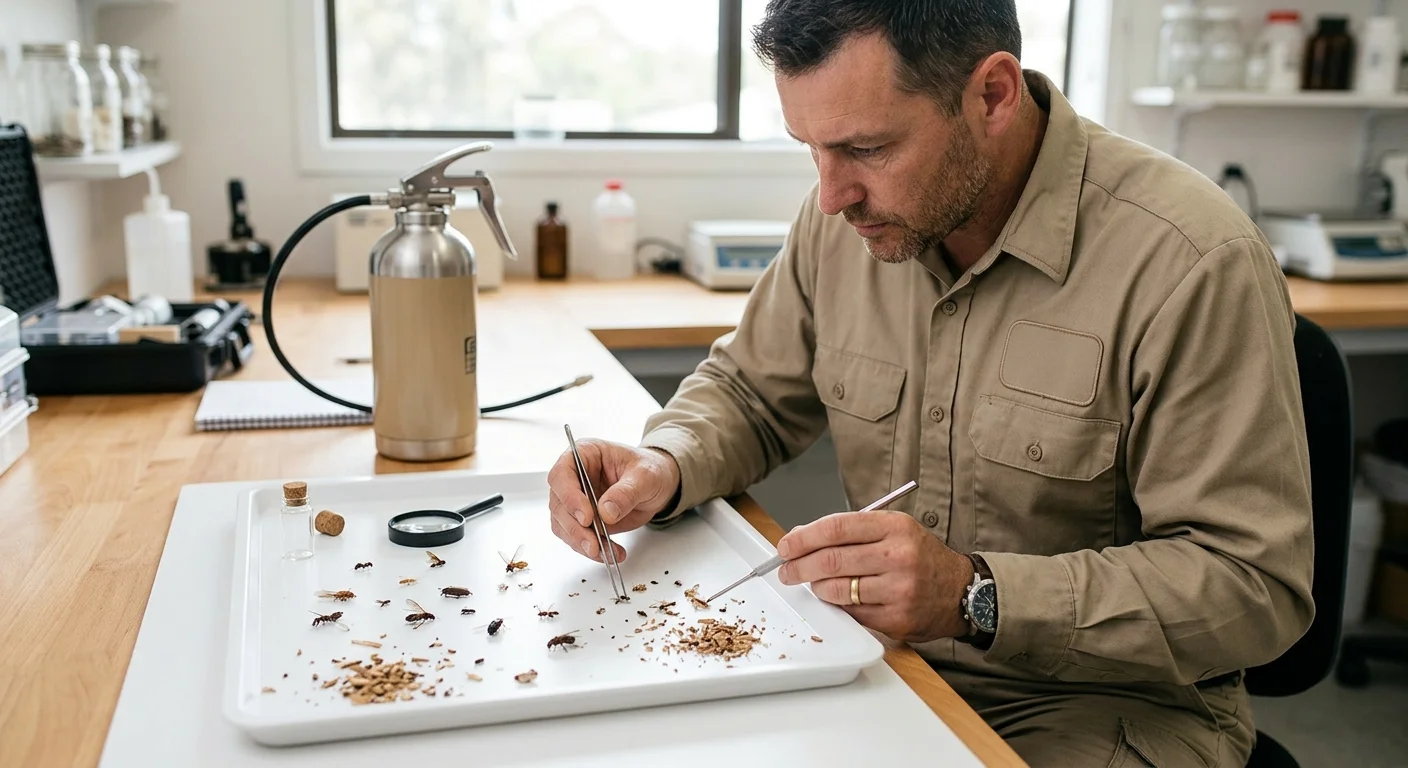
Which insects get mistaken for termites in San Diego
The bugs that look like termites here are not one species. They’re a stack of lookalikes that show up in different parts of the county for different reasons.
Flying ants are the most common mix-up. UC IPM calls Argentine ants the most common ant in and around California houses and gardens. Workers are about 1/8 inch and dull brown, with one node between the thorax and abdomen. When reproductives take wing, they land on sills and patio lights the same way termite swarmers do. That is the termites vs ants moment most people mean when they search bugs that look like flying termites.
Carpenter ants are the next trap. They are larger, darker, and they chew galleries in wood. They do not eat the wood the way termites do. They push out coarse shavings as they nest. On a damp fascia in Encinitas, or in a wet window frame in La Mesa, those shavings look a lot like termite debris until you look closer. Our carpenter ant damage or termite signs page walks through that split in more detail.
Wood-boring beetles add a third pile of dust. Tiny round exit holes and fine bore dust under a hardwood trim piece in a South Bay bungalow get called termite droppings all the time. Beetle dust is usually paler and more powdery. It does not have the six-sided shape that drywood termite pellets do.
Actual termites in this county are mostly two groups. UC IPM names the western drywood termite, Incisitermes minor, as California’s second most important termite pest, common along the Pacific coast into the deserts of Southern California. Coastal attics, older wood windows, and unshaded eaves from Oceanside down through Imperial Beach are typical drywood settings. Subterranean termites in the genus Reticulitermes occur across nearly all of the state, from coastal dunes to higher inland elevations. They nest in soil, need moisture, and build shelter tubes to wood. Inland slabs in El Cajon, Escondido, and Santee, plus irrigated planters tight to stucco, fit that pattern better than a dry Encinitas rafter.
UC IPM also notes Heterotermes aureus in southeastern California, and the Formosan termite, Coptotermes formosanus, currently restricted to a small area near San Diego. Do not treat every swarm as Formosan. That species is not county-wide.
German cockroaches get dragged into this search too. They are not wood pests. UC IPM describes them as about half an inch, light brown, with two dark stripes on the pronotum, and they live in kitchens and bathrooms. A cockroach on a baseboard is a sanitation and harborage problem. It is not a termite swarmer.
What wings, bodies, and debris can actually show
Start with the insect, not the panic. What termites look like in San Diego depends on caste and species, but swarmers still share a few checks you can do with a phone camera and a still bug.
Wings. Termite swarmers have two pairs of equal length, longer than the body. Flying ants have larger front wings and smaller hind wings. If the four wings look like one even pair, you’re closer to a termite. If the back pair is clearly shorter, you’re closer to an ant.
Body. Termites have a broad, even waist. Ants have a pinched waist, an hourglass. That one feature settles more kitchen-table arguments than color does. Color varies. Drywood and subterranean swarmers can look pale tan to dark. Ants around San Diego homes are often brown or black. Color alone is a weak test.
Antennae. Termite antennae are straight and bead-like. Ant antennae bend, like an elbow. You need a close shot. A blurry photo from across the room will not settle it, and a photo never proves an infestation in the wood.
Then look at what they left behind. UC IPM calls drywood fecal pellets diagnostic: six hexagonal sides, expelled from kickout holes less than 2 mm across. Those pellets collect in small cones on a windowsill, in a door track, or on a garage shelf under a beam. Subterranean termites do not make those pellets. They leave shelter tubes of soil and chewed wood on foundations, stem walls, and slab edges. Carpenter ants leave coarser, shredded wood that looks more like pencil shavings than grit. Beetles leave powder and round holes.
Shed wings on a sill are a clue, not a verdict. Termite swarmers drop wings after the flight. Ants can drop wings too. A neat stack of equal-length wings next to hexagonal pellets is a stronger drywood story than one wing on the porch after a warm evening. If the debris is mixed with mud tubes at the slab in East County, the story leans subterranean. Our signs of termites in San Diego guide covers tubes, pellets, and damaged wood as a set, which is how a Branch 3 inspector reads a house.
Do not spray to “test” it. UC IPM says do-it-yourself treatments are not recommended for drywood termites. For subterranean termites, it states that all effective products are for professional use only. Household cleaners also will not identify the insect. They can scatter the evidence a licensed inspector needs.
Why one bug on a windowsill doesn’t confirm an infestation
One winged insect is a data point. It is not a map of your framing.
Termite swarmers are reproductives leaving a mature colony to start a new one. UC IPM notes that western drywood swarmers are visible during summer and fall daytime hours. That daytime timing is one way they differ from some other fliers. Subterranean termites in California can forage year-round. Activity is lowest from November to February and highest in summer. A June swarm after rain on a Mission Valley patio is a different setting than a September cluster at an attic vent in Point Loma.
Those fliers also travel. Lights pull them. A neighbor’s fence, a eucalyptus stump, a woodpile, or a patio cover can throw swarmers onto your glass. An insect on the inside of a closed window is more concerning than one on the screen. Even then, you still need pellets, tubes, hollow wood, or a confirmed ID. Drywood colonies typically contain fewer than 1,000 individuals, per UC IPM. Subterranean colonies can field hundreds of thousands of foragers. Neither number is something you can count from a sill.
A single bug also does not tell you which treatment class would apply later. Drywood termites live in the wood. Subterranean termites nest in soil and need moisture contact. Carpenter ants nest in wood they do not eat. Beetles are a furniture and trim problem more often than a foundation problem. Guessing the species from one body, then buying a consumer spray, is how people treat the wrong pest and leave the real one in place.
Save the insect in a clear bag, or take several sharp photos of the body, waist, wings, and antennae. Note where you found it: interior sill, attic hatch, garage stem wall, or outdoor light. Note the debris next to it. That packet is what a licensed inspector can use. It is not a diagnosis by itself.
What a licensed termite inspection should document
Identification of bugs that look like termites is a field job. In California, wood-destroying work sits with companies registered for Structural Pest Control Board Branch 3. Branch 3 covers wood-destroying pests by insecticides or structural repairs, not fumigation. Only Branch 1 licensees may fumigate. We do not hold those licenses. We match you with licensed, insured local companies that do.
A Wood Destroying Pests and Organisms Inspection Report, SPCB form 43M-41, is what most lenders want before they finance a California home. A registered Branch 3 company issues it. The report, as the board describes it, records the presence or absence of evidence of wood-destroying pests and organisms in visible and accessible areas, plus recommendations to correct infestations that are found. Hidden galleries inside finished walls, under slabs, or behind storage the inspector cannot move are outside that visible-and-accessible scope. The report should say so.
Ask the company you’re matched with to write down species evidence, not a vibe. Drywood: hexagonal pellets, kickout holes, damaged sound wood away from soil. Subterranean: shelter tubes, soil contact, moisture. Carpenter ant: coarse shavings, galleries, often a moisture leak. Beetle: round holes and powder. The inspector should also note conditions that invite the wrong reading, like irrigation against a Chula Vista slab or a wood-to-soil contact at an older Kensington porch.
You can confirm the company is in good standing through the California Structural Pest Control Board license search. Property records of WDO activity in the last two years are searchable on the board’s WDO system. A second opinion is allowed. The matched company inspects first and quotes in writing before any treatment begins. Treatment itself, if needed, is a separate decision after the report, not a spray on swarmers.
If you want that visit set up, start with a termite inspection through our network. Bring the photos, the bagged insect if you have one, and a note of where the debris showed up.
When to call us
Call when winged insects, equal-length wings, hexagonal pellets, or mud tubes show up and you cannot tell termites from ants or beetles. A licensed Branch 3 company is the one who should inspect the wood, not a consumer spray. Call us at (858) 400-6561 and we’ll match you with a licensed local pro.