
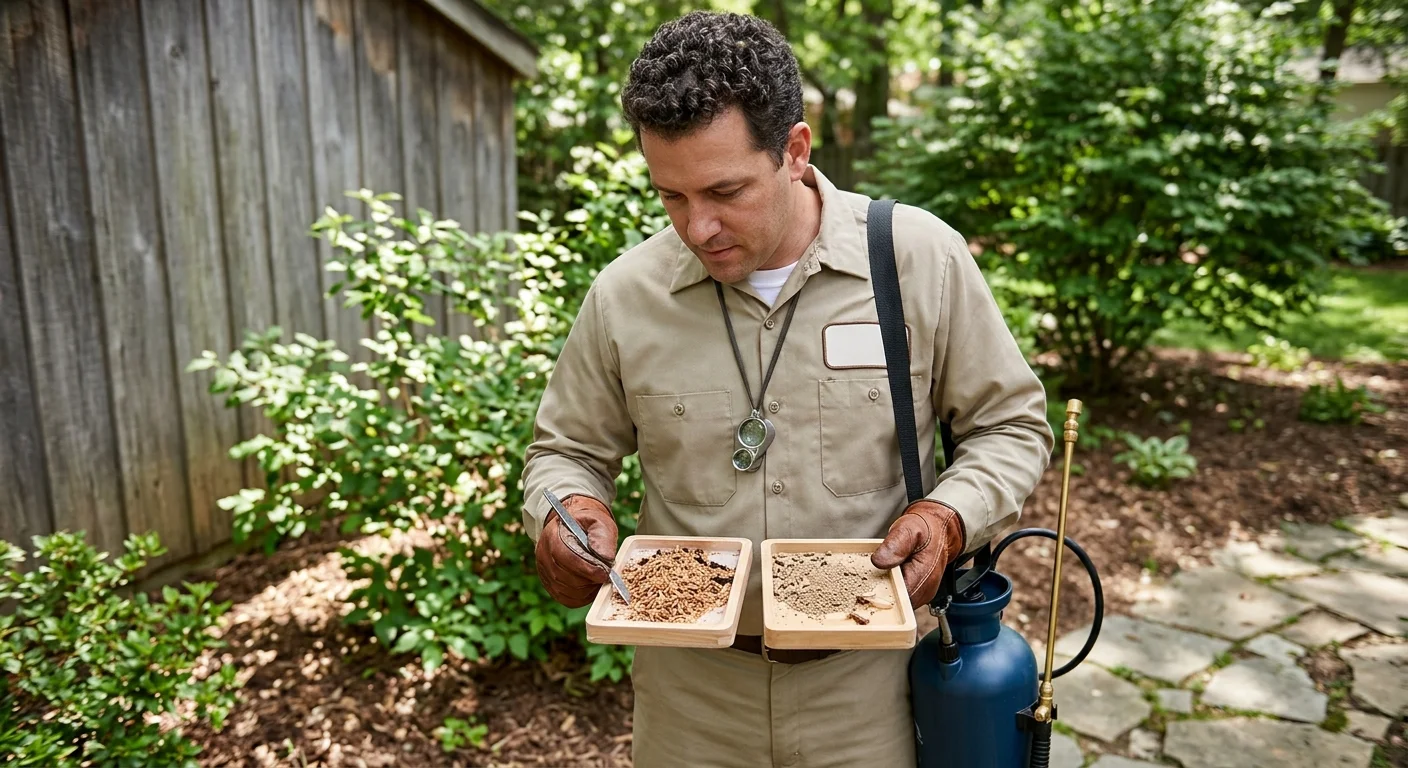
For carpenter ants vs termites, start with the material below the wood. Six-sided pellets support a drywood termite identification, while shelter tubes point toward subterranean termites. Rough debris or damaged wood alone doesn’t confirm carpenter ants or rule out termites.
How wood damage and debris differ
A pile beneath a window frame can look like ordinary sawdust. That appearance isn’t enough to name the pest. Save a small sample and note exactly where it fell before cleaning the area.
UC IPM’s drywood termite guidance identifies six-sided fecal pellets as diagnostic evidence. Drywood termites push those pellets through kickout holes measuring less than 2 millimeters across. A fresh pile may therefore sit below a small opening in trim, framing, or another wood component.
That combination matters more than color alone. Paint dust, construction debris, and deteriorated wood can also collect below damaged areas. A close inspection of the individual pieces is more useful than calling every pile “termite droppings” or “carpenter ant sawdust.”
Subterranean termite evidence looks different. These termites require soil contact for moisture and build shelter tubes between soil and wood. They don’t produce the distinctive hexagonal pellets associated with drywood termites. A tube near a foundation, crawl-space support, or other soil connection deserves inspection without being scraped away first.
Carpenter ant debris looks different again. UC IPM describes carpenter ant sawdust as fibrous, not the six-sided pellets drywood termites leave. Carpenter ants don’t consume wood like termites. They excavate it to nest, and the galleries often begin where water damage or wood decay is already present. Indoor nests are typically satellites of a larger parent nest outside, in a live or dead tree, a woodpile, or landscaping materials. If debris lacks confirmed termite markers, the correct answer is still “not identified,” not automatically “carpenter ants.”
This distinction matters across San Diego County. Western drywood termites occur along California’s Pacific coastal region and into Southern California’s deserts. Common subterranean termites occur across nearly all regions of the state. Homes near the coast and properties farther inland can therefore require more than a quick debris comparison.
For a closer look at confirmed termite material, see our guide to termite droppings or sawdust.
Which insect evidence supports each identification
An insect sample can strengthen an identification, but context still matters. Record whether the insect came from the damaged wood, a nearby windowsill, an outdoor wall, or another location. A loose insect elsewhere in the building might not have caused the damage you found.
Flying insects create another common mix-up. Drywood termite swarmers are visible during summer and fall daytime hours, according to UC IPM. That timing supports an identification, but it doesn’t settle one by itself. Our flying ants and termite swarmers comparison explains how a licensed company evaluates the insects rather than relying only on the wings left behind.
Collect a whole specimen when possible. Shed wings without the body provide less evidence. Photos can preserve where the insect appeared, yet a photograph can’t confirm hidden activity or the condition of structural wood. It also can’t show how far an infestation extends.
When people search for signs of carpenter ants in a house, they often have several separate clues: an insect, loose debris, and damaged wood. Those clues should be kept connected to their original locations. Combining material from different rooms can make the evidence harder to interpret.
Termite evidence can also represent more than one termite type. Drywood termites live differently from subterranean termites, which nest in soil and use shelter tubes. The drywood and subterranean termite guide explains why that distinction affects the inspection.
A Formosan termite population is restricted to a small area near San Diego. That fact shouldn’t be stretched into a countywide identification. Species and treatment conclusions belong to the licensed company examining the property.
If the evidence ultimately supports ants rather than termites, our San Diego carpenter ant guide explains the next professional conversation. Pest Pros San Diego can also connect you with a company offering ant control.
Why visible damage doesn’t define the treatment
Termite damage vs carpenter ant damage isn’t only an identification question. The licensed company must determine the pest, affected locations, and accessible evidence before recommending work. A photograph of opened wood can’t establish those points.
Drywood termite treatment may be localized or whole-structure. UC IPM lists localized liquids, dusts, foams, microwave devices, electrocution, and wood replacement among the available approaches. It doesn’t recommend do-it-yourself drywood termite treatments.
Whole-structure fumigation has an advantage when infestations may exist in accessible and inaccessible areas. Localized treatment is less reliable when the infestation’s full extent can’t be determined. That doesn’t mean every drywood termite finding requires fumigation. It means the visible opening can’t define the treatment area by itself.
Subterranean termite work follows a different path because these termites nest in soil and maintain connections between soil and wood. Professional approaches can include soil-applied products, bait systems, and correction of moisture or wood-to-soil conditions. UC IPM states that all effective products for subterranean termites are for professional use.
California’s licensing structure also separates these services. Branch 1 covers fumigation with poisonous or lethal gases. Branch 3 covers wood-destroying pests through insecticides, structural repairs, and corrections, excluding that type of fumigation. General ant work falls under the appropriate credentials for household pest control.
Pest Pros San Diego doesn’t select or perform a treatment. We match customers with licensed local pest control companies. The matched company inspects first and explains its recommendation in writing before treatment begins.
Ask how the proposed work connects to the documented evidence. A clear recommendation should identify the target pest and affected area. It should also distinguish confirmed findings from inaccessible areas or conditions that couldn’t be evaluated.
What a licensed inspector should document
A useful inspection record starts with location. It should identify the room, building side, wood component, and nearby soil connection where each clue appeared. Photos should show both the close detail and its wider setting.
The inspector should describe what was actually observed. That may include six-sided pellets, a kickout hole, shelter tubes, insects, shed wings, or visible wood changes. Moisture can be recorded when observed, but it shouldn’t become an unsupported species identification.
For suspected termites, ask whether the company performing the inspection is properly registered for Branch 3 work. A Wood Destroying Pests and Organisms report can be issued by a properly registered Branch 3 company. It records evidence found in visible and accessible areas, along with recommendations for correcting an infestation.
That scope has limits. A WDO report covers visible and accessible areas, not every concealed space inside a building. Most lending institutions require one before financing a California home loan, but the lender determines its own timing requirements. Don’t rely on an assumed expiration period.
You can check whether a WDO inspection was filed for a California property during the prior two years through the Structural Pest Control Board’s public system. You can also verify a company or individual license through the board’s license-search page. Cancelled licenses and registrations don’t appear in those search results, so the board should be contacted when that history matters.
Before authorizing work, request a written identification and recommendation. It should explain why the evidence supports termites, ants, another pest, or no confirmed active infestation. Ask the company to separate observed pest evidence from any opinion about wood condition or repair needs.
Our termite inspection service connects San Diego County property owners with licensed local companies. The matched company determines the inspection scope and any treatment recommendation after evaluating the property.
When to call us
Call when you find recurring debris, shelter tubes, swarmers, or unexplained wood damage. A licensed local company can examine the evidence and determine whether it supports termites, carpenter ants, another cause, or no confirmed pest.
Call us at (858) 400-6561 and we’ll match you with a licensed local pro.