
The jar on the hardware shelf looks like the whole answer when a cockroach runs a City Heights counter at 11 p.m. People search cockroach and boric acid, buy a white powder, and wait for the kitchen to go quiet. A registered product is an insecticide with a label. That label is the job description, and it is also the list of things the powder can’t do.
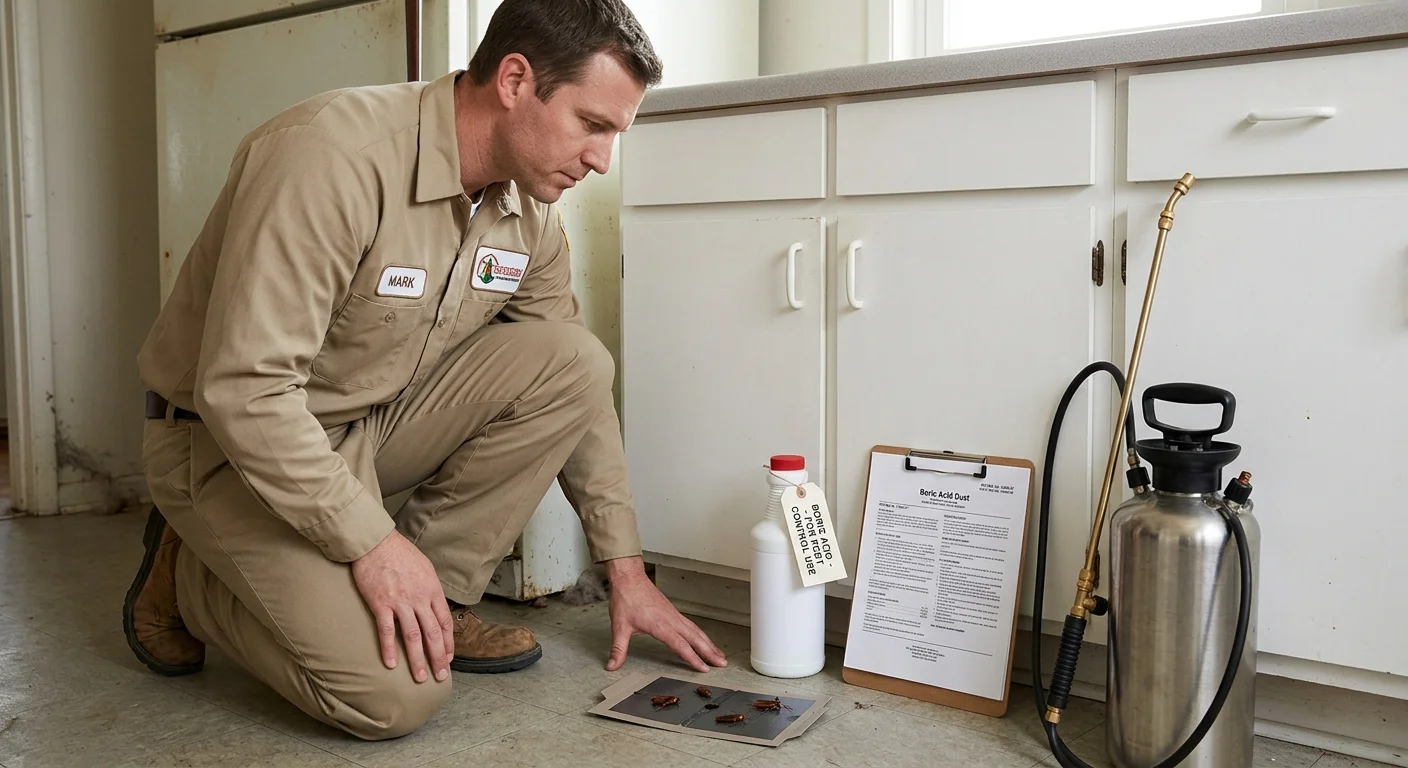
What registered boric acid products are labeled to do
UC IPM names boric acid as the most common active ingredient used against cockroaches in insecticidal dusts. That is a fact about product class. It is not a wipe-out claim for a San Diego kitchen.
A registered insecticide for roaches carries an EPA registration number, a directions-for-use section, and precautionary statements. Those three pieces decide what the product is allowed to do in a home. Two jars can both say boric acid and still carry different directions. The only directions that apply are the ones on the container you bought. Read them, then follow them. The EPA’s consumer pesticide-safety page is the place to start with that label.
UC IPM Pest Notes: Cockroaches (Publication 7467) sets the rest of the frame. Pesticides alone will not solve cockroach problems. The note’s plan is sanitation, exclusion, monitoring, and chemical control as a supplement. Gel baits in that same note are very effective when placed in or near locations where cockroaches harbor or forage. Dusts that use boric acid live in that chemical-control step. They don’t replace cleaning. They don’t replace sealing. They don’t replace a sticky-trap count.
Timing is slow, and it is easy to misread. UC IPM says it may take 7 days or longer before you see fewer cockroaches. That verified line is about bait results in the pest note. It is the closest timeline on file for this page. It is not a stopwatch for every boric acid product on a shelf. Labels disagree with each other. A reminder to pick the powder up on day five does not come from UC IPM, and it does not come from this brand.
How a given product acts on the insect belongs on that product’s label. This page will stay with what UC IPM actually published: boric acid shows up in insecticidal dusts used against cockroaches, and visible bait results can take 7 days or longer. A nervous-system story, a dehydration story, or a single kill-time for every jar would be invented. Those claims are not on the ledger, so they stay off this page.
The useful list is what a registered boric acid product still can’t do. It can’t name the species in the wall void. It can’t reach every harbor in a 1960s Clairemont cabinet run or a stacked National City kitchen. It can’t stand in for a dry, cleaned, sealed food area. It can’t be treated as automatically safe around children or pets. Precautionary statements exist because exposure is real. If the powder, paste, or crystal you bought has no insecticidal label, you don’t have a cockroach insecticide.
Why cockroach species and hiding places still decide the plan
The German cockroach is the most common indoor species in California, especially in multi-unit housing, according to UC IPM. Adults are about 0.5 inches long and light brown, with two dark stripes on the pronotum, the shield behind the head. Females carry a light beige egg case about 1/4 inch long until near hatch.
UC IPM puts them in warm (70° to 75°F), humid rooms close to food, water, and dark harborage. Food-prep areas, kitchens, and bathrooms. That maps onto a lot of San Diego County housing: stacked apartments in City Heights, Logan Heights, National City, and Chula Vista, plus older inland units in El Cajon where the AC runs and the kitchen never fully dries. A coastal Encinitas bungalow with a marine-layer morning and a slow dishwasher leak is a different building. The same white powder does not read those differences.
Reproduction is why a single product pass fails as roach infestation control. UC IPM: about 30 young per egg case, with the case incubating about 30 days, and a female may produce a new case every few weeks. German cockroaches have the fastest reproductive cycle of the common pest cockroaches. One female and her offspring can produce over 30,000 individuals in a year. Egg-to-adult timing varies by species, from a few months to more than a year. UC IPM does not give a German-specific egg-to-adult figure, so this page will not invent one.
American, Oriental, and brown-banded cockroaches use different rooms and different schedules. If you have not identified the insect, you are shopping for a chemical. Start with the cockroach types found in San Diego before you decide a powder is the plan.
Hiding places decide whether any insecticide for roaches even meets the insect. German cockroaches live in the warm, humid band around food prep. A product that never reaches that band does not participate. This page will not map cracks, voids, or dust films for you to treat. Placement is a labeled-use question for a registered product, or a written plan from a licensed company. Sticky traps tell you if the population is moving. The calendar does not.
Health concerns in the UC IPM note are food contamination and indoor allergens. The note does not publish a disease-transmission rate. A cockroach control visit from a matched, licensed company starts with species and harborage, then a written plan. The powder on the shelf cannot do that first step.
How labels differ from homemade kitchen mixes
A hardware-store boric acid with an insecticidal label, a pharmacy powder, and a laundry booster are not interchangeable. Only a product labeled as a pesticide has directions for cockroaches. Mixing an unlabeled powder with sugar, flour, or condensed milk is not a labeled use. This page will not give ratios, bait balls, or placement maps.
The other kitchen-aisle experiments already have their own pages on this site. Baking soda and sugar for roaches is not a registered insecticide plan. Diatomaceous earth has its own label limits. If you are comparing consumer products, read whether roach killer works in San Diego homes against the actual label, not against a social post.
A common follow-up is which smell cockroaches hate the most. No primary source on file names that smell. UC IPM Pest Notes 7467 does not carry it. Scent is not a control method you can hang a kitchen on.
Homemade food-scented mixes also put a palatable powder where a toddler or a dog is most likely to find it. Don’t assume a borate powder is gentle because it looks like sugar. The label’s precautionary statements are the safety document. If there is no pesticide label, there are no approved household-insect directions.
Keep food areas honest while you figure out the next step. Wipe grease, store food in sealed containers, fix the leak under the South Bay sink, and empty pet bowls at night. Those are sanitation moves from the UC IPM plan. They are not a homemade insecticide. Off-label kitchen chemistry does not become a labeled use because a video said it was cheap.
When a licensed cockroach inspection should come first
A licensed inspection should come first when you are seeing cockroaches in a kitchen or bathroom, especially German cockroaches in multi-unit housing. UC IPM flags food contamination and indoor allergens. Pesticides alone will not solve the problem, so a consumer dust sitting in a cabinet is a thin plan for a building that shares walls, plumbing, and trash rooms.
Household cockroach work in California is Branch 2 structural pest control: the practice relating to the control of household pests, excluding fumigation with poisonous or lethal gases. Only a registered company with the right license performs that work. You can confirm a company on the California Structural Pest Control Board license search. Pest Pros San Diego holds no SPCB license and applies no pesticides. We match you with licensed, insured local pest pros who hold the appropriate California credentials for the service.
Inspection should come first when nymphs show up with the adults, when neighbors in the same building have activity, when the problem sits in food-prep areas, or when a consumer product is already down and trap counts are not dropping after the period UC IPM describes. If you can’t tell a German cockroach from another species, that is an inspection question too.
What gets rid of roaches on a lasting basis, on the UC IPM record, is the combined plan: sanitation, exclusion, monitoring, and labeled chemical control as a supplement. Nothing on file supports a permanent, one-product wipeout. Follow-up timing belongs to the matched company after it inspects. This brand does not set a calendar, a re-treatment promise, or a fee schedule. The company you’re matched with inspects first and quotes in writing before any treatment begins.
When to call us
If the kitchen is still active after a consumer product, or you already know it is a German cockroach problem in a San Diego County home or apartment, stop guessing at powders. A licensed company can identify the species, check harborage, and write a plan that fits that building. Call us at (858) 400-6561 and we’ll match you with a licensed local pro.