
The line on a Spring Valley kitchen counter is almost never the nest. Those are workers, and they redraw the trail because the colony is still feeding from wet slope soil, a valve box, or a slab gap. Wipe it and it comes back by evening. That recurring trail is when ant control needs a licensed inspection, not another store spray.
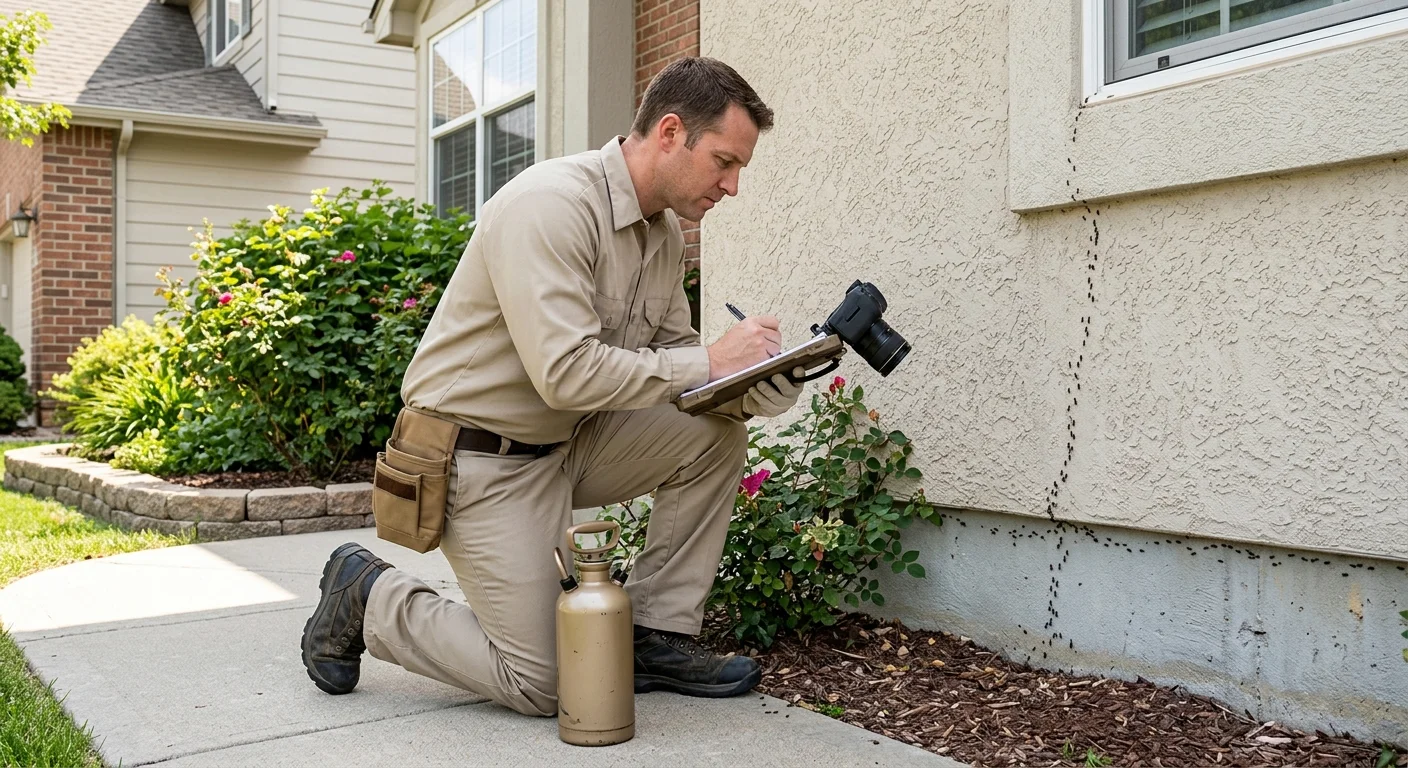
How to document the trail before calling
Write down the path before you pick up the phone. A matched company works from a map, not a clean counter.
Note where the line starts and where it ends. Kitchen to window. Garage to the water heater. Patio slider down into ice plant on the grade. Photograph it in daylight and again after dark. Argentine ants forage day and night in San Diego County. UC IPM calls them the most common ant in and around California houses and gardens.
Record the time, the room, and the food or water they hit. Pet kibble, a sticky rim, a dripping hose bib. Leave one trail intact if you can do it safely. The inspector needs the path.
Walk outside in the same hour. Follow the line to the base of the wall, a gap in the slab, a hose, or an irrigation valve box. On canyon lots off Sweetwater Road, Bancroft Drive, and the Campo Road corridor, trails often leave the slab and drop into planted banks. Those banks stay wet after a watering cycle even when the rooms feel dry.
Write which side of the house faces downhill. On Dictionary Hill and the Sweetwater-facing slopes, the wet side is usually the planted bank, not the street elevation. Photograph valve boxes, mulch piled against stucco, and any wood touching soil. Note citrus, succulents, and thick groundcover. Those plantings are common here, and they hide shallow nests. UC IPM describes Argentine ant nests as shallow, often just under the soil, under pots and rocks, and in pavement cracks.
Do not mix a spray to show you tried. Killing the visible line is how the trail reappears in a new room. Our page on why spraying Argentine ants makes it worse explains that countywide pattern. Your job before the call is notes and photos.
If you rent, send the photos to the manager. Do not wait for the line to fade. Worker traffic is a feeding map. It is not proof the nest is gone.
Which Spring Valley property conditions need inspection
Spring Valley is unincorporated East County. There is no city pest desk. Land use sits with the County of San Diego. Housing here mixes postwar ranch homes, hillside split-levels, and lots that fall toward Sweetwater Reservoir and the canyon fingers off Campo Road and Jamacha Boulevard.
That grade changes the ant job. Slope irrigation runs longer than a flat lot in La Mesa. Overspray soaks stucco and the slab edge. Valve leaks sit in boxes under ice plant. UC IPM says moist areas are particularly attractive nesting sites for Argentine ants.
Many ranch houses sit on slabs with a short, planted terrace in back. The terrace is irrigated. The front parkway may be dry. Trails follow the wet side. If you only treat the kitchen that faces the street, you missed the source. Raised planters against the house, decorative rock, and timber walls along a grade show up on Dictionary Hill and on streets facing Mount Helix and Casa de Oro. Trails use that cover. So do gaps at garage weatherstripping, AC condensate lines, and utility holes on the downhill wall.
Older slab homes along SR-94 often have cracks in the slab. The trail on the kitchen tile may enter there, not at the window you keep wiping. Hillside houses with stepped retaining walls have more soil-to-structure contact than a pad on the El Cajon valley floor. The inland heat is shared. The canyon lot is not. Our El Cajon pest control notes help with East County climate. They do not replace a walk of a Spring Valley slope.
Pet bowls on the patio, side-yard trash, and bird feeders over irrigated lawn pull foragers. Honeydew on citrus and shrubs does too. Argentine ants tend aphids and scale. UC IPM notes they protect those insects, so plant damage and ant trails often arrive together.
If trails return after every watering day, the inspection has to include the irrigation clock. Ask the licensed company to walk the slope, the valve boxes, and the downhill foundation. Indoor-only work on a canyon lot leaves the colony in the bank.
Mobile home parks and older courts in the community have skirting gaps and shared irrigation. Say that when you call so the match fits the property, not a generic ranch house. Ants in Spring Valley homes are a site problem. The lot shape, the water, and the plant contact are part of the job.
Why worker activity doesn’t identify the colony
The ants on the counter are foragers. They are not the nest. Argentine ant colonies in California are not single mounds. UC IPM describes them as linked into one large supercolony with multiple queens. Workers from more than one nest can share a trail.
That is why wiping or spraying the visible line fails. You removed scouts. Queens and brood stayed in soil, a wall void, or under a pot on the grade. New workers redraw the trail, sometimes overnight, sometimes in another room.
Size helps a little. Argentine workers are about 1/8 inch, dull brown, with one node between thorax and abdomen, according to UC IPM. That ID is still not a nest map. Southern fire ants also live in San Diego County. They are native. Their workers vary in size, with an amber head and thorax and a darker abdomen. A thin kitchen line of small brown ants is usually Argentine here. A mound in open, sunny yard soil is a different problem. Do not hire one kitchen spray for both.
Worker counts also fail as a severity score. A thin line can feed a large, linked nest system. A heavy line can be one food source next to a satellite nest. Only an inspection that follows the trail outdoors, then looks for nest sites, starts to locate the colony.
Spraying foragers can scatter them. For fire ant mounds, UC IPM warns that spraying a nest may cause the colony to disperse. For Argentine ants, a broadcast spray on the trail often pushes activity to a new entry. That is the cycle homeowners describe after a weekend treatment.
Baiting uses a different idea. Slow-acting bait lets foragers carry material back to the nest. UC IPM recommends liquid borate baits in refillable stations for severe Argentine ant infestations. It also notes that sweet liquid baits attract them year-round. Which product, and whether bait is even the right tool, belongs to the licensed company after they identify the species. Do not mix or place professional products yourself.
Countywide species notes live in our San Diego ant control guide. Use that to learn the pest. Use a site visit to find this lot’s nests.
What to compare in a licensed company’s scope
If you searched for an ant exterminator in Spring Valley, start with scope, not a promise to clear the counter. Ant work here is general household pest control in California. That falls under Structural Pest Control Board Branch 2. Pest Pros San Diego does not hold an SPCB license and does not treat homes. We match you with licensed, insured companies that do.
Ask each company for written findings. The scope should name the species they believe they have, where they looked, and whether the plan covers interior trails, exterior nest sites, and soil along irrigation. A kitchen-only spray on a Bancroft Drive slope is a thin scope. If two companies propose different methods, ask each one to explain how the plan reaches linked nests, not just the trail you photographed. Then compare those answers against what you documented on the slope.
Compare follow-up in their contract. Re-treatment terms belong to the company you hire, not to this referral service. Ask what happens if trails return when watering resumes. Ask whether they will inspect plant contact, the base of the wall, and valve boxes, or only the rooms you named.
Verify the license on the California Structural Pest Control Board lookup. Confirm the company is current. General pest work is Branch 2. A standard ant trail is not a fumigation job. Only Branch 1 licensees may fumigate, and that method is for other structural pests.
There is no verified per-job price guide for ant treatment in our claims file. Skip a flat number quoted before anyone walks the lot. Cost depends on access, irrigation, housing type, and how far the nest system runs. The matched company inspects first and quotes in writing before any treatment begins.
Ask how they will handle kids, pets, and food areas. Follow the label and the company’s written prep list. The EPA consumer pesticide safety page is the federal primer. UC IPM ant pages are the California management source.
For the longer view after the first service, read how to keep ants out permanently in San Diego. Moisture, exclusion, and baiting strategy sit with the licensed company. Your part is documenting the trail and comparing scopes that fit a Spring Valley lot.
When to call us
Call when the same trail returns after wiping, after watering, or after a store spray. That is nest work for a licensed pest control company, not another kitchen product. Call us at (858) 400-6561 and we’ll match you with a licensed local pro.