
A hardware-store bag can name cockroaches on a registered pesticide label. That line is a use claim for that container, not a diagnosis of a San Diego kitchen. It doesn’t identify the species under a National City sink. It doesn’t prove a Chula Vista fourplex is under control.
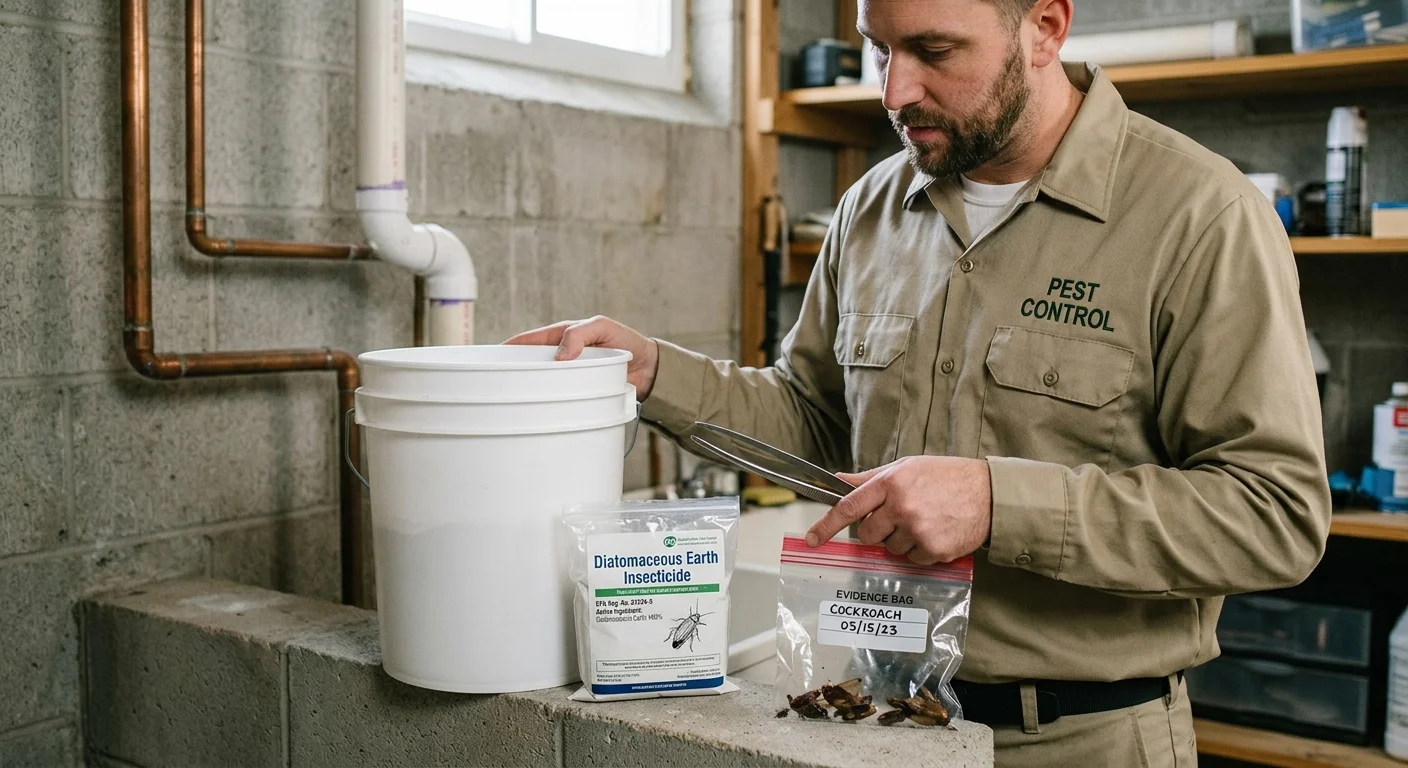
What the registered label can establish
The only document that can tell you whether a given diatomaceous earth product is labeled for roaches is the label on that product. Not a blog, and not a store shelf talker.
Some diatomaceous earth products are sold as pesticides. Some are sold for other uses. This page can’t confirm which bags in San Diego County aisles carry a cockroach site. That list changes by registration and by brand. If cockroaches aren’t named on the label in your hand, that product isn’t a confirmed cockroach treatment.
EPA pesticide safety guidance tells you to read and follow the label. Rates, mix directions, placement, dusting steps, inhalation precautions, and cleanup all differ by product, and the container in your hand is the only correct source for them.
A registered label can name pests and use sites if they’re printed there. It can print precautionary statements. It can’t identify the insect in your home. It can’t map a City Heights dishwasher void. It can’t clear a kitchen after a weekend of product use.
Food-grade language is a common reason people pick a bag off the shelf. We couldn’t confirm that a food-grade mark authorizes pest use. We also couldn’t confirm that any diatomaceous earth product is safe around children or pets. Check the label. If it’s silent, don’t guess.
Licensed companies in California work from labels too. General household pest work, including cockroaches, is Branch 2 work under the Structural Pest Control Board. The companies we match hold the appropriate California credentials for the service type. Pest Pros San Diego doesn’t apply pesticides and doesn’t sell a house brand of dust. Confirm a company’s license on the SPCB license search. From San Ysidro to Oceanside, read the registered label on the actual container. Treat every pest name as a limit, not a finish line.
Why cockroach species and hiding places still matter
San Diego County isn’t one kitchen. German cockroaches in a National City apartment stack aren’t the same job as a large roach near a South Bay floor drain. Coastal Imperial Beach units hold humidity that inland El Cajon houses don’t. Mira Mesa kitchens still have dishwashers and bath traps. Those pockets matter more than the climate zone on a map.
UC Statewide IPM describes the German cockroach as the most common indoor species in California, especially in multi-unit housing. That matches housing from City Heights and Logan Heights through Chula Vista. UC IPM calls it the most persistent and troublesome cockroach species. It may pose health concerns from food contamination and indoor allergens. UC IPM doesn’t give a local disease-transmission rate, and we won’t invent one.
German cockroaches are about half an inch long and light brown, with two dark stripes on the pronotum. UC IPM puts them in warm conditions around 70° to 75°F, near food, water, and dark harborage, usually kitchens and bathrooms.
Egg-case incubation is about 30 days, per UC IPM Pest Notes 7467, with about 30 young per case. UC IPM says German cockroaches have the fastest reproductive cycle of the common pest cockroaches. One female and her offspring can produce over 30,000 individuals in a year. That’s why treating one cabinet doesn’t touch an infestation in a stacked building.
Other species hide in different places. A garage drain roach isn’t living like a German cockroach in a stove void. Compare what you’re seeing in our cockroach types in San Diego guide. A label that says “cockroaches” doesn’t name the type or the harborage.
German cockroaches use cracks around food prep, not open floor. In a Logan Heights fourplex, harborages can sit in shared walls. In a detached Encinitas house, they still want the dishwasher kickplate and the bath vanity. Product use that never reaches those sites can’t answer the infestation question.
What product use can’t confirm about an infestation
Using diatomaceous earth for roaches can’t confirm the species. It can’t confirm the source. It can’t confirm that egg cases are gone. It can’t confirm that a neighboring unit isn’t feeding the kitchen where you already used a consumer product.
UC IPM is blunt: pesticides alone will not solve cockroach problems. Sanitation, exclusion, and monitoring come first. Chemical control is a supplement. Gel baits, in UC IPM’s wording, are very effective when placed in or near harborage and forage sites. That finding isn’t a request to apply a trade product. Boric acid is the most common active ingredient UC IPM names in insecticidal dusts against cockroaches. Diatomaceous earth is a different material, so a boric acid finding says nothing about how a diatomaceous earth product will perform.
UC IPM says it may take 7 days or longer before you see fewer cockroaches on a bait program. A quiet morning after a pantry product doesn’t mean the population collapsed. Egg cases still incubate for about a month.
Product use also can’t confirm building-scale problems. In Chula Vista and National City multi-unit housing, German cockroaches move along plumbing and shared walls. In a City Heights courtyard building, one unit’s crumbs can feed insects that rest in another stove. A bag on one shelf doesn’t inspect the laundry room or the unit above.
It can’t confirm that sanitation is done. Food residue in a toaster, a pet bowl left overnight, or a refrigerator drip pan will keep German cockroaches in range. UC IPM puts sanitation first for a reason. A product can’t certify that those sources are gone.
If you haven’t identified the insect, the pest name on a diatomaceous earth label isn’t an ID. People confuse nymphs with other insects, and large outdoor cockroaches with German cockroaches. Our piece on whether roach killer works in San Diego covers the same gap for sprays and baits.
Monitoring confirms activity. A quiet breakfast counter does not. Product use isn’t evidence of control.
When a licensed cockroach inspection should come first
Start with an inspection when the insect is already living with you. Sightings in a kitchen, activity in more than one room, or a multi-unit building that keeps returning cockroaches are reasons to stop guessing with a bag. So is a harborage you can’t find.
The company you’re matched with inspects first. That visit names species, harborage, and moisture, then sets a written plan before treatment starts. Pest Pros San Diego doesn’t send technicians and doesn’t apply products. We match you with licensed local pest control companies. For cockroaches, that’s Branch 2 structural pest control work. Confirm the license on the SPCB search.
A licensed inspection is the right first step in stacked housing from Barrio Logan through San Ysidro. One kitchen is rarely the whole story there. It’s the same in older South Bay and central-city buildings with long plumbing runs. A dry inland house in Escondido or Poway still needs that look if German cockroaches have settled the kitchen and bath. Climate doesn’t cancel indoor habitat. An Encinitas kitchen can stay damp from marine air. An El Cajon kitchen can run dry outside and still stay wet around the dishwasher. The inspection has to see that room, not a generic county map.
If you’ve already used a consumer product and activity continues, say so. Don’t assume the next bag will close the gap. UC IPM’s finding that pesticides alone will not solve cockroach problems still applies. The matched company names sanitation and exclusion after it sees the site.
Cockroach control through our network starts with that inspection, not with a product we stock. For the county-wide picture, read our San Diego cockroach control guide. Bring photos of the insect if you have them, plus the label of anything already used.
Don’t wait for a diatomaceous earth experiment to finish. The label has no finish line for a home infestation. An inspection names the species and the harborage. A consumer product can’t.
When to call us
Call when cockroaches are in the kitchen or bath, when a multi-unit building keeps returning activity, or when a labeled consumer product hasn’t answered the infestation. We don’t treat, spray, or dust. Call us at (858) 400-6561 and we’ll match you with a licensed local pro.