
If you found a fast, flattened insect on a kitchen floor or under a sink, identification comes before any treatment. UC IPM lists five cockroach species commonly regarded as pests in California. This page is the visual split for three you are most likely trying to name: German, American, and Oriental. Where they hide, and what that means for inspection, is on cockroach types in San Diego.
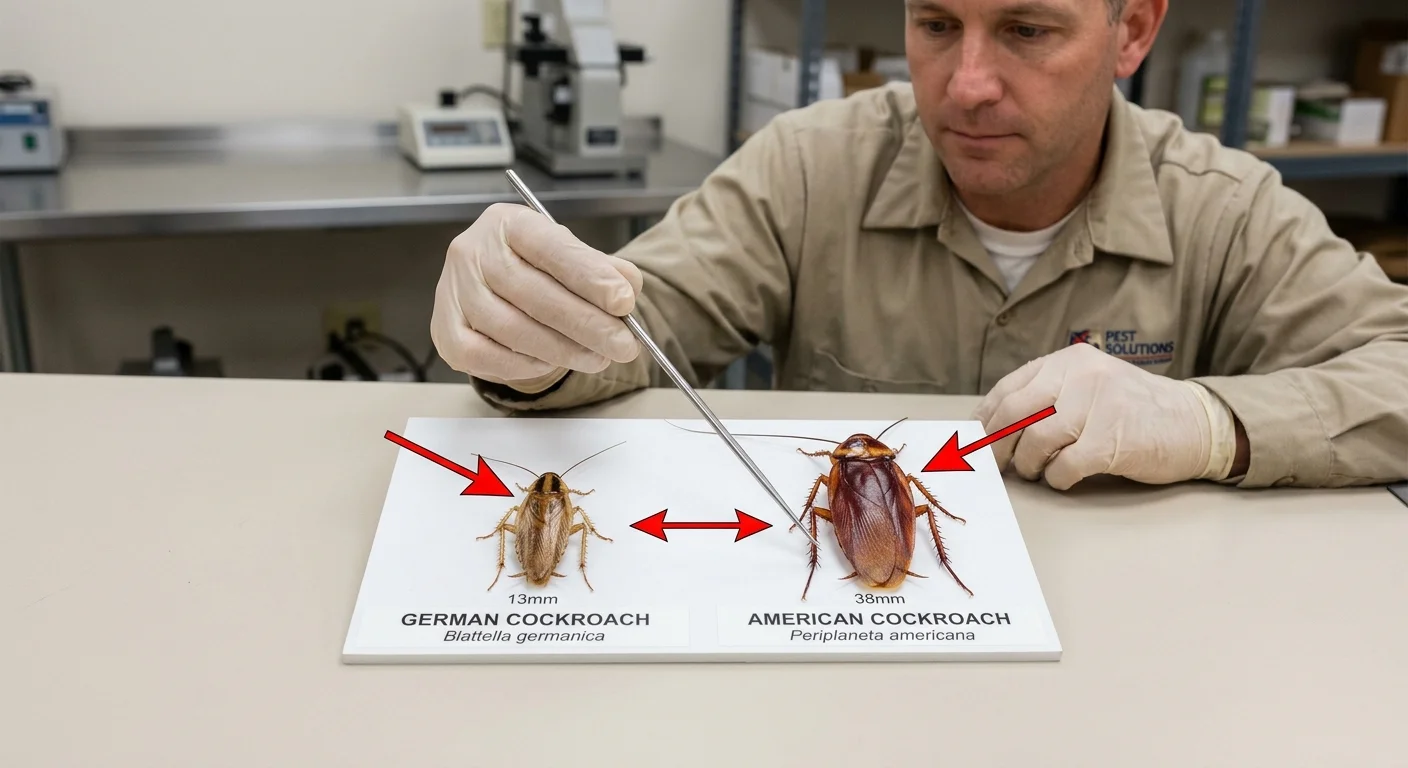
One visual table
UC IPM: cockroaches are broad, flattened insects with long antennae and a shield-shaped pronotum behind the head. They range from less than 1/2 inch to almost 2 inches. Most are nocturnal. Nymphs resemble adults and feed the same way, but they do not have fully developed wings and are not reproductively active. Right after a molt they can look white until the covering hardens, usually within hours.
| Species | Adult (UC IPM Table 1 / 2) | Egg case | Notes that help a photo |
|---|---|---|---|
| German (Blattella germanica) | 0.5 inch; light brown; two dark stripes on the pronotum | Light beige, about 1/4 inch. The female carries it for most of the incubation, then drops it about 1 to 2 days before hatch. | UC calls this the most common indoor species in California, especially in multi-unit housing, kitchens, and bathrooms. |
| American (Periplaneta americana) | 2 inches; reddish brown; large body; light-colored pronotum edges | About 3/8 inch. Brown when laid, turning black in 1 to 2 days. Carried about 6 days, then cemented to a protected surface. | Outdoor invader that can enter from sewers, drains, and similar moist sites. |
| Oriental (Blatta orientalis) | 1.25 inches; almost black. Male wings shorter than the body. Female wings not fully formed. | Dark red-brown, about 3/8 inch, deposited in debris or food in sheltered places. | Prefers cooler sites. UC says this species does not fly and cannot climb smooth vertical surfaces, so it may be trapped in porcelain sinks or tubs. |
UC also names brownbanded, Turkestan, smokybrown, and field cockroaches as California pests. Do not force a German ID if the marks do not match. Habitat overlap and those extra species belong on the types article, not in a second table here.
Nymphs and what is not an ID
Nymphs look like smaller, wingless or short-winged versions of the adult. They are often the stage you see most. A single adult does not tell you how many nymphs are in harborage. UC notes that German adults can hide in a crack 1/16 inch wide, and immatures stay in even smaller cracks.
Droppings and smears can look like dark spots. UC uses accumulations of fecal matter, cast skins, egg cases, and live or dead cockroaches as monitoring clues, not as a species key. If you only have specks, photograph them next to a ruler and keep the specimen if you can.
After you have a name
Identification is for choosing the next inspection path. It is not eradication. UC’s management is sanitation, exclusion, monitoring, and, when needed, baits placed where cockroaches harbor. Indoor sprays are not the visual-guide job. A licensed company can confirm the species from a specimen or a clear photo and write a plan. Verify the license with the California Structural Pest Control Board.
Control steps sit on cockroach control in San Diego. Matching for a visit is cockroach control service.
Frequently asked questions
Are there cockroaches in San Diego?
Yes. UC IPM lists German, brownbanded, Oriental, American, and Turkestan cockroaches as common California pests. German, American, and Oriental are the three this visual table covers. A photo or a captured specimen is useful before anyone treats.
What are the types of cockroaches in San Diego?
Use the table above for adult size, color, and egg cases. For where each species hides, go to cockroach types in San Diego.
What is the difference between a German and an American cockroach?
Size and the pronotum. UC: German adults are 0.5 inch and light brown with two dark stripes. American adults are 2 inches, reddish brown, with light-colored pronotum edges. Habitat is a separate question and lives on the types page.
Is a water bug the same as a cockroach in San Diego?
People often use “water bug” for large, dark, damp-area cockroaches. That nickname is not a species. Match the insect to the table, or have a licensed inspector do it.
When to call us
If you have adults, nymphs, or egg cases, get a licensed inspection rather than treating from a photo on this page. Call (858) 400-6561 to get matched with a licensed local company. The matched company identifies the species and quotes any work.