
A tick and a bed bug look similar to a panicked homeowner at 2 a.m., but they’re not close once you actually compare a specimen. Ticks are round, slow, and often still attached to skin when found. Bed bugs are flat, fast when disturbed, and do not stay latched the way a tick does. San Diego has ticks outdoors, and bed bugs indoors. The response to each one is different. A bite mark alone cannot tell you which insect it was.
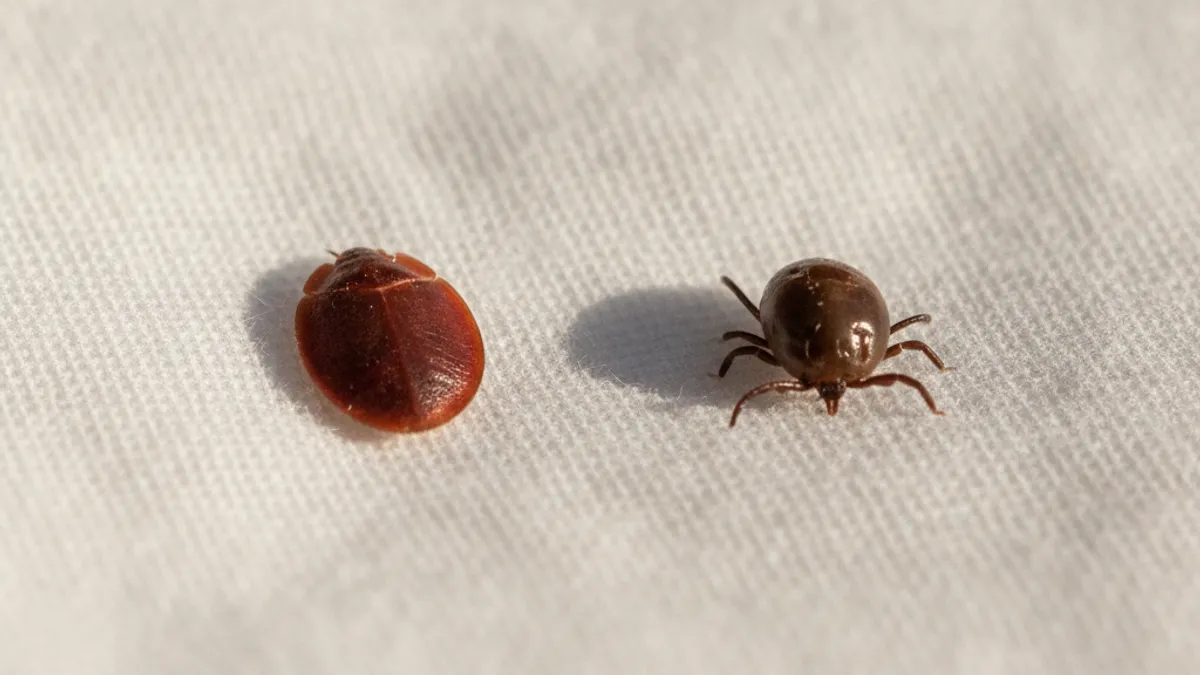
Start with the insect, not the bite
If you still have the animal, that is the evidence. Photograph it in place if you can do so safely, then keep the specimen. The EPA says bites on the skin are a poor indicator of a bed bug infestation, because they can look like other insect bites, rashes, or hives, and some people do not react at all. UC IPM is stricter: raised welts or other dermal symptoms should never be used for diagnosis. Confirm bed bugs only by finding the insects or their signs, such as fecal spots, blood spots, egg cases, and shed skins.
- If the animal is still attached to skin, treat it as a tick until a clinician or the County Vector Control Program says otherwise, then remove it using the CDC steps below.
- Count legs on a clear photo if you can. Ticks have eight legs and rounded, teardrop-shaped bodies.
- Bed bugs have six legs and flat, reddish-brown bodies.
- A tick swells and darkens while feeding, often for hours.
- A bed bug feeds and leaves. You will almost never photograph one still attached.
Why people mix these up
Both bites can leave a red, itchy welt. Both animals are reddish-brown and small enough to overlook until they’ve already fed. And both tend to get noticed the same way, someone wakes up with a mark they can’t explain and starts searching for what caused it. That’s usually where the confusion starts, since the insect itself is often long gone by the time a mark shows up. Without a specimen or bedroom signs, the mark is not an ID.
What a tick actually looks like
A tick has eight legs (it’s an arachnid, not an insect) and a rounded, teardrop-shaped body that swells and darkens as it feeds. Unfed, a tick is flat and small. San Diego County notes that tick nymphs may be about the size of a poppy seed. Fed, a tick balloons and can turn gray or blue-gray. The strongest field tell is attachment: a feeding tick stays on the skin. County copy also says ticks feed from a couple of minutes to days, depending on the tick and the host, so attachment time is not a species ID by itself.
Ticks pick up on people from outdoor exposure, hiking trails, tall grass, brushing against chaparral, or from a pet that’s been outside. The County lists the western blacklegged tick (Ixodes pacificus) and the Pacific Coast tick (Dermacentor occidentalis) among common local types, and says it can help identify a tick you found. It does not list the brown dog tick on that page. A separate identification fact, from University of Florida IFAS, is that the brown dog tick (Rhipicephalus sanguineus) can complete its entire life cycle indoors as well as outdoors, especially where dogs are present. That is a species trait, not a County claim that brown dog ticks are San Diego’s most common indoor tick.
What a bed bug actually looks like
A bed bug has six legs, a flat, oval body about the size of an apple seed, and a reddish-brown color that darkens after it feeds. UC IPM describes a feeding event as taking between 3 and 10 minutes, after which the insect leaves. You will almost never find a bed bug still attached to you the way you would a tick.
People sometimes describe bed bug marks in a line. That pattern is not diagnostic. EPA and UC IPM both treat skin reaction as a poor or invalid ID tool. Use mattress seams, box springs, headboards, and baseboard cracks, plus the insect or its signs.
| Trait | Tick | Bed bug |
|---|---|---|
| Legs | 8 (arachnid) | 6 (insect) |
| Body shape | Round, teardrop, swells when fed | Flat, oval, apple-seed shaped |
| Feeding | Often still attached; County notes minutes to days | Minutes, then leaves (UC IPM) |
| Where found on body | Often still attached at the bite | Rarely found on the body |
| Bite pattern | Not a reliable ID | Not a reliable ID |
| Where it lives | Outdoors; some species can establish indoors with dogs | Mattress seams, headboards, baseboard cracks |
| How you got it | Hiking, yard exposure, an infested dog | Travel, secondhand furniture, apartment spread |
Why the response is completely different
If it’s a tick, CDC says remove it as soon as possible. Do not wait for a clinic visit just to pull it off. Grasp the tick as close to the skin as possible with clean, fine-tipped tweezers and pull away with steady, even pressure. Don’t twist or jerk. Don’t use petroleum jelly, heat, nail polish, or other substances to make it detach. Clean the bite area and your hands afterward. San Diego County’s tick page matches that tweezer method and says if you develop a rash or fever within several days to weeks after removing a tick, see your doctor. CDC uses the same medical boundary: rash or fever within several days to weeks, and tell the clinician when and where the bite likely happened. County copy also notes that tick-borne diseases such as Lyme disease, tularemia, and spotted fevers are rare in San Diego County, which does not mean you skip the doctor if symptoms appear.
If it’s a bed bug, the concern is the infestation evidence, not the itch. Finding one confirmed bed bug is a reason to inspect thoroughly for more insects and signs. It is not proof, by itself, that a large infestation is already established. EPA notes that low-level infestations are challenging to find. UC IPM says confirmation requires the pests or their signs. Treat one sighting as a search, not as a population count. Our guide on what bed bugs actually look like covers that inspection in detail.
When to call a professional
A single tick picked up on a hike is a CDC-style removal and a watch for rash or fever, not a pest-control visit by itself. Recurring ticks indoors, especially around a dog, can mean a species that can live inside, such as the brown dog tick described by UF IFAS. That is a job for a licensed look through our flea and tick treatment service, plus veterinary care for the pet.
Bed bugs are identified by insects or signs, then treated by a licensed company. If your inspection turns up the flat, apple-seed shaped insects or their shed skins in seams and cracks, our bed bug treatment page explains how referral matching works. Pest Pros San Diego does not apply heat or pesticides.
Frequently asked questions
Can a tick bite look exactly like a bed bug bite?
Yes, the mark can look similar, and some people have no mark at all. EPA and UC IPM both say not to diagnose from bites. A specimen still attached points to a tick. Multiple marks without an insect prove nothing.
If I find one bed bug, do I have an infestation?
Not as a rule you can state as always. One confirmed insect is a strong reason to inspect seams, cracks, and furniture for more bugs, shed skins, and fecal spots, because low-level populations hide well. It can also be an early introduction. Inspect and, if you want a licensed look, call. Do not skip the search because you only saw one.
Do ticks live inside San Diego homes the way bed bugs do?
Usually outdoor exposure is the County story: trails, grass, and brush. Western blacklegged ticks and Pacific Coast ticks are the common types the County names. Brown dog ticks are a different species that UF IFAS says can complete a life cycle indoors where dogs are present. That is the exception to “ticks stay outside,” not a claim that every indoor tick in San Diego is that species.
What’s the fastest way to tell them apart if I only have a photo?
Count the legs if you can. Eight legs and a rounded, non-flat body is a tick. Six legs and a flat, oval shape is a bed bug. If the animal is still attached to skin in the photo, that’s a strong tick indicator. If you only have a photo of a welt, you do not have an ID.
When the answer turns out to be bed bugs, Pest Pros San Diego matches the job to a licensed local company.
Not sure which one you’re dealing with? Call (858) 400-6561 and describe what you found or photographed. The call routes to matching with a licensed pest control company that can tell you whether a visit is warranted.