
Finding a flat reddish-brown insect in bedding, or dark spots along a mattress seam, is the reason to look closely. Bites on skin are a poor identifier. EPA states that bed bug bites can look like bites from other insects, rashes, or hives, and that some people do not react at all. This guide covers adults, nymphs, eggs, and the stains and shed skins that belong at the bed. Treatment, if any, is a later decision after identification. See bed bug treatment only after you have something an inspector can check.
Bed bugs vs. other common household bugs
Bed bugs hide well, and several household insects get mistaken for them. Telling them apart matters, because the treatments are not interchangeable. Carpet beetles and bat bugs are the two look-alikes people raise most. Fleas and small cockroaches come up as well.
UC IPM: adult carpet beetles are small, about 1/8 to 1/10 inch long, with round bodies and short antennae. Their color runs from black to a mix of white, brown, and yellow. Next to a bed bug’s flattened oval at about 1/5 inch, they read as shorter and rounder. The larvae are slightly longer than the adults and look like fuzzy or hairy maggots. Carpet beetles feed on wool, leather, silk, and similar animal products, not on blood, so they turn up in closets, rugs, and stored fabric rather than clustered at a mattress seam. Our carpet beetle guide covers them in detail.
Bat bugs look close enough to bed bugs that identification usually needs a hand lens. UC IPM’s field mark is the fringe of hairs on the pronotum, the shield-shaped plate behind the head. Those hairs are longer than the eye diameter on a bat bug and shorter on a bed bug. Bat bugs feed on bats first, and they bite people when that host leaves a roost. Finding them points at bats in the attic or a nearby structure, so the source is a different problem. Our bat bugs vs bed bugs page walks through both.
Fleas are much smaller and often jump, which bed bugs do not. Fleas are also dark reddish-brown, but they have a laterally flattened body designed to move through fur. Ticks, another biting pest, have eight legs (adults) and a more oval, flattened body when unfed, expanding significantly when engorged. They are usually picked up outdoors or off pets. Our tick vs bed bug comparison walks through both side by side if that is the call you are trying to make. Small, flat, reddish-brown insects that do not jump, found at the bed, point to bed bugs.
Clear, magnified photos of adults, nymphs, and eggs
Here is what each stage looks like. Bed bugs stay hidden and feed at night, so finding one takes a flashlight and a slow look.
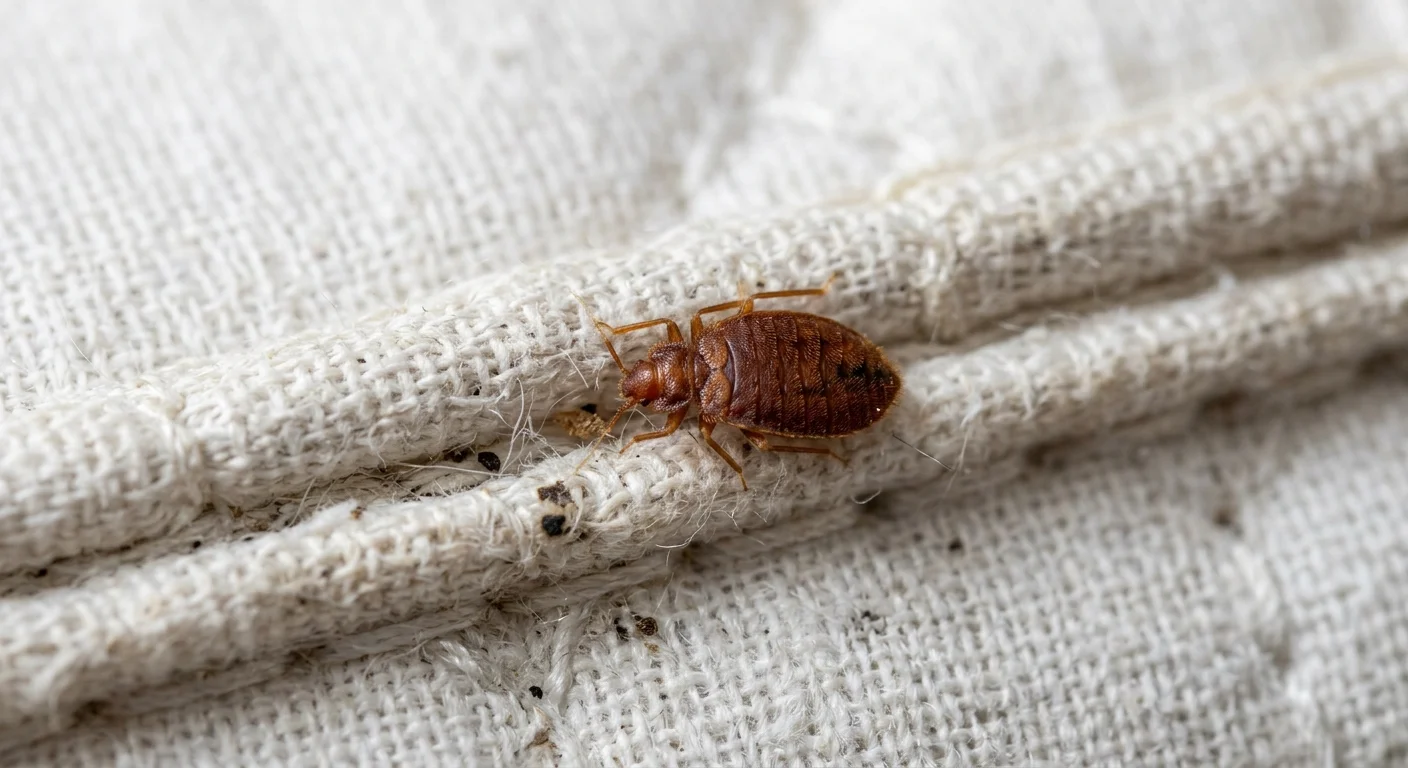
Adult bed bugs
UC IPM: adults are small (about 1/5 inch), flattened, oval, and rusty red. Nymphs are smaller and lighter colored. EPA notes they can squeeze into a crack that would hold a credit card. After a blood meal they look redder and more swollen. They have six legs and two antennae. They do not have wings and cannot fly or jump.
Bed bug nymphs
Bed bug nymphs, or juvenile bed bugs, are miniature versions of the adults, but their appearance changes as they grow. UC: there are five progressively larger nymphal stages, each requiring at least one blood meal before molting to the next stage. Nymphs are smaller and lighter colored than adults. As they feed and grow, they become darker and larger, eventually resembling a smaller, paler adult bed bug. Like adults, they appear reddish after feeding.
Bed bug eggs
UC IPM: eggs are tiny, about 1/20 inch, and white. A female lays 200 to 500 over her lifetime, usually two to five a day, on rough surfaces such as wood or paper near where people sleep. Gluelike material covers the eggs, and they hatch in about 10 to 15 days at room temperature. The eggshells often stay stuck in place after hatching, so you may find both. EPA gives the same size in metric, about 1 mm. Eggs mean a breeding population, not a single hitchhiker. Shed skins are a separate sign, covered further down.
Where to look: seams, tags, and screw holes
Bed bugs stay close to where people sleep, in dark, undisturbed spots. Bring a flashlight, a magnifier, and time. Work outward from the bed.
Your mattress and bed frame are the primary hotspots. Start by meticulously examining the seams, piping, and tags of your mattress and box spring. Pull back fitted sheets and look along the edges. Bed bugs often congregate here, and you might see the bugs themselves, their shed skins, or fecal stains. Don’t forget the underside of the mattress and the bed skirt.
Next, inspect your bed frame, headboard, and footboard. Disassemble the bed if possible, paying close attention to all cracks, crevices, joints, and especially screw holes. These tiny openings are perfect hiding places. Wooden bed frames are particularly susceptible because of their many natural hiding spots. Check behind the headboard where it meets the wall, as this area offers both shelter and easy access to a sleeping host.
Expand your search to furniture immediately surrounding the bed. This includes nightstands, dressers, and bedside tables. Empty drawers and inspect the inside joints, corners, and under the furniture. Check behind picture frames, loose wallpaper, electrical outlets, and even curtain folds near the bed. Bed bugs will travel a short distance from their primary harborage to find a meal. In more severe infestations, bed bugs can spread further. You might find them along baseboards, in the seams of upholstered chairs or sofas, inside books on a shelf, or even behind loose plaster. Think small, dark, and undisturbed, within a short crawl of a sleeping person. EPA: if a crack will hold a credit card, it can hide a bed bug.
Signs they leave behind: spotting, shells, and fecal stains
You can confirm bed bugs without catching one. They leave stains, shells, and spotting where they hide. Catching that early usually means a smaller job.
Fecal stains
One of the most common and definitive signs of bed bugs is their fecal matter. These appear as small, dark spots, often resembling dried ink or ground pepper. They are typically found on mattresses, box springs, bed frames, and even walls near infested areas. Look for them in clusters along mattress seams and in crevices where bed bugs hide.
Shed skins (exuviae)
As bed bugs grow from nymphs to adults, they shed their exoskeletons five times. These shed skins, or exuviae, are empty, translucent casings that look exactly like the bed bug itself, only hollow and light brown or yellowish. Finding these skins in your bedding, on your mattress, or in the cracks of your bed frame is a strong indicator of an active and growing bed bug population. The presence of multiple sizes of shed skins suggests that bed bugs are progressing through their life cycle within your home.
Blood spots
You might also notice small, rust-colored or reddish-brown spots on your sheets, pillowcases, or pajamas. These can be digested blood voided onto fabric, or a crushed insect. Skin marks are not what confirms the insect.
Odor in heavy infestations
UC IPM: a foul, rotting, bloody-meat, or acrid buggy smell might be present in heavily infested areas. That odor is not a light-infestation ID tool. Look for insects, eggs, shed skins, and fecal stains first.
If you are finding any of these in your San Diego home, the next step is a licensed inspection. Our bed bug treatment cost in San Diego guide covers what moves a real quote.
Frequently asked questions
What do bed bugs look like?
UC: adults are about 1/5 inch, flattened, oval, and rusty red. Nymphs are smaller and lighter colored. Eggs are about 1/20 inch, white, covered in gluelike material, and hatch in about 10 to 15 days at room temperature. Look in seams and crevices.
How do I tell bed bugs from fleas or ticks?
Fleas are much smaller, jump, and have a body flattened side-to-side for moving through fur. Ticks have eight legs as adults and a body that swells dramatically when engorged, and they’re usually picked up outdoors or from pets. Bed bugs have six legs, don’t jump, and are found around where you sleep.
What are the signs of bed bugs besides seeing one?
Dark fecal spotting along mattress seams and baseboards, shed skins, and small rust-colored spots on sheets. Bites on skin are not a confirmation sign. Some people never react, and the marks can look like other insects or rashes.
Where should I look first?
EPA: around the bed, look near the piping, seams, and tags of the mattress and box spring, and in cracks on the bed frame and headboard.
When to call us
If you’ve found insects or their signs at the bed, or if you still cannot tell what you have after looking at seams and frames, request a licensed inspection. Bed bugs are often hard to settle with household products alone. Pest Pros San Diego does not eradicate infestations. We match you with a licensed local company. That company inspects first and quotes in writing. You can check a company’s license with the SPCB license check. Call us at (858) 400-6561 to get matched with a licensed local pro.