
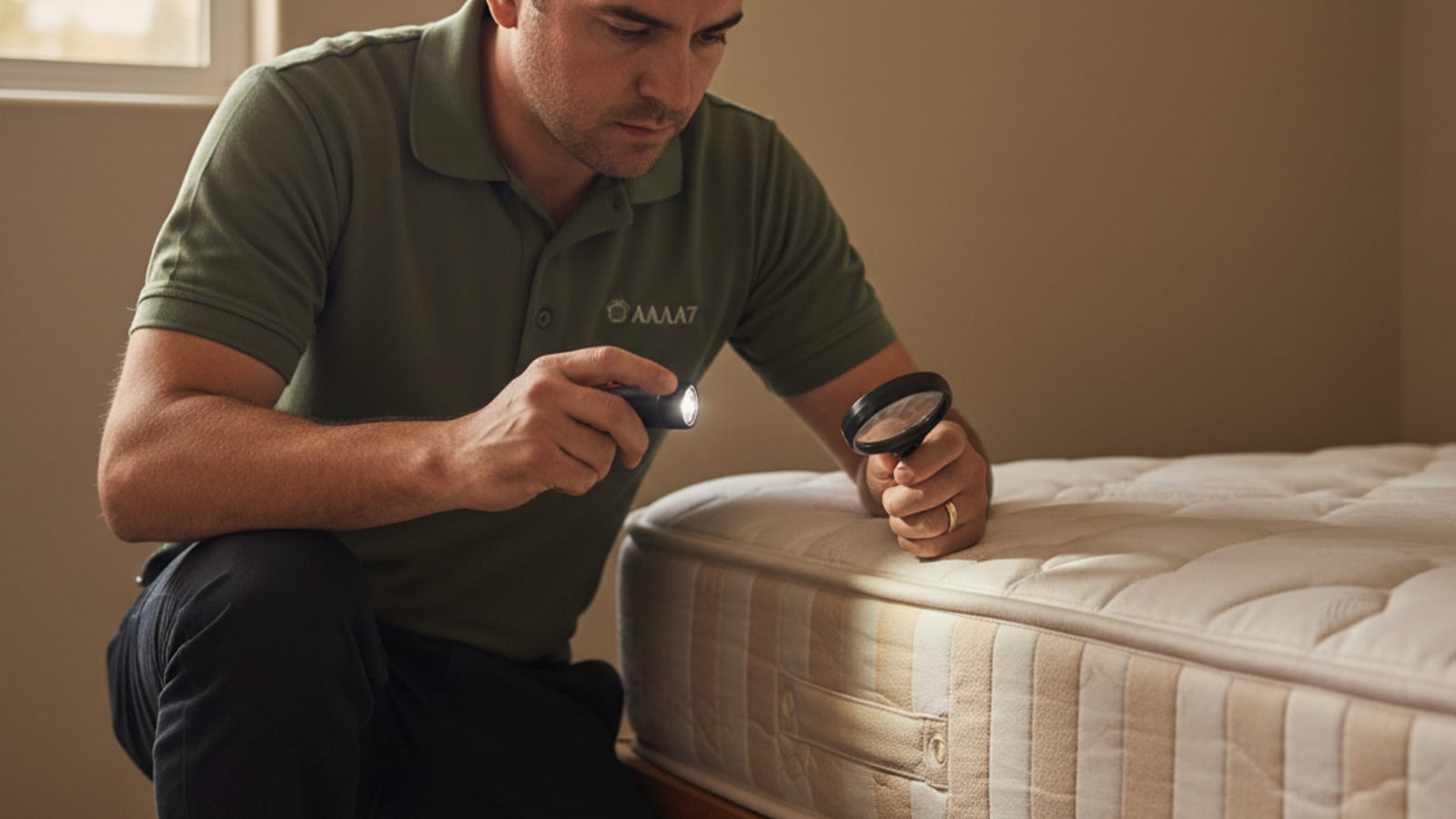
Bed bug work is expensive because it is labor-heavy and because one missed harborage can restart the job. San Diego quotes vary. The useful comparison is method, rooms involved, and what the written proposal includes after someone has confirmed the insect.
Pest Pros San Diego matches homeowners with licensed companies. We do not run heat equipment, apply insecticides, or warrant a result.
The two main treatment protocols
Residential jobs usually get quoted as insecticide work, heat work, or a mix. They are not interchangeable, and a blog cannot pick one for your unit.
Chemical treatment
Insecticide jobs typically treat cracks, crevices, bed frames, and other harborage. Some companies add an insect growth regulator. How many visits, how far apart, and whether eggs are in the written scope are questions for the licensed company after inspection. Do not treat any visit count in a blog as a protocol.
Prep still matters when a company asks for it: hot laundry, less clutter, vacuuming, and following the written instructions. Skipping those steps is a common reason a job fails. That is not the same as a guaranteed clearance if you do them.
Heat treatment
HomeGuide’s 2026 heat-treatment cost page lists $1 to $3 per square foot, or about $2,000 to $6,000 for heat remediation in a 2,000 square-foot home, as of that page. Those are national planning figures, not a San Diego invoice and not a Pest Pros price.
UC IPM’s current commercial-heat recommendation is at least 140°F for two hours or 130°F for three hours, with a minimum lethal temperature of 113°F, and California heat providers must be licensed and bonded by the Structural Pest Control Board. HomeGuide also notes that large or cluttered homes may need more than one visit because heat may not reach every bug. One visit is not a clearance promise.
Ask the company what temperature, duration, rooms, and follow-up inspection are in writing. Do not treat a blog temperature as their method.
What drives the price
Severity. A recent, limited find is a different job from insects already in couches, baseboards, and outlets. The inspector names that spread.
Size of the treatment area. Chemical work is often priced by rooms. Heat is often priced by square footage and equipment. A 2,500 sq ft house is not a studio.
Clutter and access. Heavy clutter adds labor. Some jobs need cleanout first.
What is included. Ask whether follow-up, adjacent rooms, and a re-treat clause are in the contract. Warranties are not standard across companies. Read the paper. Do not assume every legitimate job includes a warranty.
Discretion. Unmarked vehicles are a company policy question, not a network add-on we sell.
When chemical may be the quote you compare
Companies often propose insecticide work when the find is limited, the building is an apartment where heating one unit is impractical, or the written plan can include follow-up. That is a fit question, not a rule that chemical is “for budget jobs.”
When heat may be the quote you compare
Heat is often proposed when a company wants to treat a contained set of rooms without a residual product, or when items cannot be sprayed. It is still not a one-visit elimination guarantee. HomeGuide’s own cost factors include extra visits when heat cannot reach every harborage.
What a cheap number often leaves out
A price far below the labor of inspection, prep, and follow-up is a signal to ask what is missing. Common gaps: no confirmation it is bed bugs, no follow-up, no written harborage list. UC IPM is clear that insecticide alone will not control an infestation and that follow-up monitoring is part of management.
Bed bug eggs and hidden harborage are why a single unscoped spray is a poor bet. That is not a license to invent a 2-4 week rebound clock.
Why DIY bed bug products usually fail
Store sprays and foggers have a poor record for established bed bugs.
Eggs and gaps. Eggs and cracks smaller than a card’s width are easy to miss with a can.
Foggers. UC IPM treats over-the-counter total-release foggers as ineffective for bed bugs and potentially harmful to residents. The best approach it names is combining chemical and nonchemical tactics with sanitation and habitat changes, not a consumer can.
If you have confirmed bed bugs, a store product is a poor substitute for a licensed plan. See bed bug treatment.
Frequently asked questions
What drives the cost of bed bug treatment in San Diego?
Method, rooms or square footage, clutter, and what the written follow-up includes. Heat is often a square-footage quote. Insecticide work is often a room-and-visit quote. Severity, meaning how far the population has spread, is what moves the number most, and that is an inspection finding.
Is heat or chemical treatment better?
Neither is better in general. Heat can be faster in a vacant or well-prepped space. Insecticide work can be the practical option in a single apartment. Access, unit type, and spread decide it. The company that inspected should put both options in writing if both are on the table.
Can I get an inspection before committing to treatment?
Yes, and that is the right order. Many “bed bug” calls are carpet beetles, fleas, or other insects. Booking treatment before confirmation is paying for a guess.
The inspection comes first
A licensed company should confirm the insect and the spread before quoting heat versus chemical. For how bed bug pricing sits next to other services, see the San Diego pest control cost guide.
Call (858) 400-6561 to get matched with a licensed local pro. The match is an introduction. The inspection, method, price, and any warranty language come from that company.