
Small dark flies that keep turning up near a sink are a common indoor complaint. Until the wet spot behind them is found, anything sprayed at the adults is a temporary result.
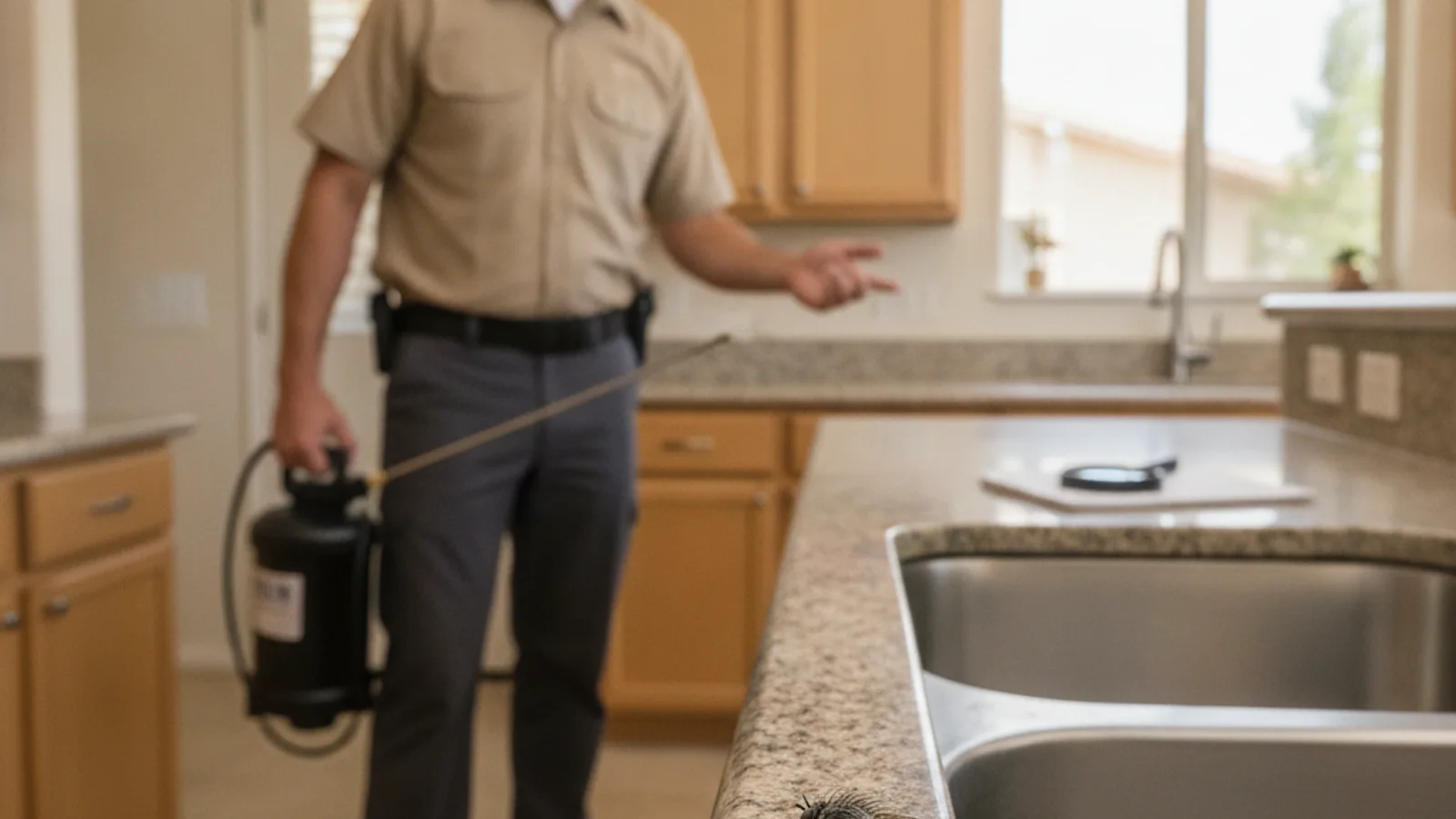
How drain flies differ from fruit flies and gnats
Three different small indoor flies get called the same thing, and each one points to a different source. Getting the name right is the whole job, because the wrong name sends you to the wrong room.
Rather than measure the fly, follow it. Where it turns up is the more reliable clue, and it is something you can check tonight. A fly that keeps reappearing at a sink, floor drain or shower points at the film inside that drain. A fly hovering over fruit on the counter or over a houseplant points at the fruit bowl or the wet potting soil, not the plumbing. Track which room and which fixture they come back to, and you have narrowed the source before anyone arrives. UC IPM publishes species pages worth comparing against what you are seeing, and an inspector can confirm the identification in person.
Our guide to fruit flies and gnats in San Diego covers the kitchen and houseplant side of the same comparison. If what you’re seeing turns out to be a house fly, start with our guide to house flies in San Diego instead.
One practical step: catch two or three of them on clear tape or in a sealed bag and keep them. A photo of a small fly on a white counter is usually too blurry to identify. A taped specimen isn’t.
Why finding the breeding source comes first
Spraying the adults you can see doesn’t reach whatever is producing them. That’s why the useful work here is finding the wet spot, not picking a product.
This page doesn’t give chemical drain instructions, and it won’t tell you to pour anything down a line. Products marketed for drains vary in what they contain and what their labels permit, and some of what gets recommended online can damage pipes or push a problem into a shared plumbing stack. Read the actual label on anything you buy, and check the EPA’s pesticide safety guidance for how consumer products are meant to be used.
Source-finding is mostly patience. Start where the flies rest, then work outward one wet spot at a time. Sinks and showers are obvious. The ones people miss are the floor drain in a garage or laundry area, a rarely used guest bathroom, a shower in a converted granny flat, a wet-bar sink nobody has run in a year, and the pan under a refrigerator.
San Diego County gives this a local shape. A vacation rental or second home along the coast can go weeks with one bathroom untouched, and a dry trap lets what’s below the water seal breathe into the room. Multi-unit buildings in the South Bay and around City Heights often share vertical plumbing stacks, so the source may sit in a neighboring unit and no amount of cleaning in your kitchen will change it. East County and backcountry properties on septic systems have their own set of check points, and those belong to a plumber, not a pest technician.
If you’re finding other damp-loving pests in the same rooms, the moisture question is bigger than the flies. Our guide to silverfish in San Diego covers that overlap.
What moisture and drain conditions to document
Write things down as you go. A licensed inspector who arrives to a list works faster, and a plumber who gets a list can tell you on the phone whether the job is theirs.
Note the room and the exact fixture where you see adults resting, not just where you swat them. Note the time of day. Note whether the count is steady, climbing, or tied to running a particular fixture. If flies appear an hour after someone showers upstairs, that’s a real clue and it’s easy to lose.
Then log the conditions:
- Fixtures that go unused. Which sinks, tubs, showers, and floor drains haven’t run in the last month.
- Standing water. Under-sink cabinets, the base of a toilet, a garage floor low spot, an appliance drip pan.
- Slow drains. Which lines gurgle or drain slowly rather than running clear.
- Recent plumbing work. New fixtures, a replaced trap, a capped line, or an abandoned drain that got tiled over.
- Outdoor water. Irrigation overspray against the foundation, a leaking hose bib, a pool equipment pad, a clogged area drain.
- Shared walls. In a condo or apartment, whether neighbors are seeing the same flies.
Take photos of anything wet. Don’t open a wall, cut into a slab, or pull a cleanout plug to investigate. That’s a plumbing decision with real consequences, and a photo of the ceiling stain is enough for someone to price the work.
Inland north county homes in Escondido, San Marcos, and Vista deal with long dry stretches, and dry traps show up there for a different reason than at the beach: unused fixtures in a big house plus low humidity. Running an unused drain for a minute every couple of weeks is free and it’s a reasonable thing to try while you’re documenting.
When pest control or plumbing help fits
These are two different trades and the split matters, because hiring the wrong one costs you a visit.
A licensed pest control company identifies the species, inspects for harborage and other moisture pests, and explains any product it proposes by that product’s label. In California, the Structural Pest Control Board defines Branch 2 as the practice relating to the control of household pests excluding fumigation with poisonous or lethal gases, which is the branch this work sits under. You can confirm any company’s standing through the SPCB license search before you let anyone in the door.
A plumber owns the pipe. Broken lines, failed traps, abandoned drains, sewer defects, and anything under a slab are plumbing repairs. Pest Pros San Diego is a referral service for pest control, so we don’t match you with plumbers and we won’t pretend a pest visit fixes a cracked line. If the inspection points at the plumbing, that’s the honest answer and it’s better to hear it early.
Sometimes it’s both, in order. Identify the fly, find the wet source, repair what’s broken, then decide whether any pest treatment is still needed.
If you want the pest side handled by someone licensed, our general pest control referral service is where that starts. The company you’re matched with inspects first and quotes in writing before any treatment begins.
When to call us
Call when the flies keep returning after the obvious drains are clean, when you can’t identify what you’re seeing, or when a shared building makes the source somebody else’s fixture. A licensed company can confirm the species, check for other moisture pests, and tell you plainly if the next step belongs to a plumber. Call us at (858) 400-6561 and we’ll match you with a licensed local pro.