
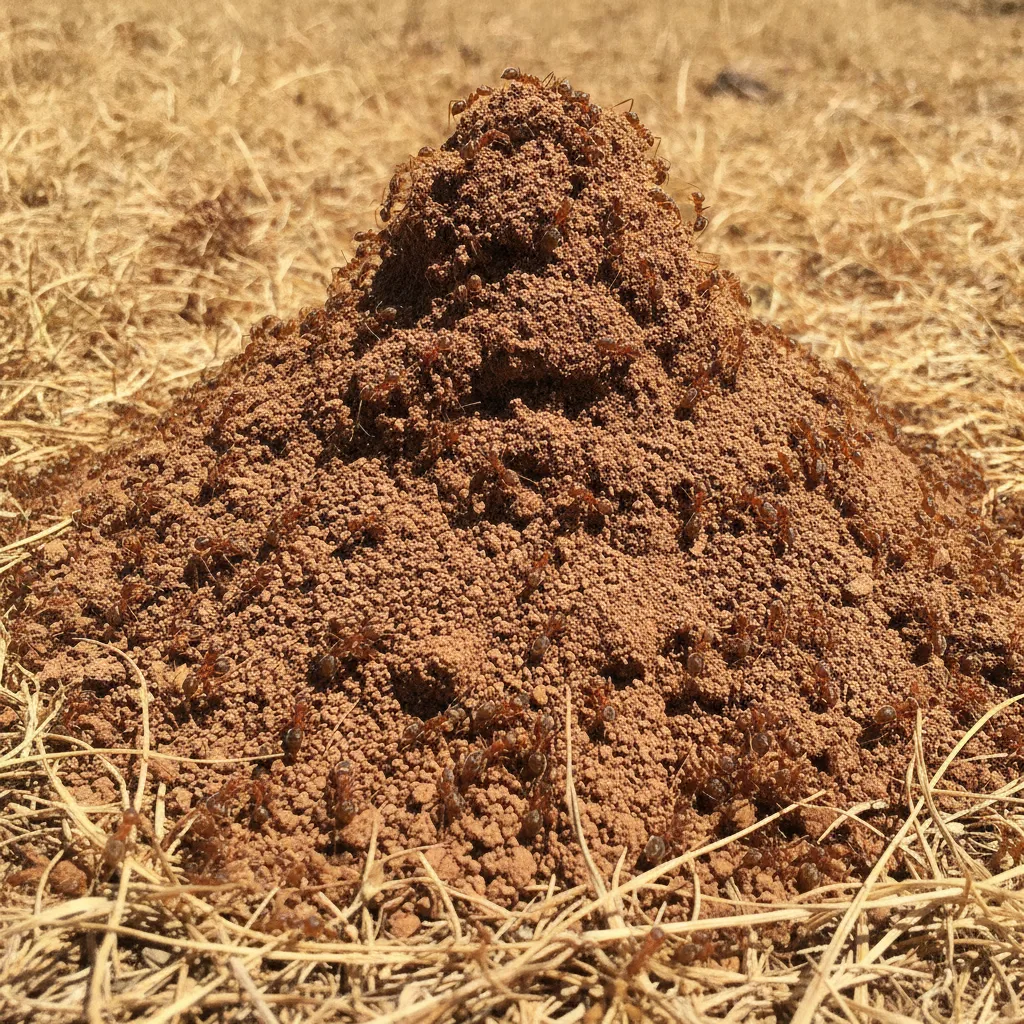
Fire ant control means baiting the colony, not spraying the mound. UC IPM’s ant key describes southern fire ant workers as polymorphic, about 1/8 inch to more than 1/4 inch, with an amber head and thorax, a mostly black abdomen, and golden hairs. They nest in small mounds or loose soil, often flattened, irregular craters in warm, sunny ground, and they swarm out and sting if disturbed. Hitting a mound with contact spray kills foragers. UC: sprays only give temporary control; slow baits are what workers can carry to the nest.
Most ant guides for San Diego are really about Argentine ants, the tiny brown ants that trail across kitchen counters and never sting. Fire ants are a different problem. They sting, they defend their mounds as a group, and they turn a backyard or a patch of turf into a place kids and pets learn to avoid. This guide covers how to tell a fire ant from the ants you already know, where they show up across the county, what the sting actually does, and why professional fire ant control uses bait instead of a spray can.
How to identify a fire ant in San Diego
A fire ant has an amber-colored head and thorax with a mostly black abdomen and fine golden hairs, according to UC IPM’s ANTKEY. Workers are polymorphic, from about 1/8 inch to more than 1/4 inch in the same nest. Disturb the nest and they swarm out and sting. They nest in small mounds or loose soil near moisture, often flattened irregular craters in warm, sunny ground.
Compare that to the ant most San Diego homes fight. Argentine ants are uniform dull brown, move in long steady trails, and don’t sting or bite in any way you’d notice. If the ants are trailing indoors along a baseboard, they’re almost certainly Argentine ants, and our guide to why spraying Argentine ants makes it worse covers that fight. If they’re in a sunny mound outside and they sting, think fire ant.
| Feature | Fire ant | Argentine ant |
|---|---|---|
| Color | Amber head/thorax, black abdomen | Uniform dull brown |
| Size | 1/8 to just over 1/4 inch, mixed sizes | About 1/8 inch, all one size |
| Nest | Loose soil mound in open sun | Hidden trails, wall voids, mulch |
| Stings? | Yes, aggressively when disturbed | No |
| Where | Warm, sunny ground; small mounds near moisture | Everywhere, especially indoors |
Where fire ants show up across San Diego County
UC IPM lists the southern fire ant among common California house-and-garden pests. It nests in small mounds or patches of loose soil near moisture, often as flattened, irregular craters in warm, sunny ground (UC ANTKEY). The red imported fire ant is a quarantined pest. UC lists San Diego County among the counties it has infested, along with Orange, Los Angeles, Riverside, and San Bernardino.
Argentine ants are the most common ant in and around California houses and gardens (UC IPM). In some areas, competition from the Argentine ant has slowed the spread of the fire ant. That is a UC statement about some areas, not a neighborhood map.
A mound in open sun is the ANTKEY nest pattern. City pages such as El Cajon are matching routes, not proof that East County lots host more colonies. This page does not name a San Diego peak season.
What a fire ant sting does, and when to worry
A southern fire ant sting is painful (UC IPM ant key). UC’s red imported fire ant page describes a burn and itch, then a white pustule that can take several weeks to disappear. That pustule language is UC’s wording for the imported species, not a diagnosis of a southern fire ant sting on your skin. Scratching a mark open invites infection. Spreading swelling, hives, trouble breathing, or dizziness after stings is a medical emergency. A pest company can inspect a mound. The medical side is a doctor’s call.
Why fire ant control needs bait, not a spray
Here’s the trap. You soak a mound with contact spray, surface ants die, and the nest looks finished. UC IPM: pesticide sprays only provide temporary control, and spraying foraging ants will not control a colony. On red imported fire ants, UC also warns that spraying a nest may cause the colony to disperse. Slow-acting bait is the method UC recommends so workers can carry the product to the nest, including queens.
Pest Pros San Diego matches you with a licensed Branch 2 company for household pests. We do not bait mounds or treat perimeters. Ask the company to name the ant, show the bait or other method in writing, and skip a spray-only quote if the goal is the colony. If mounds keep returning after DIY attempts, that loop is the same pattern behind a sudden ant infestation: foragers are not the nest.
The red imported fire ant is a quarantined pest in California (UC IPM). UC lists Orange, Los Angeles, Riverside, San Bernardino, and San Diego counties among areas it has infested. A fast-spreading mound of unusually aggressive stinging ants is worth reporting through CDFA Report a Pest and worth a professional ID. Do not treat a county list as a reason to skip that report.
Frequently asked questions
Are there fire ants in San Diego?
Yes. UC IPM lists the southern fire ant among California’s common house-and-garden pests. It stings and nests in small outdoor mounds in sunny ground. The red imported fire ant is a quarantined pest in California. UC lists San Diego County among counties it has infested. Report a suspected imported find through CDFA.
How do I get rid of fire ants in my yard?
Use a slow-acting bait, not a contact spray. UC IPM: workers carry bait to the nest. Spraying foragers will not control a colony. For repeat mounds, ask a licensed Branch 2 company to inspect and to put bait versus spray in writing. Pest Pros does not apply either.
Why do fire ant mounds keep coming back after I spray them?
Because a spray hits foragers, not the nest. UC IPM: spraying foraging ants will not control a colony. Bait is the method that can move into the nest. This page does not treat budding as a southern fire ant fact.
What’s the difference between fire ants and the ants in my kitchen?
The ants trailing indoors are almost always Argentine ants, which are tiny, uniform brown, and don’t sting. Fire ants have an amber head and thorax with a black abdomen, build outdoor soil mounds in sunny areas, and sting aggressively when disturbed. If the ants sting and live in a mound outside, they’re fire ants, not the kitchen kind.
Are fire ant stings dangerous?
For most people they’re painful. UC describes a white pustule lasting several weeks for red imported fire ant stings. Southern fire ant stings are painful in the ant key, without that pustule sentence. Spreading swelling, hives, trouble breathing, or dizziness is a medical emergency.
When are fire ants most active in San Diego?
This page does not name a San Diego peak month for fire ant mounds. UC ANTKEY: they nest in warm, sunny ground near moisture and may swarm out of nests if disturbed. UC: spraying foraging ants will not control a colony.
If fire ant mounds keep showing up in a San Diego yard, call (858) 400-6561 to get matched with a licensed Branch 2 company. Ask them to identify the ant and quote bait or another written method, not a spray-only perimeter.