
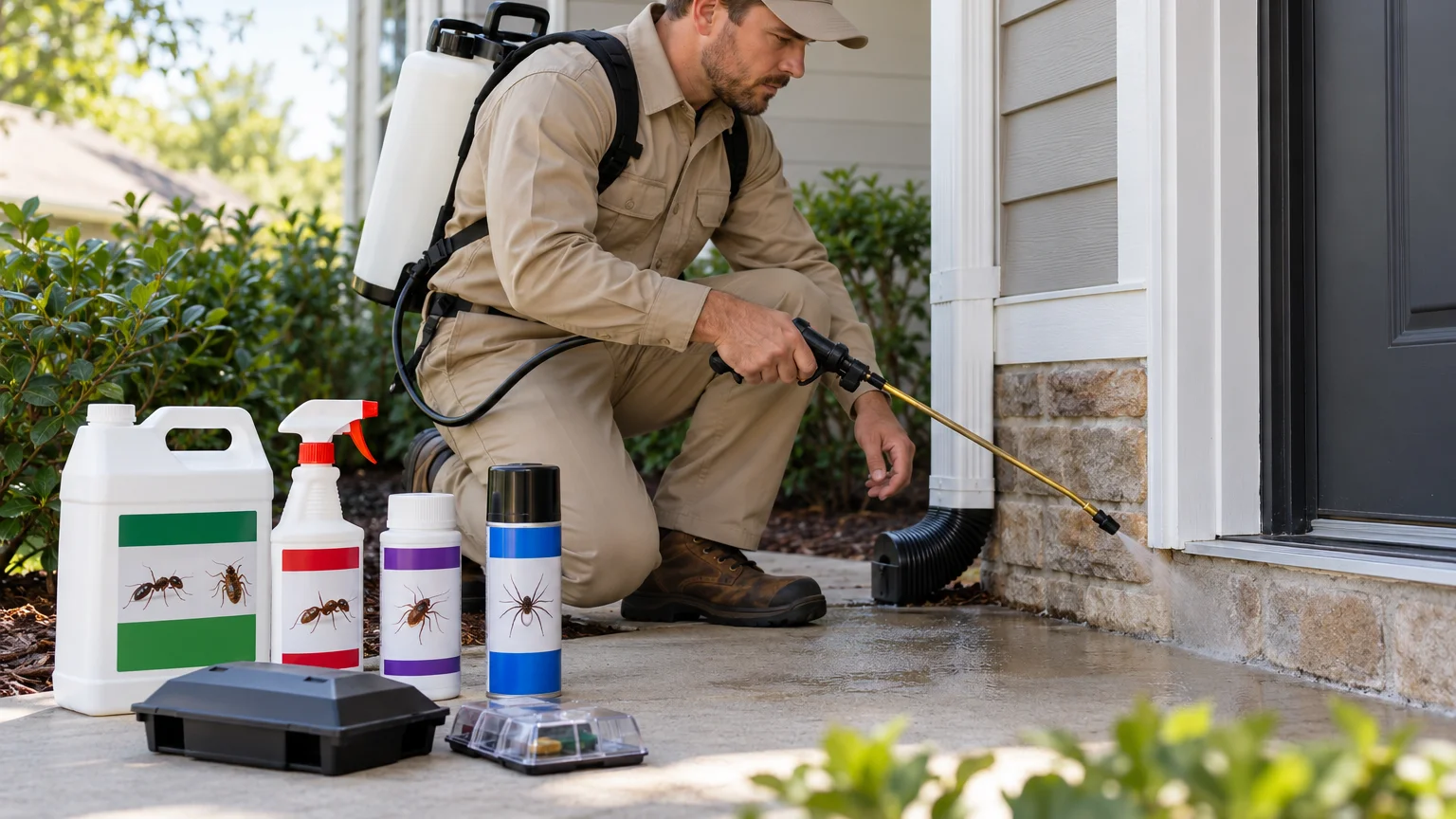
Compare pest control products in this order: target pest, application site, restrictions, and precautions. If one detail doesn’t match your situation, set that product aside. This approach helps you compare home pest control products without relying on packaging promises alone.
What the pest name on a label can establish
Start with the pest listed on the product label. A broad phrase such as “kills bugs” doesn’t answer the main question. You need to find the actual pest you’re trying to manage.
That sounds simple until identification gets uncertain. A small jumping insect near a sink may be a springtail or something else. Winged insects near a window may be flying ants or termite swarmers. A brown insect in a kitchen may not be the cockroach species you assumed.
A label can tell you whether its directions address a named pest. It can’t confirm that the insect in your home is that pest. Photos, package colors, and a quick internet comparison can still leave important differences unresolved.
Write down what you observed before shopping:
- Where did you find the pest?
- Was it indoors, outdoors, or in both places?
- Did you see one insect, a trail, a nest, or repeated activity?
- Are there wings, droppings, shed material, webbing, or damaged wood?
- Does activity return after cleaning or removing visible pests?
Those details make the product comparison more useful. They also help a licensed company inspect the right areas.
Don’t treat a close match as a confirmed identification. If the label names Argentine ants, for example, that doesn’t make every brown ant an Argentine ant. Species matters because different pests can nest, feed, and move differently.
UC IPM offers identification and management material through its Statewide Integrated Pest Management Program. Use that material to narrow the possibilities, then compare the label with the pest you can reasonably document.
If the evidence remains unclear, pause the purchase. Our guide to DIY versus professional pest control explains when uncertainty changes the decision. A correct pest name is the first filter, not the final answer.
Why application sites and restrictions matter
Next, find the application sites listed on the label. A product that names your pest may still be wrong for the place where you found it.
“Indoor” isn’t specific enough for a careful comparison. A City Heights apartment kitchen, a Chula Vista patio, an El Cajon garage, and an Encinitas garden present different sites. Read for the exact setting rather than assuming one household product fits all four.
Compare the label with the location you need to address:
- Interior rooms or exterior areas
- Cracks, voids, surfaces, or enclosed spaces
- Kitchens or other food-related areas
- Lawns, ornamental plants, or other landscaped sites
- Sleeping areas, furniture, or stored belongings
- Areas used by children or pets
Restrictions deserve equal attention. Read every condition tied to the site, not just the pest list. A prominent pest name on the front can’t resolve a conflict elsewhere on the label.
Don’t move directions from one setting to another. Indoor directions don’t automatically apply outdoors. Lawn directions don’t automatically cover an edible garden. Directions for a structural crack don’t automatically cover an exposed surface.
The product form also doesn’t settle the question. Dust, bait, aerosol, granules, and liquid products can carry different site language and restrictions. Compare the full label rather than choosing by format.
This is especially important with familiar ingredients. Our guide to what diatomaceous earth labels cover shows why an ingredient name alone doesn’t define every acceptable site or use.
If no product label clearly matches both the pest and the site, don’t improvise. That’s a useful stopping point. A licensed pro can inspect the activity and explain which treatment category fits the location. For recurring household activity, we can connect you with a local company through our general pest control service.
Which safety claims need direct label support
Safety language should be specific, conditional, and traceable to the product label. Words such as “natural,” “gentle,” or “family friendly” don’t answer practical questions about your household.
Look for label language that directly addresses the people, animals, surfaces, and spaces involved. Don’t fill gaps with assumptions from another product, an online comment, or a similar-looking package.
Claims involving these situations need direct label support:
- Use in a home with children
- Use around dogs, cats, birds, fish, or other animals
- Placement near food, dishes, counters, or preparation areas
- Use on bedding, furniture, carpets, or clothing
- Ventilation or protective equipment
- Leaving and returning to a treated area
- Cleanup, storage, and disposal
- Contact with skin, eyes, plants, or water
The right answer may differ between products. It may also depend on the exact site and conditions listed. Don’t shorten conditional language into a broad claim that a product is simply “safe.”
Keep packaging and the complete label available while you compare. If part of the label is missing, unreadable, or hidden beneath another sticker, don’t guess what it says. Find the complete registered label before making the decision.
The EPA pesticide safety resource offers broader consumer guidance. It doesn’t replace the directions and precautions attached to the product you’re considering.
Be cautious with claims about “natural” pest repellents too. A familiar ingredient doesn’t establish where it belongs, what pest it addresses, or what precautions apply. Our guide to natural pest repellents explains how to separate a limited deterrent claim from a complete pest-management plan.
When children, pets, food areas, or uncertain exposure conditions affect the decision, the safest comparison is often a shorter one. Set aside anything with unclear directions and ask a licensed company to inspect first.
When a licensed company should inspect first
DIY pest control makes the most sense when the pest, site, and label all align. An inspection becomes the better first step when any part of that match remains uncertain.
Call a licensed company before choosing among pest control products when:
- You can’t identify the pest with reasonable confidence.
- Activity returns after cleaning or basic prevention.
- You see insects emerging from walls, ceilings, or structural wood.
- The affected area includes several rooms or units.
- A nest or colony location isn’t visible.
- Children, pets, food areas, or sensitive spaces complicate label use.
- The available labels don’t clearly name both the pest and site.
- You suspect termites or another wood-destroying pest.
UC IPM doesn’t recommend do-it-yourself treatment for drywood termites. It also states that effective subterranean termite products are for professional use. California separates structural pest control work by license branch. Branch 1 covers fumigation, Branch 2 covers general household pests excluding fumigation, and Branch 3 covers wood-destroying pests and related structural work excluding fumigation.
You can check a company or individual through the California Structural Pest Control Board license search. Match the credential to the service being discussed. Don’t rely only on a product name, vehicle wording, or verbal assurance.
Pest Pros San Diego doesn’t inspect, apply pesticides, or sell pest control products. We match homeowners and businesses with licensed, insured local pest control companies. The company you’re matched with inspects the property, identifies the treatment scope, and provides its own written terms.
Bring useful evidence to that inspection. Save clear photos, note where activity appears, and keep any product labels you’ve considered. Tell the company about previous applications without guessing at missing details. This helps the pro understand what has already happened.
A licensed inspection doesn’t force you into treatment. It gives you a clearer basis for comparing the proposed work with DIY options. Ask the company to explain the pest identified, the areas involved, the product label, the restrictions, and any written preparation instructions before work begins.
When to call us
Call when the pest is uncertain, activity keeps returning, or no label clearly matches the pest and site. We can connect you with a licensed, insured local company that handles the relevant service.
Call us at (858) 400-6561 and we’ll match you with a licensed local pro.