
A patio bottle can change whether a mosquito lands on your arm for a while. It cannot close the gap under a Pacific Beach slider, dry mulch against an El Cajon slab, or break the Argentine ant supercolony that UC IPM describes as linked nests with multiple queens. Natural pest repellents shift scent, landing, and short contact. They don’t rewrite the house.
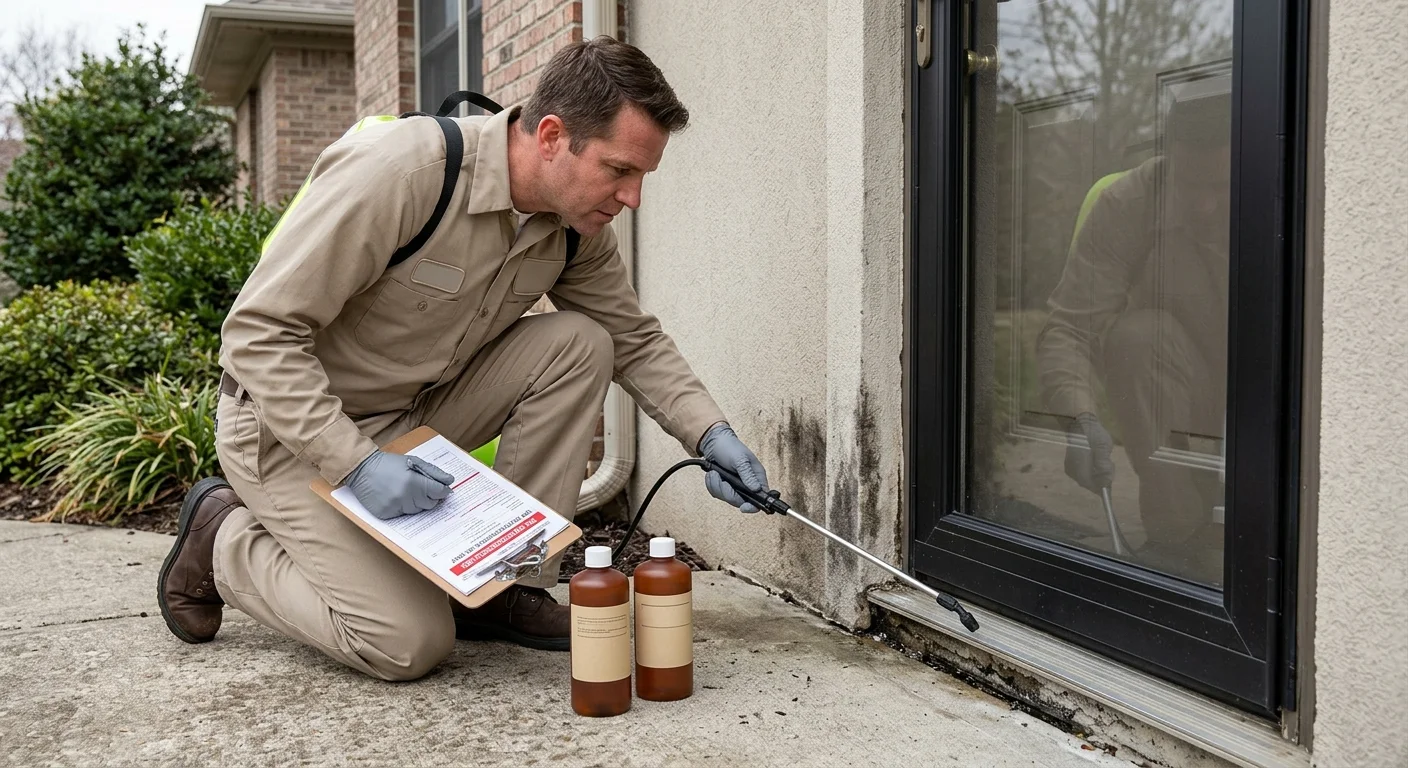
What a repellent can change around a home
A repellent’s job is narrow. On skin, it can make a mosquito or tick less likely to land on the person wearing it, for as long as the label supports. On a surface, a product may discourage crawling insects from crossing a treated band, only where the label lists that pest and that site. That’s a change in behavior at a point of contact. It isn’t a change in the building.
San Diego County makes the limit easy to see. A La Jolla deck and an Escondido drip line aren’t the same problem. Coastal evenings still bring mosquitoes to uncovered skin. Inland irrigation still feeds Argentine ants at the soil surface. A citrus-scented spray on your wrists does nothing to the colony under the walkway. A cedar block in a closet does nothing to a German cockroach harbor behind a National City stove.
Gadgets share the same aisle. Ultrasonic plugs promise to push pests out with sound. University of Arizona Extension found electronic repellers ineffective against household pests generally. Treat that as a class warning. If the device has no registered label naming the pest, you have a night-light with a story.
Plant oils, vinegar, and pantry powders fill most natural roundups. This page isn’t a recipe list, and it will not rank oils. A kitchen ingredient can smell strong to you and still mean little to the insect in front of you. House flies find food by odor and moisture. UC IPM notes that they pick up material from waste and leave it on human food. A herb on a windowsill doesn’t cut that path.
What a labeled product can change is small and real. It can make a walk to the car easier on uncovered skin. It can make a trash rim less attractive for a short stretch. It can sit next to sanitation, not instead of it. Once you want the kitchen empty, the trail gone, or the nest down, you’ve left the repellent category. You’re in a service conversation, which is why questions to ask a natural pest control company live on a separate page.
Why entry gaps, moisture, and prey still matter
Pests in this county follow water, food, and a hole they can fit through. A repellent doesn’t change those three things. The marine layer along Encinitas and Pacific Beach keeps stucco, window tracks, and crawl-space soil damp for long stretches. East County heat in El Cajon dries the surface, then drives ants to irrigation and pet bowls. South Bay apartments in Chula Vista and National City stack kitchens and baths, the habitat UC IPM names for German cockroaches: warm, humid rooms next to food, water, and dark harborage.
Entry is physical. A torn screen in Ocean Beach, a missing door sweep in Mira Mesa, a utility gap at a Clairemont slab, a weep hole without a screen: those are doors. Most crawling insects don’t need the front door. They use the gap you stopped noticing. Sealing that gap changes the house. Spraying a pleasant oil at the threshold doesn’t.
Moisture is the other half of the county. UC IPM’s springtail note is blunt. These 1/16-inch jumpers show up in sinks, washbasins, tubs, floor drains, damp crawl spaces, and wall voids. They don’t bite, spread disease, or damage furnishings. Insecticide sprays are generally not recommended. The work is drying the source. Millipedes tell the same story after heavy rain. UC IPM describes mass movement when soil saturates, and Penn State Extension says they don’t live more than a few days indoors. Indoor pesticide is rarely justified. A repellent on the baseboard doesn’t fix the grade, the downspout, or the mulch piled against the stem wall.
Prey and food keep the rest going. Argentine ants are the most common ant around California houses, according to UC IPM. They tend honeydew insects on plants and then walk that food indoors. They nest in shallow soil, under pots, in pavement cracks, and in wall voids. Sweet liquid baits in stations are what UC IPM points to for severe indoor pressure, not a cinnamon dust on the counter. German cockroaches contaminate food and add indoor allergens. UC IPM is direct: pesticides alone will not solve cockroach problems. You need sanitation, exclusion, monitoring, then bait in the right harborage. Spiders stay where the prey stays. If you’re shopping spider repellents and what actually works, start with the insects they eat and the gaps they use.
How to read a registered product label
The word natural on the front of a bottle is marketing. The label on the back is the rule. EPA’s pesticide safety pages exist so you can read that rule before you buy or apply. This brand will not give mixing steps, homemade recipes, or off-label uses. If the label doesn’t name your pest and your site, the product isn’t for that job.
There isn’t a single best natural insect repellent. The useful bottle is the one whose directions match the pest, the place, and the person using it. Start with the active ingredient, not the scent story. Then read the pest list. A fly on a patio and a German cockroach in a City Heights kitchen aren’t interchangeable targets. Then read the use site: skin, clothing, indoor crack, outdoor perimeter, ornamental plant. A skin product protects the person wearing it. It doesn’t treat a yard, a slab, or a wall void.
Look for the signal word, first-aid section, and any age, pet, or ventilation limits the maker printed. Follow those as written. Don’t stretch a patio mist into a kitchen fog. Don’t combine two products because a blog said they work better together. Don’t use a professional concentrate meant for a licensed applicator. Naming an active ingredient a licensed company may use is one thing. Handing you a mix rate is another, and we will not do that.
People also bring oregano, vinegar, dish soap, and cream of tartar into this search. We don’t have a verified university figure on this claims file that oregano repels house flies. UC IPM remains the source to check for flies, not a spice rack. Vinegar is a cleaner. Dish soap from the sink is a cleaner too, unless that exact bottle is labeled as an insecticidal soap for a listed pest. Cream of tartar is baking inventory. If you want DIY pest control that actually moves a population, you’re in sanitation, exclusion, and moisture work, then a labeled product used exactly as directed. Homemade sprays skip the registered-label step on purpose. That’s why they stay off this page.
When recurring pests need a licensed company
A repellent that you reapply and still see the same trail isn’t failing at scent. It’s the wrong tool. Recurring Argentine ants, German cockroaches in multi-unit housing, wasps at a nest, rodents in an attic, and wood-destroying insects aren’t perfume problems. They need identification, a site inspection, and a method matched to the biology.
UC IPM’s ant work is the local pattern. Argentine colonies aren’t separate. They link into a supercolony with multiple queens. Spray a trail and you often scatter foragers. For fire ants, UC IPM warns that spraying a nest may cause the colony to disperse and make control harder. Slow-acting bait is the recommended path because foragers carry it home. Southern fire ants are native and present in San Diego County. The red imported fire ant is a quarantined pest in California, but San Diego County isn’t in CDFA’s interior regulated area. A suspected find is still worth reporting to CDFA. None of that is a job for a pantry spray.
German cockroaches are, in UC IPM’s words, the most persistent indoor species, especially in multi-unit housing. A female carries an egg case for about 30 days and can produce a new case every few weeks. One female and her offspring can produce over 30,000 individuals in a year. Gel baits work when they sit in harborage, not on a baseboard you already wiped. That’s general pest control for a California Structural Pest Control Board Branch 2 company. You can confirm a company’s license on the Structural Pest Control Board search.
We match homeowners and businesses with licensed, insured local companies. We don’t apply products, and we don’t hold an SPCB license. The company you’re matched with inspects first and quotes in writing before treatment starts. For a county map of common services, see our San Diego pest control overview. Bring the label of anything you already used. It tells the inspector what the pests have already walked through.
When to call us
When the same ants, cockroaches, or mosquitoes keep coming after you’ve sealed what you can and followed a labeled product, you need a licensed inspection, not another scent. Call us at (858) 400-6561 and we’ll match you with a licensed local pro. The matched company sets the method after it sees the site.