
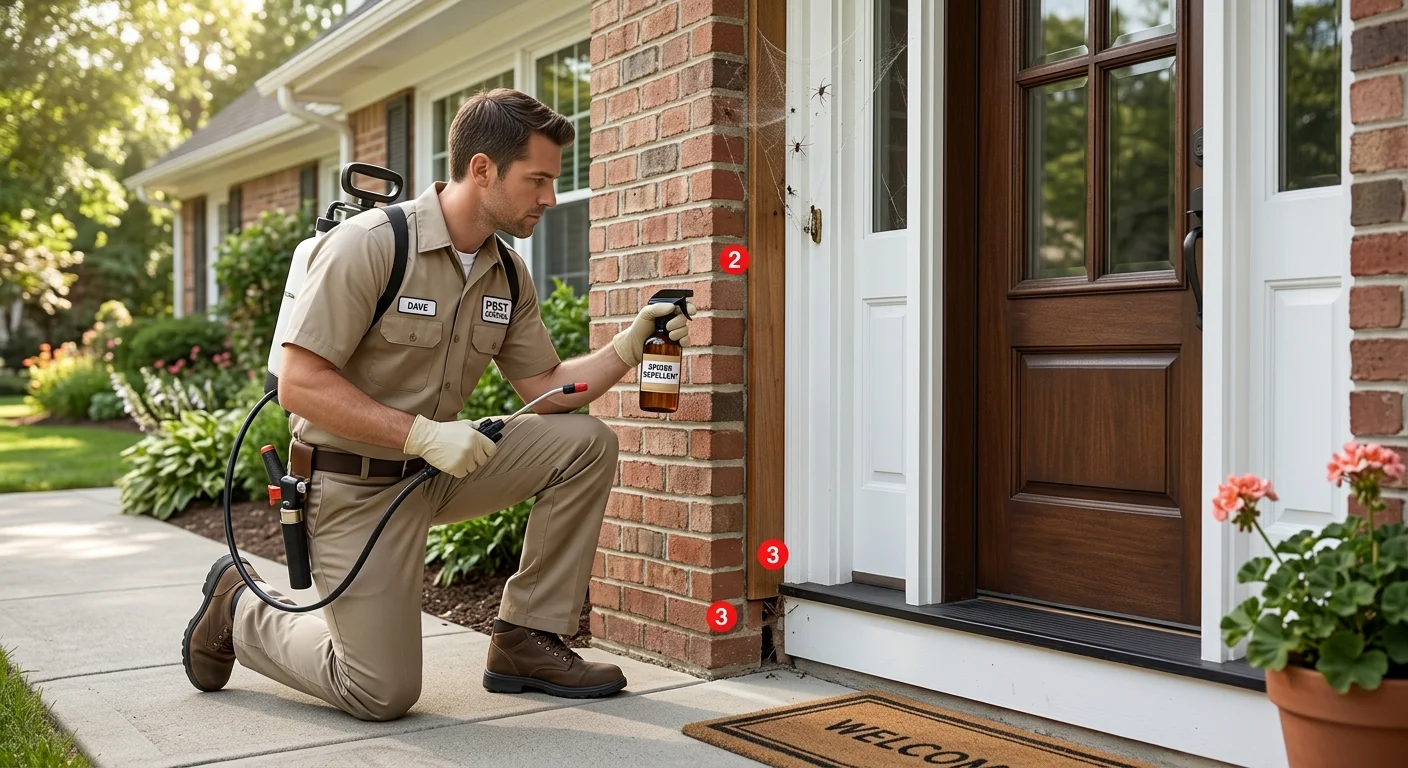
A spider repellent is worth considering only when its registered label names spiders and the place you plan to use it. It can’t remove webs, close entry gaps, or reduce the insects that keep attracting spiders.
What repellents can and can’t change
A repellent has a narrow purpose. It may be labeled for a particular spider, surface, or setting. That doesn’t make it a complete answer for every garage, patio, bedroom, or storage shed.
Start by separating a temporary product choice from the underlying problem. A product won’t repair a torn screen or replace a worn door sweep. It won’t remove old webbing from an eave. It also won’t explain which spider made the web.
That identification step matters. San Diego County has several spiders that look similar from a distance. Our guide to common spiders in San Diego can help you compare body shape, markings, web location, and hiding areas. Don’t handle an unfamiliar spider to get a closer look.
Natural spider repellent searches often lead to homemade mixtures containing peppermint, vinegar, citrus, or cedar. We couldn’t confirm a blanket effectiveness or safety claim for those recipes from the approved sources for this page. That means we won’t give you an invented formula or promise that a kitchen ingredient works.
The same caution applies to plug-in devices, pouches, and heavily scented products. Look for written directions that name the pest and intended location. Don’t treat a product name, online review, or strong odor as proof.
A doorway in Oceanside may have different exposure than a shed in Alpine. The label still controls the product decision. The surrounding gaps, web anchors, lighting, and insect activity shape what happens after that product is used.
Why webs, prey, and entry gaps still matter
Fresh webs tell you where spiders can anchor silk and remain undisturbed. Old webs can make a doorway look active long after the spider has moved. Removing empty webbing lets you watch for new activity without confusing it with what was already there.
Use care around occupied webs, egg sacs, and concealed corners. Don’t reach blindly behind storage boxes, outdoor furniture, utility cabinets, or stacked materials. If you can’t identify what you’re seeing, leave that space alone and document its location.
Next, look at the insects available as prey. A porch light surrounded by flying insects creates a different situation than an isolated spider wandering through a bathroom. Check screens, exterior lighting, food debris, and moisture sources that may be drawing other pests. A repellent doesn’t correct those conditions.
Entry points deserve the same attention. Inspect worn door sweeps, damaged screens, utility penetrations, siding joints, and gaps around window frames. Attached garages often have several paths between outdoor storage and indoor living space. Sealing accessible gaps can reduce those routes, though it won’t remove spiders already inside.
San Diego County homes don’t share one building pattern. Coastal North County patios often include stucco joints, sliding doors, and dense landscaping. East County garages and sheds may have open rafters, stored equipment, and larger door gaps. South Bay apartments may share corridors, walls, and utility penetrations with neighboring units.
Those differences explain why one bottle can’t solve every spider problem. A useful plan combines observation, web removal, prey reduction, and entry-point repairs. Our comparison of DIY and professional pest control can help you decide which parts fit your situation.
How to compare product labels without guessing
Don’t compare spider products by front-panel wording alone. Read the full current label before choosing or using one. Similar packaging can hide important differences in formulation, target pests, approved locations, and directions.
Use these checks while comparing products:
- Target pest: Look for spiders or a named spider species. Don’t assume a general reference to household insects includes spiders.
- Intended location: Confirm that the label covers the exact indoor or outdoor area you have in mind.
- Product form: Determine whether the container is ready to use or requires preparation. Follow the label instead of borrowing a mix from another product.
- Application limits: Check where the product may be placed and which surfaces the directions address. Don’t extend one permitted use to another setting.
- Precautions: Read every instruction concerning people, pets, protective equipment, ventilation, and access to the area.
- Storage and disposal: Keep the original container and follow its written directions. Don’t transfer the product into an unmarked bottle.
- Repeat use: Follow the product’s own schedule. Don’t assume that more frequent application produces better control.
We can’t declare a spider repellent safe around children or pets without its exact current label. Products and formulations differ. If a precaution is unclear, pause and contact the manufacturer through the information printed on the container.
The EPA pesticide safety resource offers general consumer guidance. It doesn’t replace the product label in your hand. Screenshots, retailer descriptions, social posts, and AI summaries don’t replace it either.
Avoid recipes that combine products or alter labeled directions. This page doesn’t provide application rates, mixing ratios, or off-label suggestions. If the label doesn’t clearly address spiders and your intended location, choose another approach or ask a licensed company to inspect the problem.
When recurring spiders need a licensed pro
Recurring spiders can point to more than a missed corner. Activity may continue because prey remains available, webs are hidden, or entry points haven’t been found. Spiders inside occupied rooms, inaccessible voids, or shared-wall buildings can also be difficult to assess without an inspection.
Species can change the decision. UC IPM identifies the western black widow as California’s most common harmful spider. Adult females have a red or orange hourglass marking underneath the abdomen. UC IPM also notes that bites are rare, even where these spiders are common.
Don’t handle a suspected black widow. Note where it was seen and keep people away from that immediate hiding place. For other dark or fast-moving spiders, compare the location and body shape before assuming the species. A wandering wolf spider, for example, calls for a different identification process. See our guide to wolf spider control in San Diego for that distinction.
A licensed company can inspect the structure, identify likely species, and explain any proposed product by its label. California places general household pest work under Branch 2. You can verify credentials through the Structural Pest Control Board license search.
We match San Diego County customers with licensed, insured local companies. The company you’re matched with can explain treatment areas, nonchemical steps, and any follow-up terms in writing. Learn more about our spider control referral service before deciding whether professional help fits the problem.
When to call us
Call when spiders keep returning, the species is uncertain, or webbing reaches concealed areas you can’t safely inspect. Call us at (858) 400-6561 and we’ll match you with a licensed local pro.