
Spotting a large, fast-moving spider on the floor can be startling. Identification comes from the spider, not from the room it walked through.
UC Statewide IPM is the identification source for this page. In California, UC IPM names the black widow as the main spider that can cause serious injury. Spiders seen out in the open during the day are, in UC’s language, unlikely to bite people. That is not a species ID for the spider in your garage.
How to identify a wolf spider (it’s not a tarantula)
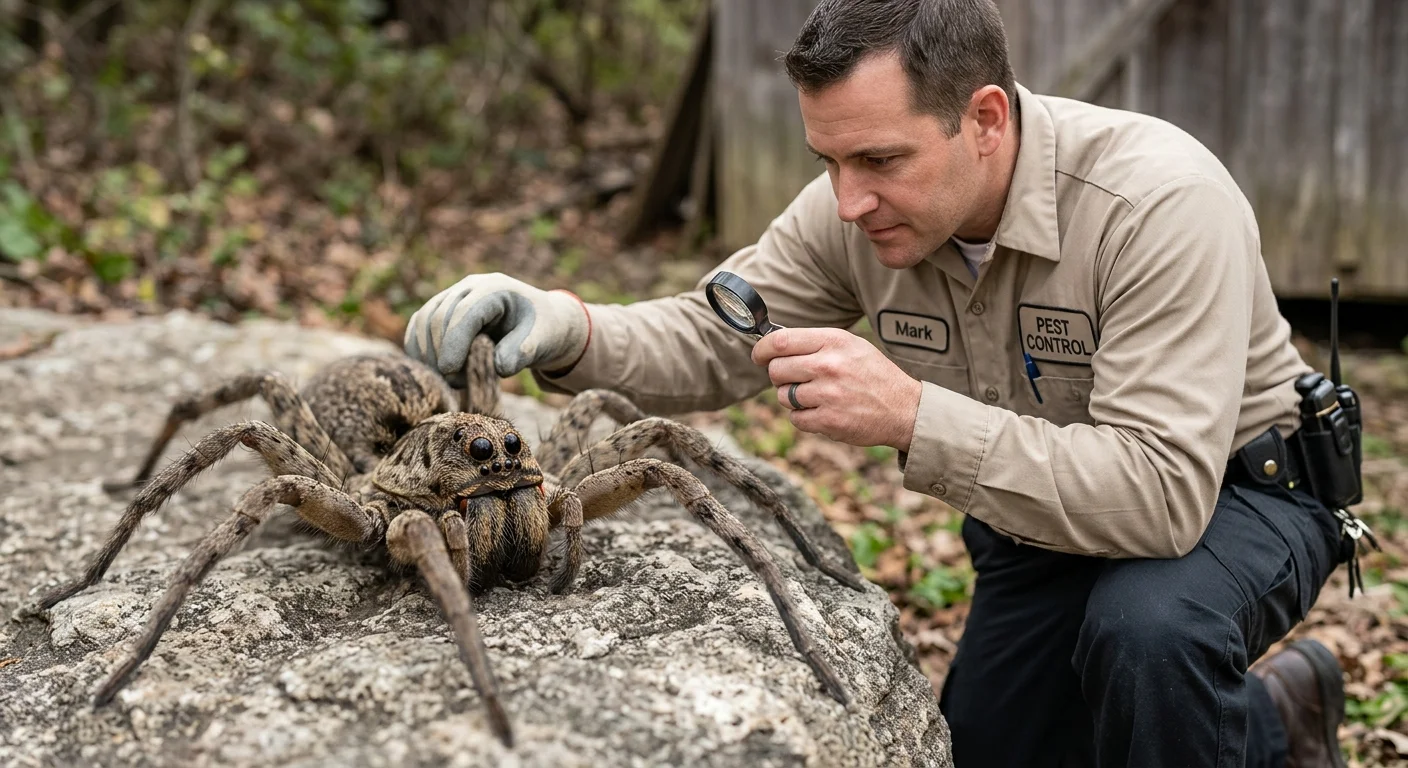
Wolf spiders (family Lycosidae) hunt on the ground. UC IPM describes them as active hunters in the open during the day and night, often on the ground in litter and on low vegetation, in burrows, and under debris. They do not spin a capture web. They make a small, thick web where they rest.
UC IPM’s field mark is the eyes: four small eyes in front in a straight row, one middle pair of larger eyes, and one rear pair of widely spaced eyes on top of the head. They have long hairy legs. Color is usually brown to tan, some with black markings, which can make them hard to see unless they are moving. At night a flashlight can show green eye shine.
This page does not publish a body-length range. UC IPM does not give one for wolf spiders on the captured spiders page. Jumping spiders also have eyes in three rows, but UC describes a different pattern (four in front with large middle eyes, two very small in the second row, two medium in the third). Do not treat “large brown hunter in San Diego” as a finished ID.
UC IPM does not compare a wolf spider bite to a bee sting. Anyone with an unusual or severe reaction after a bite should contact a physician. If you still have the spider, keep it for identification.
Where they hide in San Diego yards and homes
Wolf spiders are excellent at camouflaging and finding sheltered spots, both outdoors and sometimes within your home. Understanding their preferred habitats in San Diego can help you prevent unwanted encounters.
In your yard, you’ll typically find wolf spiders in areas that offer good cover and access to prey. They thrive in dense ground cover like leaf litter, mulch beds, and tall grasses. Rock piles, old logs, landscaping timbers, and firewood stacks are also favorite hiding spots. These areas provide the perfect environment for them to ambush insects and avoid predators. Around your home’s foundation, any clutter, overgrown bushes, or vines create ideal conditions for wolf spiders to nest and hunt. Even drought-tolerant landscaping, common in San Diego, can offer enough nooks and crannies if not properly maintained.
When wolf spiders do venture indoors, they tend to stick to low-traffic, undisturbed areas. Basements, crawl spaces, and cluttered garages are prime locations. They’ll also hide under furniture, in storage boxes, behind baseboards, and inside closets, especially those that aren’t opened frequently. UC IPM describes wolf spiders as open-ground hunters by day and night, often in litter, on low vegetation, in burrows, and under debris on soil. They make a small, thick web where they rest instead of spinning prey-catching webs. Indoors you will usually see them on floors rather than in high corner webs.
Why they come inside and simple ways to keep them out
Wolf spiders show up indoors when they follow prey or walk through unsealed openings. UC IPM says they prey on insects walking or resting on the ground, so crickets, cockroaches, and other ground insects already inside are a reason to look at the same gaps. Accidental entry through foundation cracks, door sweeps, and vents is common.
Keeping these fast-moving arachnids out of your home involves a multi-pronged approach focused on exclusion and habitat modification:
- Seal Entry Points: Inspect your home’s foundation, walls, and around pipes for any cracks or crevices. Seal these gaps with caulk. Pay close attention to doors and windows; ensure they have tight-fitting screens and that weatherstripping and door sweeps are in good repair. A worn-out weather strip under a door is an open invitation.
- Reduce Outdoor Clutter: Clear away leaf litter, grass clippings, firewood, and other debris from around your home’s foundation. These provide excellent hiding spots for wolf spiders. Trim bushes and vegetation so they don’t touch the exterior walls of your house, creating a direct bridge for spiders.
- Manage Moisture: Fix leaky pipes or faucets, both indoors and out. Reduce standing water in basements and crawl spaces with ventilation or a dehumidifier.
- Limit Prey: UC IPM says wolf spiders prey on insects walking or resting on the ground. Reducing leaf litter, debris, and other ground cover around the foundation cuts that hunting habitat. Keeping outdoor areas tidy also helps limit general pest populations.
- Regular Cleaning: Inside, vacuum regularly, especially in corners, under furniture, and in storage areas. Reducing dust and clutter removes potential hiding spots and food sources.
For more general advice on dealing with arachnids, you can also check out our guide to common spiders in San Diego. These simple steps make your home less inviting to wolf spiders and many other common pests.
Frequently asked questions
Are wolf spiders dangerous?
UC IPM treats most spiders as beneficial insect predators and names the black widow as California’s main medically important spider. Wolf spiders hunt on the ground and do not build a capture web. This page does not grade bite severity. Seek medical advice for an unusual reaction, and save the spider if it is safe to do so.
How do I tell a wolf spider from a brown recluse?
Use the eyes and build, not the ZIP code. UC IPM’s wolf spider mark is four small eyes in a front row, a larger middle pair, and a widely spaced rear pair on top of the head, plus green eye shine at night. A brown recluse question belongs on brown recluse spiders in San Diego. Location is not species proof.
Why are wolf spiders coming into the house?
They follow prey and walk in through unsealed openings. Ground-level gaps, cluttered garages, and heavy mulch or ground cover against the foundation are the usual route. Reducing the insects they hunt and sealing gaps at door sweeps and vents does more than spraying the spiders themselves.
When to call us
If you want a licensed look at entry gaps, harborage, and whether the spider is a widow rather than a ground hunter, request an inspection. Pest Pros San Diego does not inspect or treat. We match you with a licensed local company. The company you are matched with inspects first and quotes in writing. See spider control.
Call us at (858) 400-6561 to get matched with a licensed local pro.