
Shield-shaped bugs turning up on window screens and light fixtures are a familiar complaint, and the name people reach for is stink bug. This page doesn’t try to settle the identification from a description, because a photo and an inspector do that better. What it covers is the work that pays off either way: closing the gaps these insects use to get in, and what to ask the company you hire.
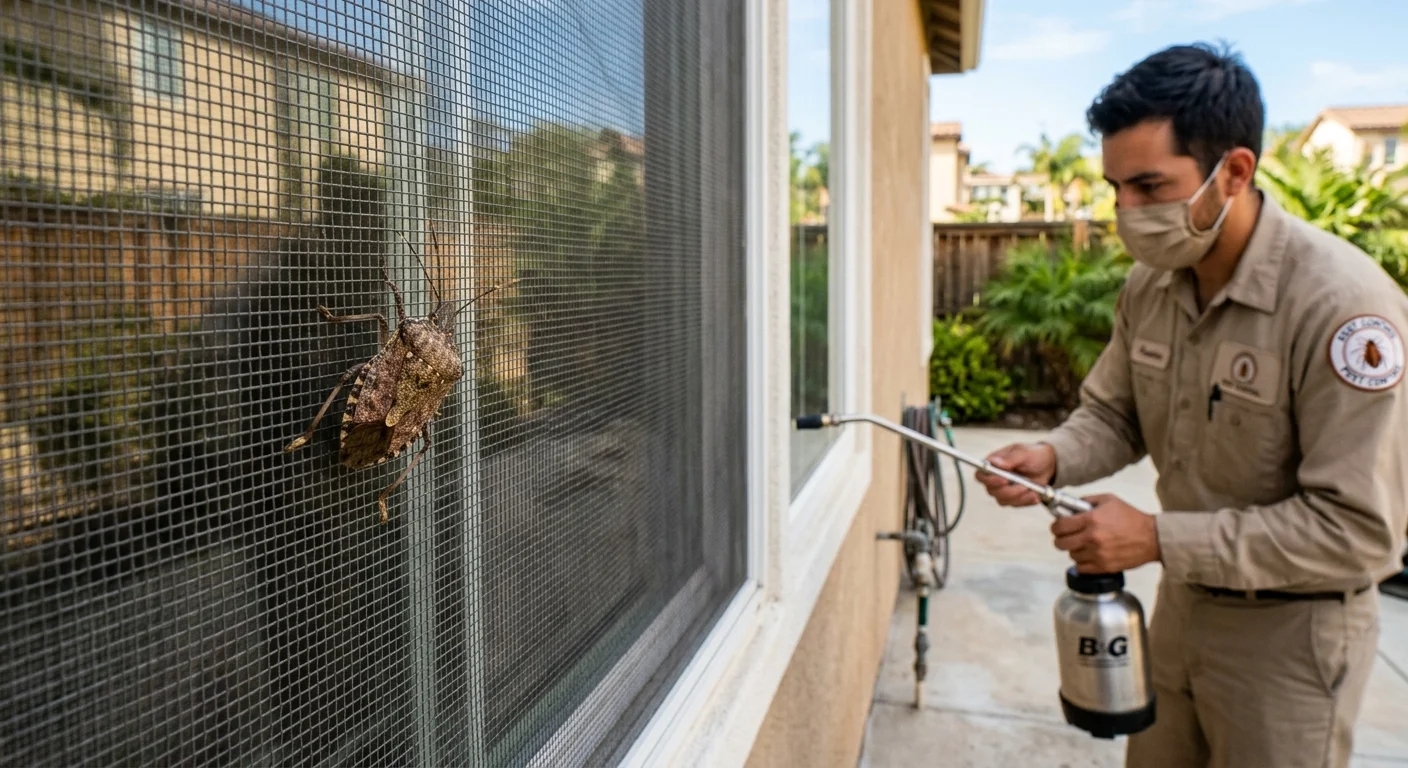
Getting the identification right first
Get a photo before you do anything else. Shield-shaped bugs cover several different insects, and the name brown marmorated stink bug gets applied to all of them. The distinction matters because a garden pest, a household invader and a beneficial insect get different answers.
Keep a specimen if you can. A crushed one is harder for anyone to identify.
Questions worth putting to whoever inspects:
- What species is this, and what did you look at to decide?
- Is it coming from the landscaping, from inside a wall, or from outside the property?
- Does this species cause damage here, or is it a nuisance?
- What would you do beyond spraying?
Why they come indoors
The behavior homeowners describe is consistent: the bugs show up on sunny walls and screens, work their way into gaps, and then reappear inside months later at windows and light fixtures.
That’s why exclusion is the lever. Anything that gets in through a gap can be kept out by closing the gap, and a treatment that kills the ones already inside does nothing about next season’s arrivals.
Ask the inspecting company where it thinks they’re entering, and ask it to show you. A general answer about the perimeter isn’t an answer.
Sealing the gaps they come in through
Stink bugs come indoors through gaps you can find and close. That work is ordinary building maintenance, it holds up after a treatment wears off, and it works on more than one pest. The CDC’s rodent guidance frames it the same way: “Look for gaps and holes in and around your home” and “Seal up any gaps and holes you find.”
Begin by inspecting all windows and doors. Check window screens for tears, rips, or holes. Make sure window frames are properly sealed with caulk, and that weatherstripping around doors and windows is intact and forms a tight seal when closed. Pay close attention to door sweeps at the bottom of all exterior doors, replacing any that are worn, damaged, or don’t make full contact with the threshold. UC IPM’s rodent exclusion guidance says to “Make sure all exterior doors are tight fitting and sealed at the threshold,” which is the same standard.
Next, examine your home’s foundation and exterior walls for visible cracks or openings. Seal these with a durable silicone or acrylic latex caulk. Don’t overlook utility penetrations, the points where pipes, wires, or cables enter your home from the outside. Seal gaps around outdoor faucets, dryer vents, electrical conduits, and air conditioning lines. Check around chimneys and fascia boards too.
Don’t forget attic and crawl space vents. Make sure they have tight-fitting screens that are free of damage. If you have a chimney, make sure it has a proper cap or mesh screen. Our General Pest Control referrals often start with similar exclusion work, because it’s what holds up after the treatment wears off.
Frequently asked questions
Are there stink bugs in San Diego?
Homeowners here report them, and shield-shaped bugs on screens are a common call. Getting the species confirmed is worth doing before anyone treats, because several different insects fit that general description. Take a clear photo and ask the inspector what they’re looking at.
Do stink bugs bite or cause damage in the home?
That’s a question for the identification rather than a general answer, and a licensed inspector should tell you what the species does and doesn’t do. What we can say is practical: vacuum them up rather than crushing them, because a crushed specimen is harder for anyone to identify.
Is there an exterminator for stink bugs in San Diego?
Yes, and the useful work is exclusion rather than spraying. Sealing the gaps around windows, doors, vents and utility penetrations is what keeps a batch from being replaced by the next one. Ask the inspecting company to show you where it thinks they are getting in.
When do stink bugs come into San Diego homes?
Ask the inspecting company what it sees on your property rather than working from a general calendar. What homeowners describe is a movement indoors as the weather cools and another burst of activity at windows when it warms back up, which means sealing work is best done ahead of the cool-weather movement.
When to call a stink bug exterminator in San Diego
DIY exclusion is worth doing, but there’s a point where it stops being a homeowner job: when you can’t find the entry points, when the activity is inside a wall or attic you can’t inspect, or when numbers keep climbing after you’ve sealed what you can reach. That’s when to bring in a licensed company. A company matched through Pest Pros San Diego inspects first, tells you what it identified and where it’s getting in, and quotes in writing before any work begins. Call us at (858) 400-6561 to get matched with a licensed local pro.