
Imperial Beach owners and agents usually meet a termite inspection through a sale. It’s worth knowing what the inspector is legally required to look at and to write down, because that’s what you’ll be negotiating from later.
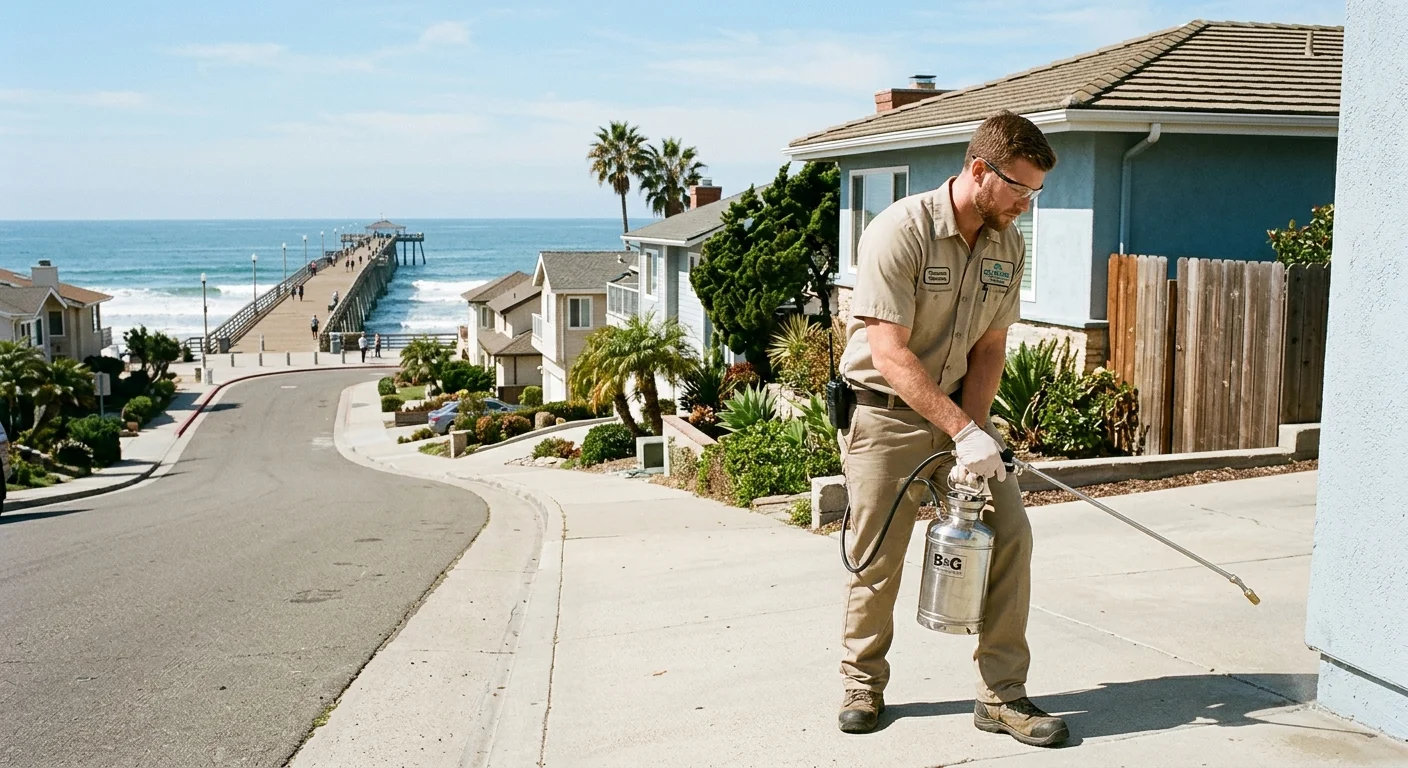
The termites an Imperial Beach inspector is looking for
Two groups turn up across San Diego County. Subterranean termites, UC IPM says, “require moist environments” and “usually nest in or near the soil and maintain some connection with the soil through tunnels in wood or through shelter tubes.” Drywood termites are the other. UC IPM reports they are “commonly found along the Pacific coastal region extending into the Central Valley and deserts of Southern California,” and that their nests “remain entirely above ground and do not connect to the soil.”
Moisture is the part you can act on, and UC IPM notes subterranean termites “are often found in wood that has been slightly decayed.” Leaky pipes, poor drainage, and blocked ventilation all feed that. Nothing published ranks Imperial Beach against other county cities for termite pressure, so don’t accept that framing from any company. Ask instead what the inspector found at your address and where.
One thing about your own house is worth settling before you book, and it isn’t about the neighborhood. Does it sit on a raised foundation or on a slab? A raised foundation gives the inspector a sub-area to crawl into and read sill plates and floor joists from below. A slab doesn’t, so the attention moves to the slab edge, plumbing penetrations, and exterior wood. Ask the company how it handles yours, because that decides how much of the structure anyone can actually see.
The conditions that matter are the ones California requires the report to list: “earth-wood contacts, excessive cellulose debris, faulty grade levels, excessive moisture conditions, evidence of roof leaks, and insufficient ventilation.” Walk the perimeter with that list before the inspector arrives so you can point at the spots you already worry about: fence posts and gate frames set into soil, deck posts and the bottom stair tread, planters pushed against the wall, irrigation hitting the foundation, and anything stacked over a vent or a sub-area hatch. Clear the hatches first, because an area the inspector cannot reach gets written up as inaccessible rather than as clear.
What a licensed inspector looks for during a WDO inspection
A Wood-Destroying Organism (WDO) inspection has to be carried out by “a licensed Branch 3 field representative or operator employed by a registered company.” Branch 3 is defined by the Structural Pest Control Board as “the practice relating to the control of wood-destroying pests or organisms by the use of insecticides or structural repairs and corrections, excluding fumigation.” The inspection covers accessible areas, inside and out.
The report is required to carry “information regarding the substructure, foundation walls and footings, porches, patios and steps, air vents, abutments, attic spaces, roof framing that includes the eaves, rafters, fascias, exposed timbers, exposed sheathing, ceiling joists, and attic walls.” That list is effectively the route the inspector walks. UC IPM adds what they’re reading along it: for subterranean termites, shelter tubes, which “are the most commonly seen evidence of a subterranean termite infestation”; for drywood termites, “feeding damage, shed wings, fecal pellets, and kickout holes.” More on the signs of termites in San Diego.
There are limits, and they belong in the report. UC IPM notes that “by California state law, the minimum requirement for termite inspections includes visual searches of accessible areas,” and that finding hidden infestations “may require removing walls, paneling, and stucco.” The report has to give an “indication or description of any areas that are inaccessible or not inspected with recommendation for further inspection if practicable.” Read that part of your termite inspection report as carefully as the findings.
Understanding your termite report and next steps
The written report follows on a form approved by the board. It includes a “foundation diagram or sketch” marking “the approximate location of any infested or infected areas evident,” plus “recommendations for corrective measures.” The form separates two things people shorthand as Section 1 and Section 2.
Section 1 is “the infestation or infection that is evident”: what the inspector actually found, and where. That’s the part a lender or buyer normally wants cleared before closing, and it’s where any termite treatment quote starts. Section 2 is “the conditions that are present that are deemed likely to lead to infestation or infection.” California is explicit that those conditions must not “be characterized as actual “defects” or as actual “active” infestations or infections,” which is exactly why the two get negotiated differently.
In a sale, delivery is a legal step, not a courtesy. Civil Code 1099 requires the seller or their agent to hand the buyer a copy of the report before title transfers, where the report is a condition of the contract or of the financing. One more line to know: every report must carry the notice that “you have a right to seek a second opinion from another company,” because findings should match between companies even when the recommended fixes don’t. Check any company’s license at pestboard.ca.gov before you sign.
Scheduling a termite inspection for your IB home or property
There’s no published inspection interval we can point you to, so ask the inspecting company what it recommends for your construction and why. What is documented is the reason people don’t catch this early on their own: UC IPM says drywood termites “are difficult to detect since they live deep inside wood and are rarely seen until they swarm.” For buyers the report is negotiating material. For sellers it’s the document the other side will ask for anyway.
Pest Pros San Diego takes the request and matches you with a licensed local company. That company does the inspection and writes the report; we don’t inspect and we don’t treat. If the timing is tied to escrow, say so when you call, and ask the company for its own turnaround in writing.
If you want to reduce the conducive conditions yourself, UC IPM’s structural advice is concrete: keep substructural wood “at least 12 inches above the soil,” keep “foundation areas well ventilated and dry,” and remove “any wood in contact with the soil.” Stored lumber, untreated fence posts, and buried scrap wood near the structure are worth clearing too.
Frequently asked questions
Is a termite inspection the same as a WDO inspection?
Yes. WDO stands for Wood Destroying Pests and Organisms, and it’s the formal name for the report a licensed inspector files. Lenders and escrow companies in San Diego County ask for it by that name, so a termite inspection and a WDO inspection produce the same document.
What is the difference between Section 1 and Section 2 on the report?
Section 1 covers active infestation or existing damage, the things a lender usually requires cleared before closing. Section 2 covers conditions likely to lead to infestation if left alone, such as wood-to-soil contact, poor drainage, or moisture against the structure. Section 2 items are recommendations rather than findings of active damage, which is why the two get negotiated differently in a sale.
What does a licensed inspector actually check in an Imperial Beach home?
The accessible structure. California requires the report to cover the substructure, foundation walls and footings, porches, patios and steps, air vents, abutments, attic spaces, and the roof framing including eaves, rafters, fascias and exposed sheathing. Anywhere the inspector couldn’t get to has to be named in the report as well.
What happens if the report comes back with findings?
Findings are not the same as a treatment plan. The report says what was found and where; the treatment is quoted from it afterwards, by scope, and the method depends on the species and how far the activity has spread. Getting the report first and the quote second is the order that protects you from paying for scope nobody has confirmed.
When to call us
If you’ve seen shelter tubes, pellets, or shed wings, or you’re preparing an Imperial Beach home for sale, a licensed Branch 3 company is the one that can inspect and write the report. Call us at (858) 400-6561 to get matched with a licensed local pro.