
Finding a pile of tiny wings on a windowsill or seeing what looks like sawdust near a baseboard can be unsettling. For homeowners in Chula Vista, these small signs can point to a much larger problem silently growing within the walls. Termites are a routine problem here, not a rare one: UC IPM reports that thousands of housing units in California require treatment for termites every year.
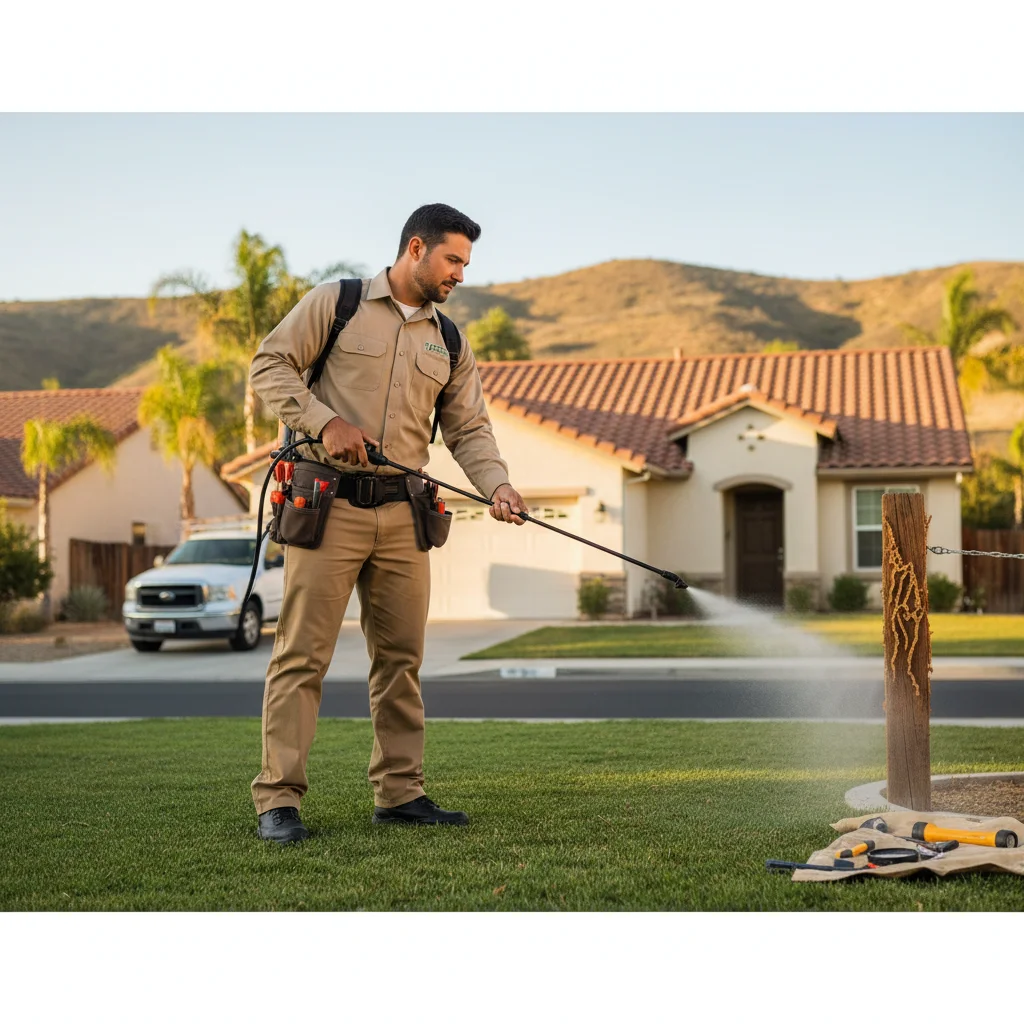
Why Chula Vista’s climate is a perfect storm for termites
Mild weather matters here because termites don’t get a hard seasonal stop. UC IPM notes that in California they can forage year-round, though the intensity of foraging varies with the season. It describes that foraging as minimal from November to February, moderate in spring and fall, and high, but erratic, during the summer months.
Two primary types of termites plague our homes: subterranean and drywood termites. Our climate provides ideal conditions for both.
Subterranean Termites: UC IPM explains that subterranean termites require moist environments, so they usually nest in or near the soil and maintain some connection with the soil through tunnels in wood or through shelter tubes. It adds that the optimal conditions for foraging, warm temperatures and high soil moisture, are usually present under and around buildings. Those shelter tubes are how a colony in the ground reaches framing that never touches it.
Drywood Termites: These don’t need contact with soil. UC IPM says nests of most species remain entirely above ground and do not connect to the soil, and that in California they infest dry, sound wood including structural lumber, dead limbs on trees, utility poles, decks, fences, lumber in storage, and furniture. From that infested wood, winged reproductives periodically swarm to infest additional nearby wood.
This combination of year-round moisture for subterranean termites and ideal swarming conditions for drywood termites creates a constant, dual threat for Chula Vista homeowners.
Spotting drywood vs. subterranean termites in Eastlake and Bonita homes
Identifying which type of termite you’re dealing with is the first step toward effective treatment. While both cause serious damage, they leave behind different clues. Whether you’re in a newer home in Eastlake or an older one in Bonita, knowing the signs is crucial.
Subterranean termite evidence
Because they come from the ground, the most obvious signs of subterranean termites are found in the lower levels of a home, like the foundation, crawl space, or garage.
- Mud Tubes: UC IPM calls shelter tubes the most commonly seen evidence of a subterranean termite infestation, and describes them as earth-hardened tubes made by workers using saliva mixed with soil and bits of wood or even drywall. Working tubes run from the nest in the soil to wooden structures and may travel up concrete or stone foundations.
- Damaged Wood: Wood damaged by subterranean termites has a layered or hollowed-out appearance. They eat along the grain, consuming the soft springwood and leaving the harder summerwood behind. You might find mud packed into the galleries they’ve eaten away.
- Swarmers: UC IPM describes subterranean reproductive winged forms as dark brown to brownish-black with brownish-gray wings, and says Reticulitermes species swarms during the afternoon in either spring or fall on clear days after a soaking rain.
Drywood termite evidence
Drywood termites live entirely within the wood they are consuming. Their signs can appear anywhere in the home, often in higher areas like attics and eaves.
- Fecal Pellets (Frass): Drywood termites push fecal pellets out through kickout holes, which UC IPM defines as small holes (less than 2mm in diameter). It says these fecal pellets have six hexagonal sides and are diagnostic for drywood termites. You’ll find them in small piles on windowsills, floors, or below infested wood. UC IPM cautions that pellets alone can’t tell you whether the infestation is currently active, though cleaning up a pile and checking again a few days later can help.
- Blistered or Darkened Wood: As they tunnel just beneath the surface, they can cause the wood or paint to look blistered or warped. Pressing on the area may reveal a hollow or soft spot underneath.
- Swarmers: UC IPM says the most common sighting of drywood termites is flying adults (called swarmers) that occur during daytime hours during summer and fall.
For a more detailed comparison of these two destructive pests, you can read our complete guide on drywood vs. subterranean termites in San Diego. An expert can provide a definitive identification, which is critical for choosing the right treatment plan.
Local building codes and termite inspection rules for home sales
In California, termites are a major consideration during real estate transactions. The Structural Pest Control Board states that most lending institutions require that homes in California be inspected for wood destroying pests and organisms (WDO) before financing a home loan. That is why the report turns up in so many sales. Ask your lender whether yours requires one.
The official report is called a Wood Destroying Organisms (WDO) Inspection Report. This report is filed with the state and details any findings of active infestations, past damage, and conditions that could lead to future problems. Under Business and Professions Code 8516(b), no registered company may issue a document stating whether wood destroying pests or organisms are present until a licensed Branch 3 field representative or operator employed by that registered company has made the termite inspection. The address of every property inspected is reported to the Board.
The WDO report is typically broken down into two main categories:
Section 1 Findings: Business and Professions Code 8516 requires the report to separately identify the infestation or infection that is evident. That is the Section 1 half: what the inspector actually found. Correcting it might mean a local treatment, whole-structure fumigation, or repairs to damaged wood.
Section 2 Findings: The same code requires the report to separately identify the conditions that are present that are deemed likely to lead to infestation or infection, and names the usual ones: earth-wood contacts, excessive cellulose debris, faulty grade levels, excessive moisture conditions, evidence of roof leaks, and insufficient ventilation. Who corrects which items is a contract question between buyer and seller, so ask your agent and the inspecting company how each side normally handles it.
Understanding this report is vital for both parties. For a seller, getting an inspection before listing the property can prevent surprises and delays. For a buyer, it gives a documented picture of the home’s condition in the visible and accessible areas, which is what you negotiate repairs from.
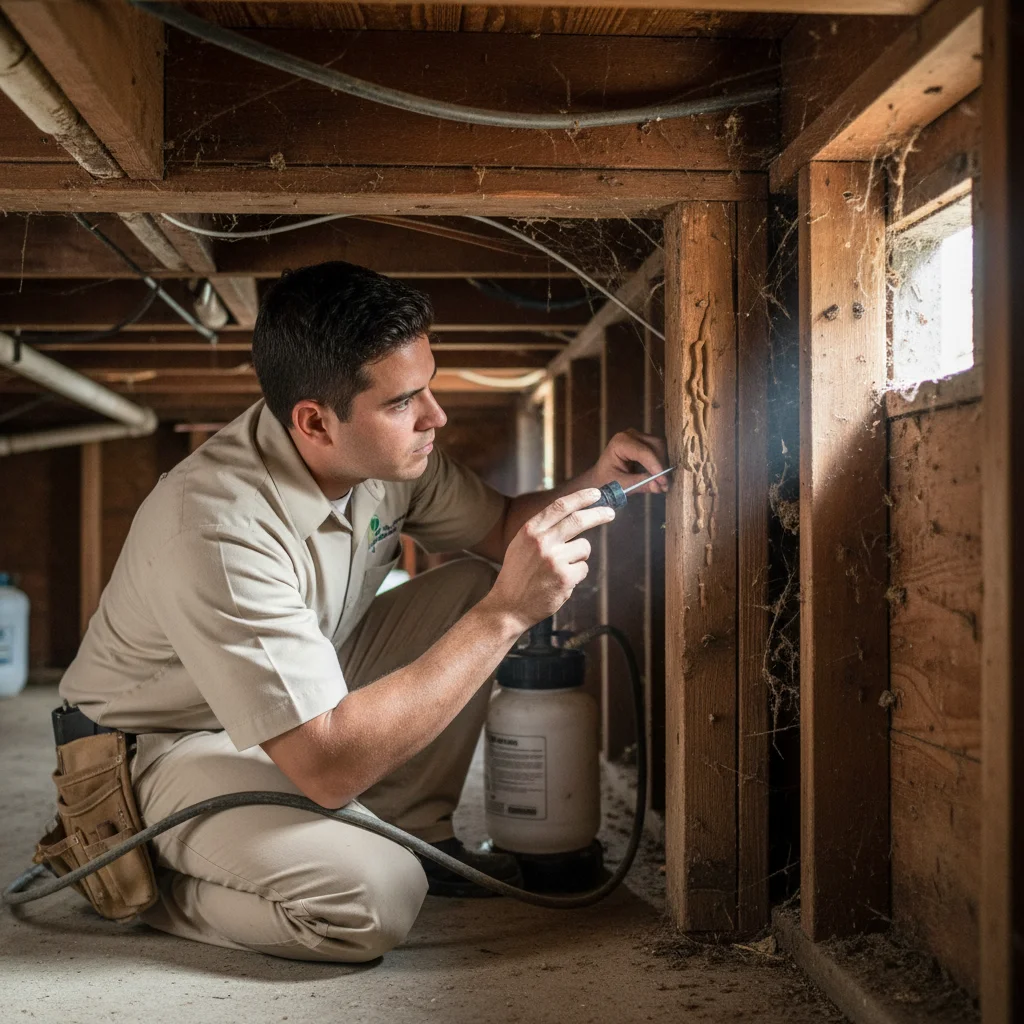
Choosing a local Chula Vista termite control company
When your home is at stake, you need a partner you can trust. Choosing the right termite control company involves more than just picking the lowest price. It’s about finding a licensed, experienced, and reputable professional who understands the specific challenges of our local area.
Here’s what to look for in a Chula Vista termite professional:
- Proper Licensing: The most important factor. In California, termite work sits under the Structural Pest Control Board, whose Branch 3 covers the control of wood-destroying pests or organisms by the use of insecticides or structural repairs and corrections. Verify the company’s license, branch and current status on the SPCB website before you sign, and check that the name on the record matches the name on your proposal.
- Local Experience: Ask how often the company works on housing like yours, and raise the details of your own build. UC IPM flags one worth naming: stucco siding that reaches the ground may promote termite infestations, since termites might travel between the stucco and the foundation unseen.
- Comprehensive Inspections: Ask whether the company inspects before it quotes, and what that inspection covers. UC IPM notes that by California state law the minimum requirement for termite inspections includes visual searches of accessible areas, and that detection of difficult-to-find infestations may require removing walls, paneling, and stucco, as well as using ladders and scaffolds.
- Clear Treatment Options: The right termite treatment depends on the species and the scope. UC IPM is direct that subterranean termites in structures cannot be controlled using techniques that are appropriate for drywood termites, such as fumigation, heat treatment, freezing, and termite electrocution devices, because most of the colony sits near or below ground level. For subterranean work it says liquid applications of pesticides are most often used, applied to the soil either in drenches or by injection. Ask which method the report calls for and why. UC IPM publishes independent detail on various treatment methods you can read first.
- Guarantees and Warranties: Ask the matched company what its guarantee actually covers, how long it runs, whether a callback is included or billed, and what voids it. UC IPM’s advice to homeowners is to read the guarantee carefully and to consider whether an annual inspection service is worth adding. Terms vary by company, so get them in writing before you sign rather than assuming what a warranty includes.
Taking the time to vet your options and choose a qualified local company is worth the delay it costs you.
Frequently asked questions
What kind of termites do Chula Vista homes get?
Both groups occur here. UC IPM describes drywood termites as most prevalent in southern California, and subterranean termites as very abundant in most parts of California. Which one you have decides the treatment, so identification comes before any quote.
How much does termite treatment cost in Chula Vista?
It depends on the species and the method the inspection calls for. Localised spot treatment on contained drywood activity is the cheap end; whole-structure fumigation is priced by the size of the building, and soil barrier work is priced along the perimeter. Any firm number offered before a report exists is a guess.
Is a termite inspection the same as a WDO inspection?
Yes. WDO stands for Wood Destroying Pests and Organisms and it’s the formal name for the report a licensed inspector files, which is what lenders and escrow companies ask for by name.
How do I check that a pest control company is licensed in California?
Look the company up with the California Structural Pest Control Board at pestboard.ca.gov before signing anything. The record shows license status and the branch held: Branch 1 is the control of household and wood-destroying pests by fumigation with poisonous or lethal gases, Branch 2 is household pests excluding that fumigation, and Branch 3 is wood-destroying pests and organisms by insecticide or structural repairs and corrections, also excluding fumigation. Termite work sits in Branch 3, or Branch 1 when the proposal is a whole-structure fumigation. The name on the record should match the name on your proposal.
When to call us
If you see discarded wings, shelter tubes on your foundation, or suspicious wood damage, a licensed inspection is what settles it. UC IPM notes that seeing swarms of flying termites does not always mean your home or building is infested, and that a professional inspection of the structure is usually required to confirm an infestation. Whether you’re worried about active termites or need a WDO report for a home sale, we can match you with a licensed local company.
Call us at (858) 400-6561 to get matched with a licensed local pro.
Termites are one part of what we cover. See our Chula Vista pest control overview.