

The ants on the kitchen counter are foragers, not the nest. UC IPM names the Argentine ant, Linepithema humile, as the most common ant in and around California houses and gardens. Its colonies are linked into one supercolony with multiple queens. Killing the trail you can see leaves that structure in place.
Why a visible trail is not the colony
Workers gather food and feed the nest. Queens stay with the colony and lay eggs. Argentine nests are often shallow, just below the soil, and go deeper when it is dry. Queens do not go out alone to start a new nest. They move with workers.
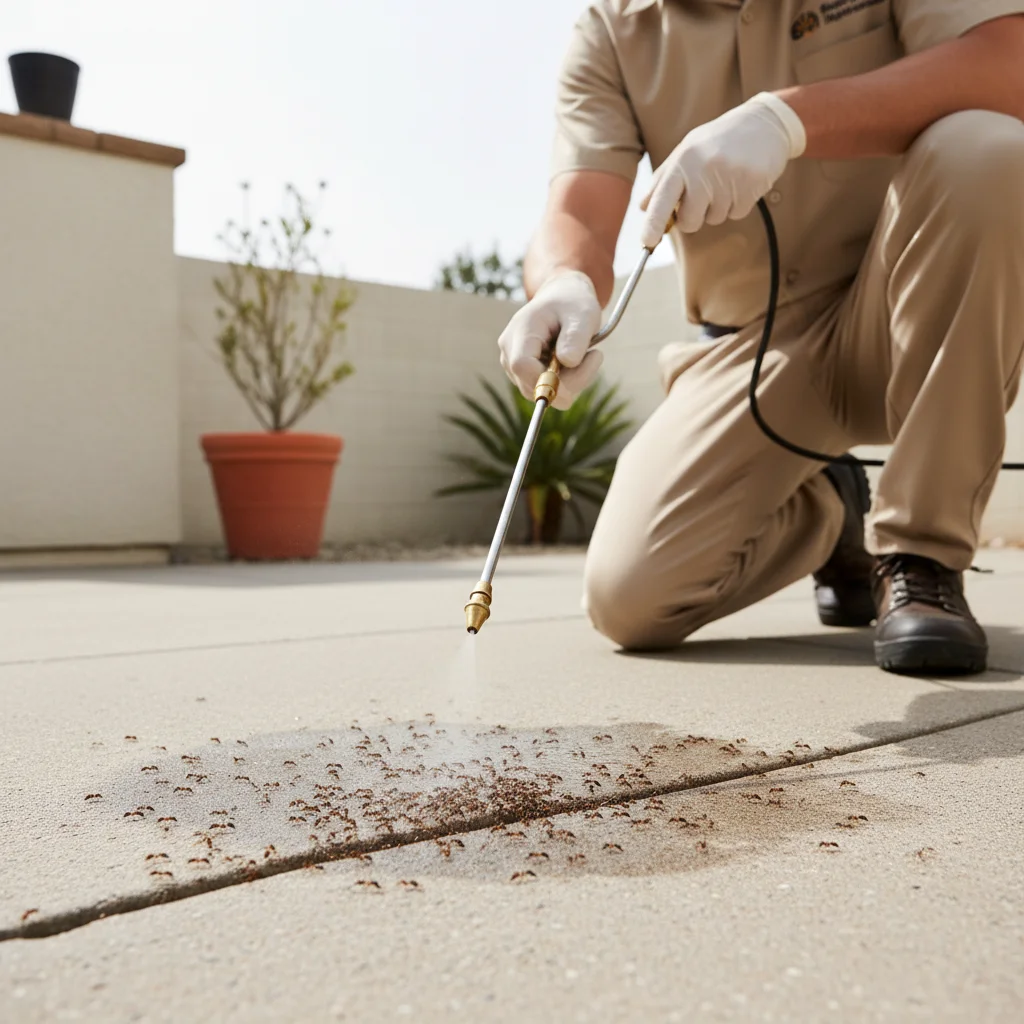
UC IPM: spraying ants indoors with pesticides will not prevent more ants from entering. Sprays only provide temporary control. This page does not claim that a contact spray splits queens or creates extra colonies. The failure mode UC names is simpler. The trail dies. The nest does not.
What UC IPM says actually reaches the nest
Baits mix insecticide with food workers want. Workers carry the bait to the nest, where it can be shared with other workers, larvae, and queens. The toxicant has to act slowly enough that foragers get home first. UC says that when baits are used properly they are more effective and safer than sprays, and that they are the only type of insecticide recommended in most situations.
Sweet baits attract Argentine ants year-round. Protein baits attract them mainly in spring. UC: it can take 5 to 10 days to see fewer ants, and full colony impact can take several weeks or more. Do not spray while you are baiting. Remove competing crumbs and sweet residues. Place baits near trails and nest openings outdoors. Indoor baiting is for a serious infestation when you cannot find the entry. Otherwise outdoor bait draws ants out.
Wipe trails with soapy water or vacuum them. That removes the scent trail. Caulk cracks. Store food sealed. Fix leaky faucets and sprinklers. Keep plants, grass, and mulch off the foundation.
If you hire a company
UC’s question: ask them to use baits and spot treatments rather than perimeter treatments or monthly sprays. The matched licensed company inspects, chooses labeled products, and puts the plan in writing. This page does not name professional actives, worker counts, kill windows, or a visit cadence.
Pest Pros San Diego matches you with that company. It does not treat the colony. See ant control and the exclusion steps on how to keep ants out of your house in San Diego.
Frequently asked questions
How do you actually get rid of Argentine ants?
UC IPM: most ants live outdoors, so keep them from entering, and use slow-acting bait that workers carry to the nest. Indoor sprays do not stop the next foragers. There is no sourced promise of eradicating a supercolony that extends past one lot line.
How long does Argentine ant treatment take to work?
UC: 5 to 10 days before you may see fewer ants, and several weeks or more for bait to move through a colony. That is not a guarantee for your address.
Will the ants come back?
Pressure from linked nests around the property can continue. UC treats this as ongoing exclusion and baiting when ants are a problem, not as a one-and-done spray.
Call (858) 400-6561 to get matched with a licensed local company.