
Those tiny red or reddish-brown bugs crawling on your sunny walls, windowsills, and patio in spring often match clover mites. Purdue Extension describes them as smaller than a pinhead, with front legs that are twice as long as the other legs, so people often mistake those legs for antennae. Clover mites do not bite people, do not damage the home indoors, and may leave a red stain when crushed. A bite or an itchy welt is not a reliable way to identify the bugs on the wall.
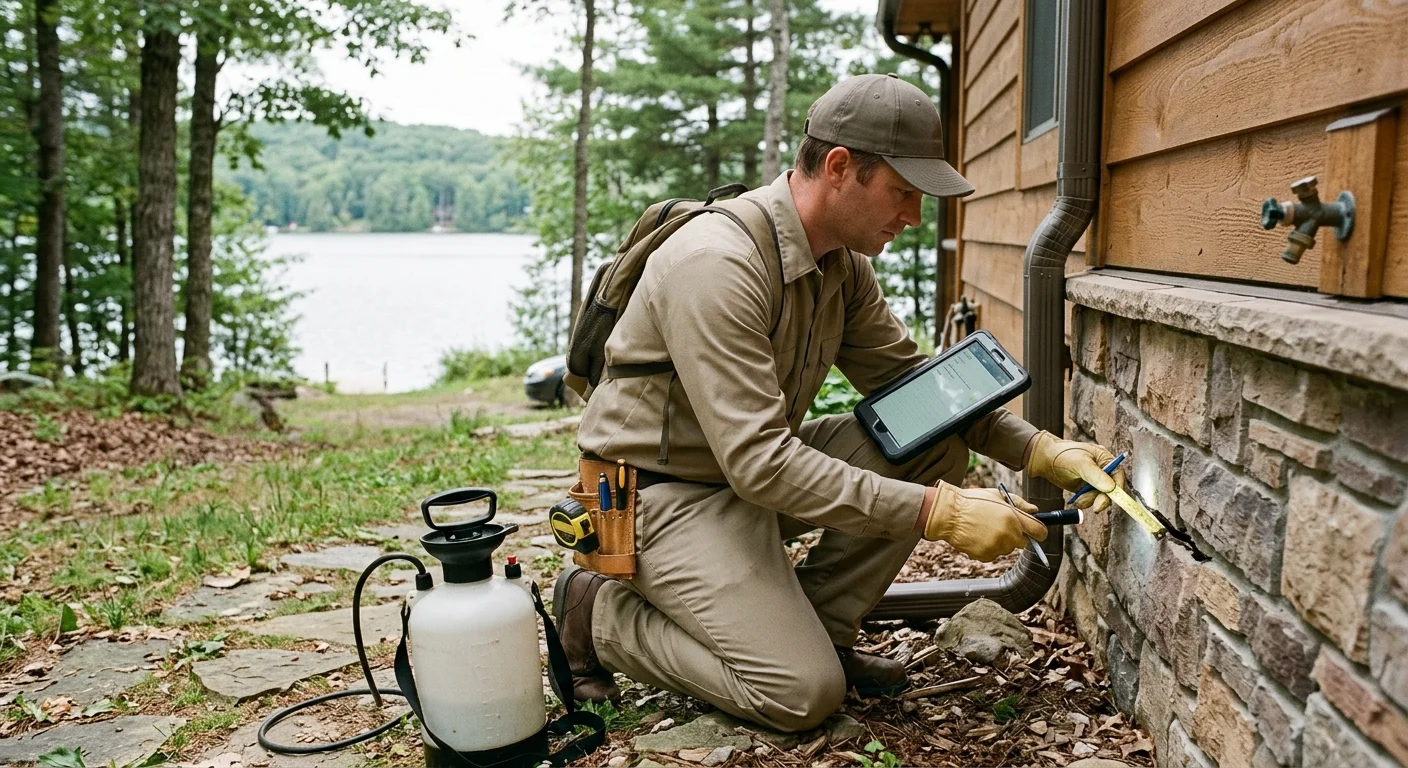
If you’ve got hundreds of them gathering on a south-facing wall, you’re not imagining it and you didn’t do anything wrong. Here’s how to identify them, why they show up, and how to shut the invasion down.
How to identify clover mites and tell them apart
Purdue Extension’s clover mite publication (Bennett and Gibb) is the identification source for this page. Clover mites are tiny, smaller than a pinhead, and may appear in large numbers. They look red to reddish-brown. The giveaway Purdue names is unusually long front legs, twice as long as the other legs.
They are mites, not insects, which is why a search for “red spider-like bugs on my windowsill” often lands here. They have no wings. Purdue notes they usually appear first around windows and can later show up more widely indoors.
Do not use biting as the test. Purdue states clover mites do not bite people. If you have itchy welts after time in grass or brush, that reaction does not prove the crawlers on the wall are chiggers, and it does not prove they are clover mites either. Photograph the specimen on a pale surface, note where you found it, and compare it with the long-front-leg description before you decide.
| What you can check | Clover mite (Purdue) | What a bite does not prove |
|---|---|---|
| Size and legs | Smaller than a pinhead; front legs twice as long as the others | A welt does not identify the wall crawler |
| Where you find it | First around windows; also foundations, siding, and window frames | Outdoor itching can have several causes |
| Harm indoors | No bite; no indoor damage; red stain if crushed | Stain or itch is not a species diagnosis |
Why clover mites invade San Diego homes in spring
Clover mites feed on grasses, clovers, and certain other plants in the lawn and around the home. Purdue notes they become an annoying household pest especially where new lawns are being established or where there is heavy growth of well-fertilized grass close to foundation walls. They do not come from inside the house as an indoor breeding pest. They live on outdoor plants and move toward the building.
Purdue says clover mites are most abundant in the fall and spring and relatively inactive during hot summer months and again during cold weather. They migrate into homes when population pressure becomes too great or when feeding conditions become unfavorable, such as the onset of hot or cold weather. Typical hiding places include loose bark, foundation walls, beneath siding, and around window frames.
That is why a warm wall and a lush strip of grass against the foundation are the conditions to check. This page does not assign a San Diego-specific temperature threshold. A seasonal surge on sunny walls is consistent with the spring and fall pattern Purdue describes.
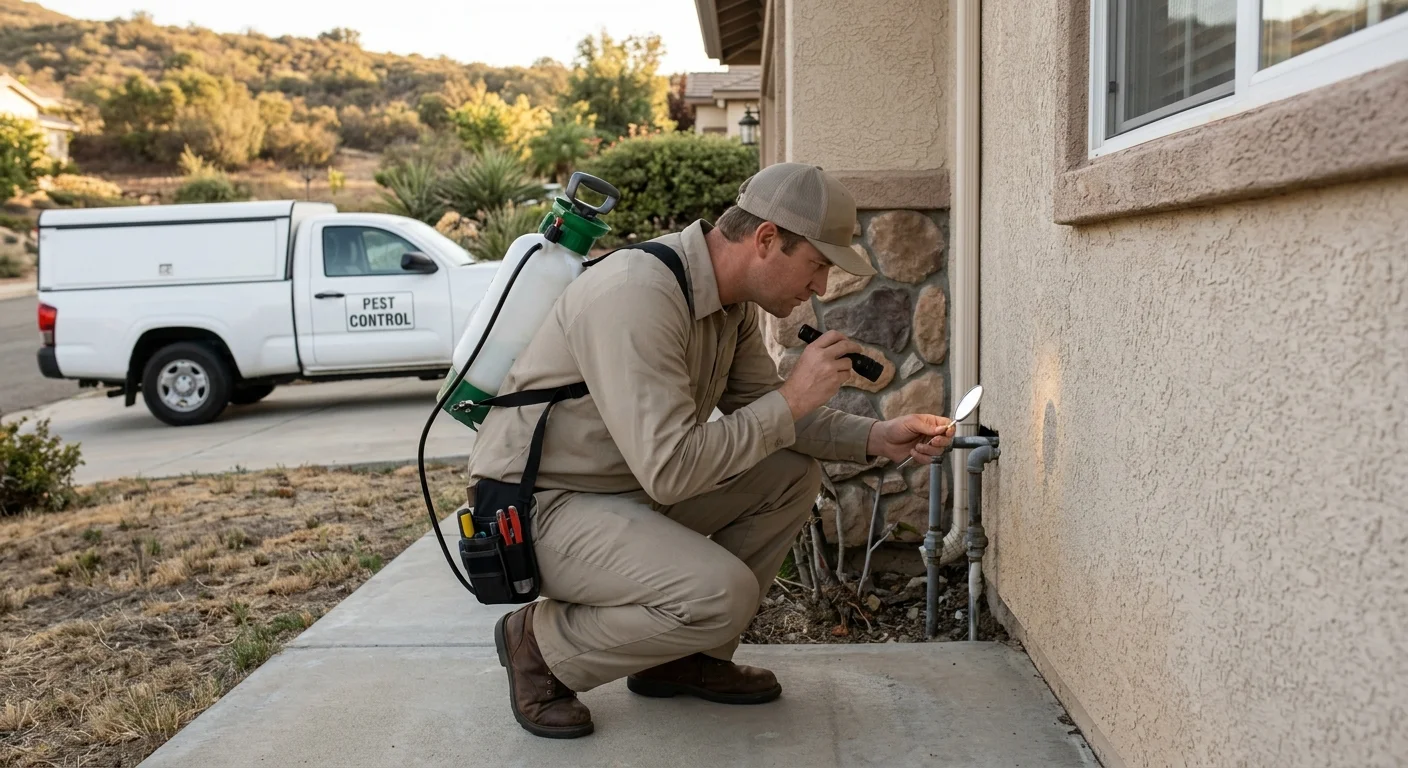
This is a seasonal pressure pattern, not a permanent indoor infestation. Clover mites are one of several pests that surge at predictable times of year. Our San Diego pest season calendar lays out when each one tends to show up, so you can stay ahead of the spring wave instead of reacting to it.
How to stop a clover mite invasion
Purdue’s prevention focus is keeping mites from entering. Grass and shrubbery against foundation walls make it easy for mites to get from lawn to house. To prevent easy access, Purdue recommends an 18 to 24 inch barrier of pea gravel along the foundation walls. If pea gravel is not practical, leave bare soil or use flower beds as the barrier.
A few more steps tighten it up:
- Don’t over-fertilize the turf right against the house. Purdue flags heavy, well-fertilized grass close to foundation walls as a typical setup.
- Seal gaps around windows, doors, vents, and where utility lines enter. Purdue lists cracks, window frames, siding, and foundation walls as hiding and entry places.
- Keep shrubs from forming a continuous bridge from lawn to wall.
When clover mites are already inside, the stain rule still matters. Purdue notes they may leave a red stain when crushed. Vacuuming provides short-term indoor relief. For a few stragglers, a damp soapy cloth or sponge works if you rinse it rather than smearing pigment into grout or paint. If a stain does happen, blot it, don’t rub it.
A matched company may discuss a labeled perimeter product as part of general pest control. Product choice, site, and timing belong to the licensee’s written scope and the label, not this article.
When to call a pro for clover mites
A handful of clover mites on a windowsill is a vacuum-and-move-on situation. You don’t need anyone for that. The time to bring in help is when the invasion comes back in large numbers every spring, or when sealing gaps and clearing a barrier band hasn’t slowed it down.
Purdue says that in situations where mites are especially difficult to control, consider the services of a commercial pest control specialist. Ask any company what it found at the foundation and plant strip, which labeled product it proposes, and how it will confirm the mites before treating.
If clover mites take over your walls every spring, we can match you with licensed local companies. See our pest control services in San Diego page or call (858) 400-6561. When you talk to any company, ask for their license number and verify it at pestboard.ca.gov before they treat.
Frequently asked questions
What are the tiny red bugs on my San Diego windowsill?
They may be clover mites. Purdue describes tiny red mites, smaller than a pinhead, with unusually long front legs, that often appear first around windows. Confirm with a photo or specimen. A bite or welt is not the identification.
Do clover mites bite?
Purdue states they do not bite people and do not cause indoor damage. They feed on plants outdoors. An itchy welt after time in grass or brush is not diagnostic of the bugs on your wall.
Why do I have clover mites in spring?
Purdue lists spring and fall as the abundant periods. Well-fertilized grass against the foundation is a documented setup. Warm walls and window gaps are the entry path to check, without a numeric local temperature claim.
How do I get rid of clover mites?
Purdue’s core prevention step is an 18 to 24 inch pea-gravel barrier along the foundation, or bare soil or flower beds if gravel is not practical. Reduce lush grass against the wall, seal entry gaps, and vacuum indoor mites instead of crushing them. Recurring invasions are a reason to compare licensed companies.
Are clover mites harmful to my home?
Purdue says they do not bite people or cause indoor damage. The red mark when crushed is a stain, not structural damage.
What’s the red stain when I crush a clover mite?
Purdue notes a red stain when crushed. Vacuum instead of squashing. If a stain happens, blot it gently instead of rubbing it in.