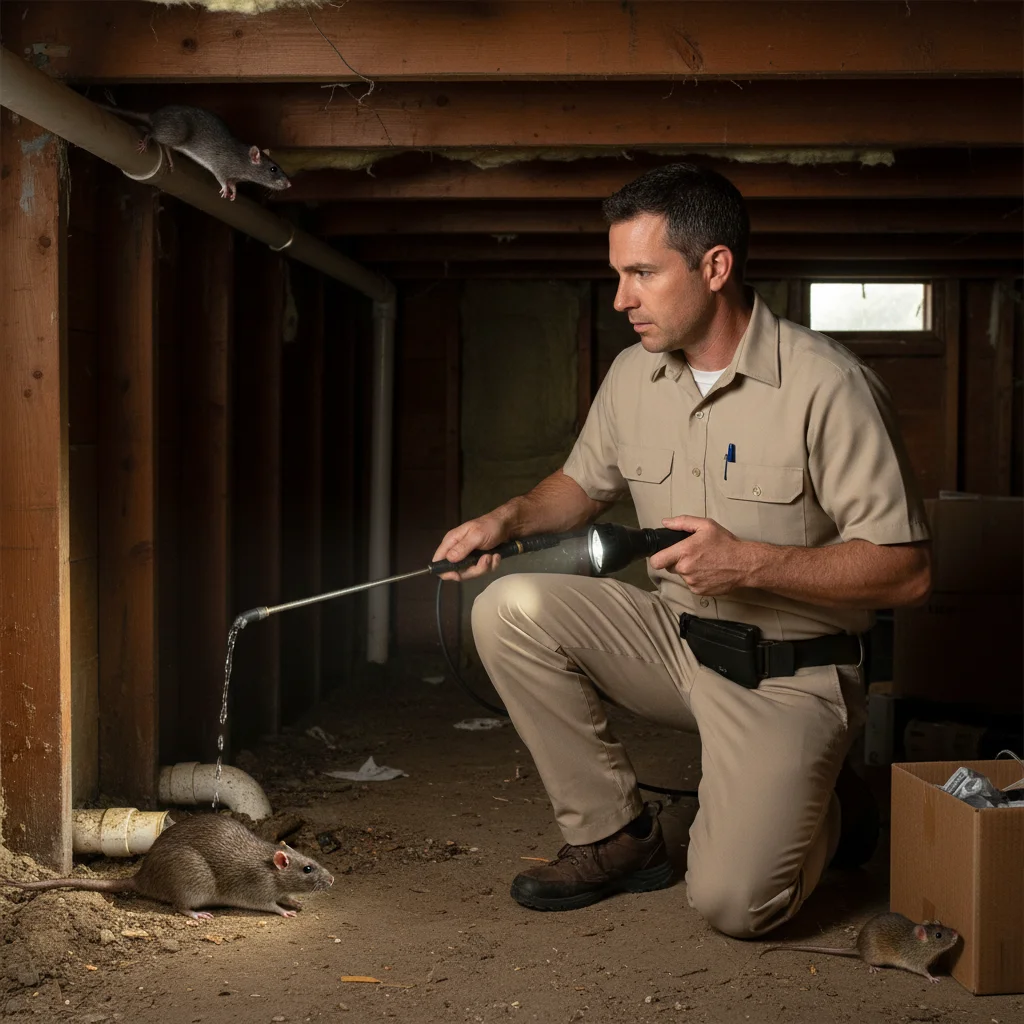
When you hear scratching in the walls or spot suspicious droppings, the first thought for many San Diego homeowners is “rats.” But not all rodents are the same, and knowing the specific culprit makes a big difference in effective pest control. San Diego County is home to a few highly adaptable rodent species that frequently invade homes, creating health risks and property damage. Identifying which one you’re dealing with is the critical first step.
Roof rats: the agile climbers
Roof rats (Rattus rattus), also known as black rats or ship rats, are incredibly common throughout San Diego. These rodents are excellent climbers, often found nesting in elevated areas like attics, walls, trees, and dense shrubbery. If you hear scurrying sounds above your head in the ceiling or along fence lines, it’s a strong indicator you might have roof rats. They typically have a sleek body, large ears, a pointed snout, and a tail that is longer than their body and head combined. Their fur color can vary from black to brownish-gray.
These rats are primarily nocturnal and omnivorous, feasting on fruits, nuts, berries, pet food, and garden produce. Their preference for high places means they can often access homes through small gaps in roofs, eaves, or even utility lines. A roof rat only needs an opening about half an inch wide to squeeze through. Once inside, they can chew through electrical wires, plumbing, and insulation, creating significant repair bills and fire hazards. Look for gnaw marks on wooden beams, pipes, and wiring. You might also find their droppings, which are small, spindle-shaped, and usually about half an inch long. They’re often scattered randomly as they move through your attic or other elevated spaces. Keeping your yard clear of overgrown vegetation and trimming tree branches away from your roof helps reduce their access points. For more on dealing with these agile invaders, our expert rodent control services are here to help.
Norway rats: the burrowing ground dwellers
In contrast to roof rats, Norway rats (Rattus norvegicus) prefer to stay closer to the ground. Also called brown rats or sewer rats, they are robust, stocky rodents with smaller ears, a blunt snout, and a tail that’s typically shorter than their body and head combined. Their fur is coarse and usually brown or grayish-brown. These rats are formidable burrowers, often creating extensive tunnel systems under foundations, concrete slabs, woodpiles, and dense ground cover. If you notice burrows along the exterior of your home, near drains, or in garden areas, Norway rats are the likely culprits.
Norway rats are also nocturnal and omnivorous, consuming a wide range of foods including meat, fish, pet food, garbage, and grains. They need a consistent water source, which often draws them to leaky pipes or damp areas around your property. Inside your home, you’ll most often find them in basements, crawl spaces, and ground-level storage areas. Their droppings are larger than roof rat droppings, capsule-shaped, and blunt at both ends, measuring up to three-quarters of an inch. Like their arboreal counterparts, Norway rats cause damage by gnawing on structures and spreading diseases. Keeping garbage cans securely sealed and maintaining a clean, clutter-free yard is crucial for preventing these subterranean invaders. Understanding the specific habits of these rodents, whether they’re Norway rats or another pest, is key to successful treatment, as discussed in our insights on rodent control in Escondido, applicable across San Diego County.
House mice: the smaller, but equally troublesome, cousin
While not technically rats, house mice (Mus musculus) are frequently grouped with rats in discussions about common indoor rodent problems due to their similar nuisance behaviors and appearance. They are the smallest of the three, weighing only about half to one ounce, compared to rats which can weigh ten times more. House mice have relatively large ears and small, dark eyes. Their tails are long, thin, and semi-naked, usually as long as their body and head. Their fur is typically light brown or gray with a lighter belly. Don’t let their small size fool you; they can reproduce incredibly fast, leading to large infestations quicker than rats. A single female can have 5-10 litters a year, with 5-6 pups per litter. This rapid breeding cycle makes early detection and intervention essential for controlling their populations.
House mice are curious and prolific foragers, constantly exploring for food, water, and nesting materials. They often nest in hidden, undisturbed areas like wall voids, cabinets, stored boxes, and even inside appliances. You’ll typically find their droppings, which are tiny, rod-shaped, and pointed at both ends, scattered along runways or near food sources. They measure only about an eighth of an inch long. Much like rats, mice contaminate food, chew through wires, and spread pathogens. Their small size allows them to enter through openings as tiny as a quarter of an inch, making exclusion challenging. Sealing even the smallest cracks around your home’s foundation or entry points is vital. While we specialize in rodent control for all sizes of invaders, distinguishing between mice and rats is a crucial first step for effective treatment strategies.
Why San Diego homes attract rodents
San Diego’s unique climate and urban-wildland interface make it a particularly attractive region for rodents. Our mild weather means rodents don’t face harsh winters, allowing them to breed year-round and sustain larger populations. The abundance of natural food sources, like palm fruit, avocados, and other garden produce, especially for roof rats, provides a ready buffet. As San Diego County continues to grow, urban development often encroaches on natural habitats, pushing rodents into residential areas in search of new homes. The dense population also means more waste and available shelter.
Furthermore, the prevalence of older homes in many San Diego neighborhoods, combined with newer constructions that might not have perfectly sealed foundations or attics, offers numerous entry points for these opportunistic invaders. Rodents are constantly looking for shelter, food, and water, and a comfortable San Diego home offers all three. Even seemingly minor issues like a leaky outdoor faucet or neglected fruit on a tree can become significant attractants. Understanding these local factors helps explain why rodent control is such a persistent challenge here. It’s why a proactive approach, rather than just reactive measures, is essential for San Diego homeowners. We see these patterns consistently across the county, making effective and localized rodent control services indispensable for homeowners.
The dangers of rodents and professional prevention
Beyond the simple nuisance factor, allowing rodents to remain in your San Diego home carries significant risks to both your property and your family’s health. These pests are notorious carriers of various diseases, including salmonellosis, hantavirus, leptospirosis, and even plague, which they can transmit to humans through their droppings, urine, and saliva. Contaminated food preparation surfaces or direct contact with rodent waste can lead to serious illness. Additionally, rodents often bring other unwelcome guests like fleas, ticks, and mites into your home, creating secondary infestations that pose their own health threats and require further treatment.
The physical damage rodents inflict on your home can be extensive and costly. Their constant gnawing habits are not just irritating; they pose a real fire hazard when electrical wires are stripped, exposing live currents. They’ll chew through plumbing pipes, potentially causing water leaks and mold growth. Insulation in attics and walls becomes damaged and soiled with urine and droppings, significantly reducing its effectiveness and air quality. Over time, this structural damage can compromise the integrity of your home.
Effective rodent prevention starts with a multi-pronged approach. First, prioritize sanitation. Store all food, including pet food, in sturdy, airtight containers. Clean up crumbs, spills, and food debris promptly. Keep garbage cans securely lidded and ideally stored away from your home’s foundation. Second, focus on exclusion. Inspect your home’s exterior thoroughly for any gaps or cracks larger than a quarter-inch for mice or a half-inch for rats. Seal these entry points using materials like steel wool, hardware cloth, or cement, which rodents can’t chew through. Trim tree branches, shrubs, and ivy away from your roofline and walls, creating a “no-go” zone for climbing rodents. Address any moisture issues, such as leaky faucets or irrigation, as water sources attract all types of rodents.
While these DIY prevention steps are crucial, professional pest control offers the most reliable solution for existing infestations and long-term protection. Our approach at Pest Pros San Diego begins with a comprehensive inspection to identify the specific rodent species, their entry points, nesting sites, and the unique factors attracting them to your property. We then develop a customized rodent control strategy that integrates trapping, baiting (when safe and appropriate), and exclusion techniques. Our goal is not just to remove the current pests but to prevent future infestations, safeguarding your home and health. For reliable service, it’s always wise to choose a licensed professional. You can verify a pest control company’s credentials directly on the California Contractors State License Board website, ensuring you’re working with a reputable and qualified team. Check license status with CSLB. A comprehensive General Pest Control plan often includes ongoing monitoring and prevention to ensure long-term rodent freedom, providing you with peace of mind.
When to call us
If you’ve identified signs of rats or mice in your San Diego home, or even suspect you might have an infestation, it’s time to call the professionals. Rodents reproduce quickly, and a small problem can escalate into a major one fast, posing significant health and safety risks. Our licensed technicians have the expertise and tools to accurately identify the species, locate all entry points, and implement a targeted, safe, and effective rodent elimination and exclusion plan. Don’t let these unwelcome guests compromise your home’s integrity or your family’s health. Call us at (858) 925-5546 for a same-day estimate.