
No. Mosquito hawks don’t hunt or eat mosquitoes. What people call a mosquito hawk is actually a crane fly, a large, wobbly, long-legged insect that most adult crane flies don’t eat anything at all during their short time as an adult. The nickname is a myth, and it’s a myth that’s cost people real mosquito control while they waited for a bug that was never going to help.
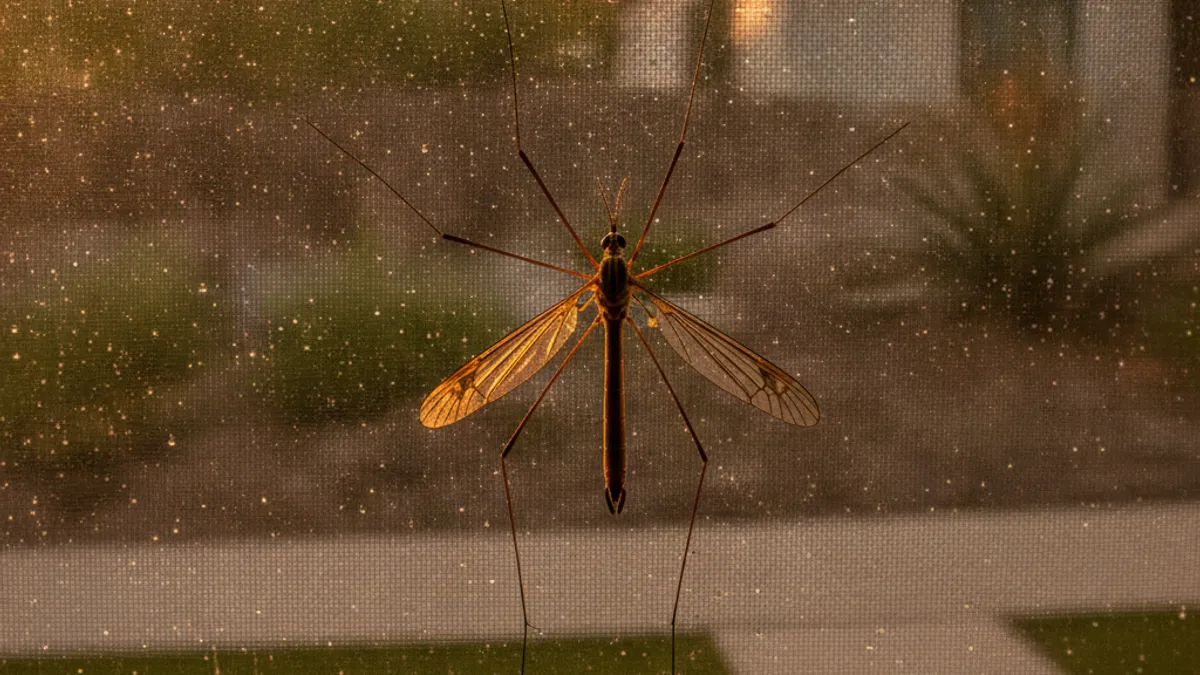
What a mosquito hawk actually is
Crane flies belong to the family Tipulidae. They show up around San Diego homes and often cluster near porch lights and screen doors at dusk. They look intimidating at a glance: long dangling legs, a body noticeably bigger than a mosquito, and an awkward, bouncing flight pattern that makes them seem like they’re hunting something. That size and clumsy flight is almost certainly where the “mosquito hawk” nickname came from, along with a similar name, “gallinipper,” that gets used for the same insect in some regions. This page does not publish a San Diego crane-fly peak season.
Adult crane flies have no interest in mosquitoes. UC IPM’s healthy-lawn crane fly page: although sometimes called “mosquito hawks,” crane flies do not feed on mosquitoes or other insects or harm people. Adults resemble large mosquitoes with very long legs. Larvae, called leatherjackets, feed on grass roots and crowns. That page also says adults do not damage grass.
Why the myth persists
Part of it is simple pattern-matching. Crane flies and mosquitoes are both leggy, both fly erratically, and both show up around the same time of evening near lights and doorways. A bug that looks vaguely mosquito-adjacent but much bigger reads as a natural predator to a lot of people. This page does not keep a backyard predator list.
The name itself does a lot of the damage. “Mosquito hawk” implies a hunting relationship that simply isn’t there, and once a name like that sticks, correcting it takes actual explanation, which most people never get since the crane fly usually just gets swatted or ignored rather than looked into.
What this means for your actual mosquito problem
If you’ve been leaving crane flies alone around your porch light hoping they’re thinning out the mosquito population, they’re not doing that job. San Diego County: invasive Aedes mosquitoes bite around the home and lay eggs in small containers of standing water, even 1/4 inch. When it is warm, they can go from egg to adult in less than one week. Dump and scrub those containers weekly. Culex questions belong on the mosquito control guide, not on a crane-fly myth page.
Neither crane flies nor a porch-light insect replaces source reduction. County Vector Control’s job is the water, not the insect at the porch light.
Are crane flies a pest on their own?
Mostly no, for adults. UC IPM: they do not bite or harm people. Leatherjackets can damage turf by feeding on roots and crowns, but UC’s home-and-landscape lawn-insect note says that damage is mainly in Humboldt and Del Norte Counties and at commercial sod farms, and that larvae are rarely numerous enough to cause damage in other areas of California. Do not treat a San Diego dusk cluster of adults as a lawn emergency.
What actually controls mosquitoes in San Diego
Tipping and dumping any standing water weekly is the single most effective step a homeowner can take. County: even 1/4 inch in a backyard container is enough for invasive Aedes eggs, and development can take about a week when it is warm. Check saucers under potted plants, clogged gutters, tarps that pool water, and anything left outside that can collect rain or irrigation runoff.
Yard treatments that target adult mosquitoes and larval sites are a licensed-company question after source reduction. Our mosquito control guide covers dumping step by step. Neighborhood Aedes maps belong to County Vector Control, not to a Pest Pros yard walk.
Frequently asked questions
What is the technical name for a mosquito hawk?
A mosquito hawk is a crane fly, in the family Tipulidae. UC IPM: adults superficially resemble large mosquitoes with very long legs. They are not mosquito predators.
Do crane flies bite people or pets?
No. UC IPM: crane flies do not harm people. Their long legs and large size can look alarming up close, but they are not a bite pest.
Why do I see so many crane flies at once?
UC IPM does not give a San Diego crane-fly calendar. Leatherjacket turf damage is mainly in Humboldt and Del Norte Counties and at sod farms, and larvae are rarely numerous enough to damage turf in other parts of California. A sudden cluster near porch lights or screen doors is not, on those pages, a sign of a San Diego lawn emergency.
If crane flies don’t eat mosquitoes, what does?
UC IPM: crane flies do not feed on mosquitoes or other insects. County Vector Control: dump standing water, even 1/4 inch, and when it is warm development can take about a week. That is the control that is mapped. This page does not inventory backyard predators.
If mosquitoes are the real problem at your property, not the harmless crane flies at your porch light, call (858) 400-6561 to request a mosquito-control match. Pest Pros San Diego does not assess yards.