
Finding pellets or loose wings near wood creates an immediate decision. Before cleaning, spraying, or arranging repairs, document what you found and where. That record can help a licensed inspector evaluate suspected drywood termites in San Diego.
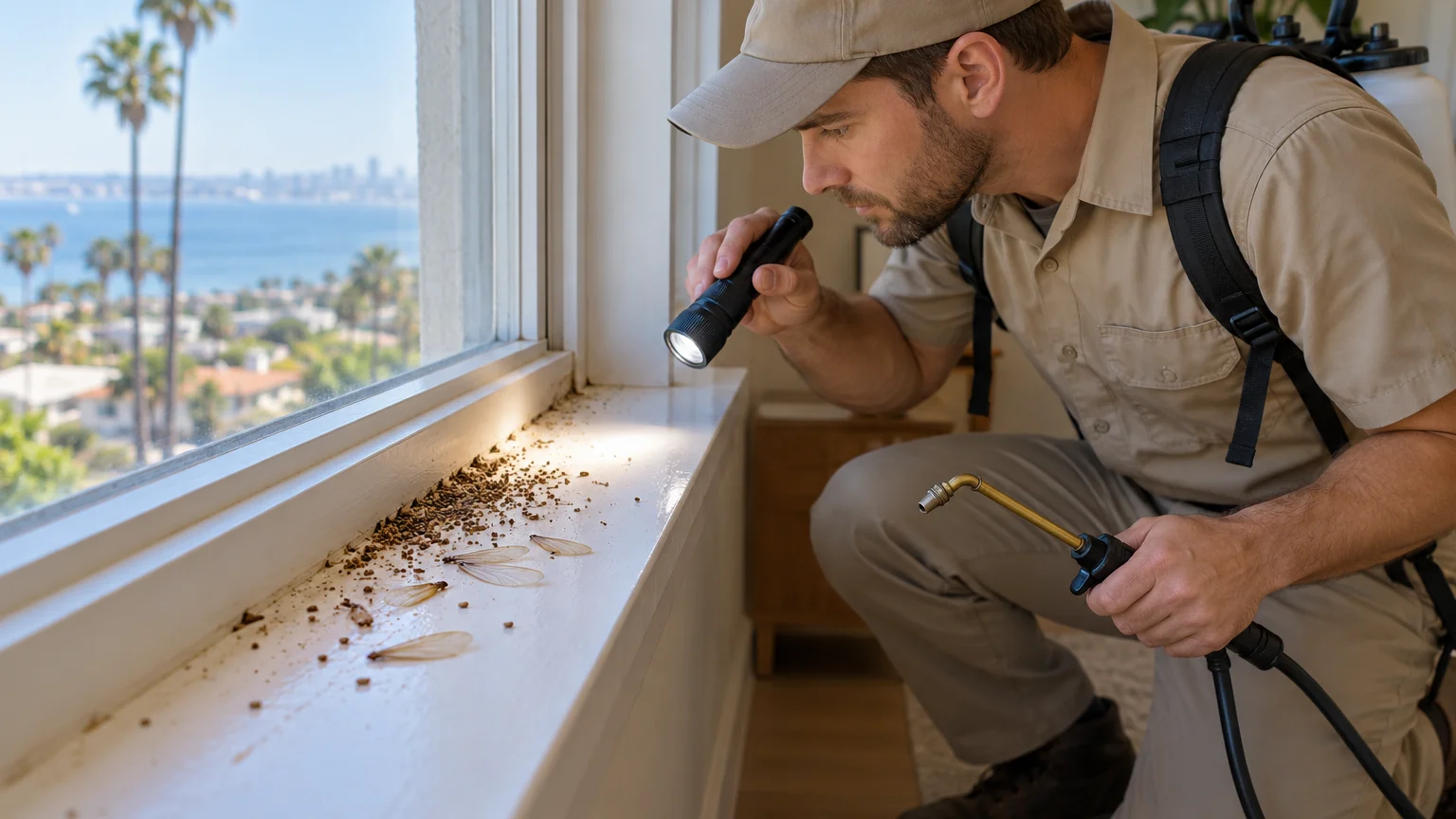
Which evidence may point to drywood termites
The western drywood termite, Incisitermes minor, occurs along California’s Pacific coastal region and across Southern California. That distribution makes it relevant throughout San Diego County. Still, one pile of debris doesn’t confirm an active colony.
UC IPM identifies six-sided fecal pellets as diagnostic evidence of drywood termites. The sides are hexagonal, although that shape may require magnification to see. The termites expel these pellets through openings measuring less than 2 millimeters across.
Start by photographing the material without moving it. Take one wide image showing the room and nearby wood. Then take a closer image that preserves the pile’s shape. Add a ruler or another clear scale beside the evidence. Don’t cover the material with the scale.
Flying adults may appear during summer and fall daytime hours. If you find insects or loose wings, photograph them before sweeping. Record the date, approximate time, room, and nearest wooden feature. Don’t identify the species from wings alone. Save that judgment for a licensed termite inspector.
Color isn’t enough to confirm pellets. Paint fragments, sawdust, insect debris, and material from wood movement can gather in similar places. Our guide to termite droppings or sawdust explains why the surrounding pattern matters.
A smell isn’t reliable documentation under the approved sources for this site. No verified termite-repellent scent or diagnostic odor was confirmed. Don’t let an odor claim replace photographs, retained samples, and a professional examination.
If insects remain, photograph their full bodies from above when possible. A licensed pro can compare that evidence with the wood, openings, pellets, and surrounding conditions.
Where pellets and shed wings may collect
Begin at the exact spot where you noticed the evidence. Avoid searching so aggressively that you scatter pellets or change the wood. The goal is to preserve context, not open the structure yourself.
Pellets fall after termites push them through small openings. Look directly above the pile for seams, joints, trim edges, and exposed wooden surfaces. Photograph the vertical relationship between the debris and the wood. A pile beneath a wooden feature tells an inspector more than a close-up with no location.
Windowsills make evidence easy to notice because their flat surfaces catch loose material. Floors, shelves, counters, and the tops of stored items can do the same. Photograph each collection point separately. Assign simple labels such as “living room, north window” or “garage, inside door frame.”
Loose wings also need context. Photograph the full group and the nearest window, light source, door, or wooden feature. Note whether you found insects with them. Don’t write “drywood termite wings” in your notes unless a qualified inspector confirms that identification. Use neutral wording such as “loose wings found on sill.”
Keep a brief location log:
- Date and approximate time found
- Room or exterior area
- Surface holding the evidence
- Wooden feature directly above or beside it
- Whether the area had been cleaned recently
- Whether similar material returned after cleaning
- File names for the matching photographs
If you clean after documenting, place a small piece of removable tape near the original spot. Don’t cover a hole or attach tape to fragile finishes. Photograph the marker so the inspector can find the location later.
Evidence in several rooms doesn’t reveal whether one or several colonies are present. Western drywood termite colonies typically contain fewer than 1,000 individuals, and hidden areas remain difficult to assess from surface evidence. A room-by-room record helps the inspector evaluate the pattern without pretending the photographs show its full extent.
For a focused identification appointment, review what a termite inspection can cover before you schedule.
Why visible evidence does not choose the treatment
Pellets, wings, insects, and small wood openings can justify an inspection. They can’t show every hidden site or determine a treatment by themselves.
Drywood termites live inside wood, so visible evidence may represent only one accessible point. UC IPM distinguishes whole-structure approaches from localized treatments. Whole-structure fumigation can reach accessible and inaccessible infestations at the same time. Localized methods depend heavily on finding the infestation’s extent.
That distinction matters because a photograph can document where debris appeared, but it can’t map galleries inside concealed wood. It also can’t confirm whether evidence is old or connected to current activity. Don’t choose fumigation, heat, injection, drilling, pesticide application, or wood replacement from an online image.
California separates structural pest control work by license branch. Branch 1 covers fumigation with poisonous or lethal gases. Branch 3 covers inspections and non-fumigation work involving wood-destroying pests, including insecticide use, structural repairs, and corrections. The company evaluating the property should hold the appropriate credentials for its role.
You can check a person or business through the California Structural Pest Control Board license search. Confirm the license type and current status rather than relying on a logo, uniform, or advertisement.
If fumigation is proposed, only an SPCB Branch 1 licensee may perform it. If another termite treatment is recommended, ask the company to connect each proposed step to its inspection findings. The written proposal should identify the areas covered and explain what the chosen approach is intended to address.
A treatment decision also shouldn’t come from a homemade test or scent remedy. UC IPM says do-it-yourself drywood termite treatments aren’t recommended. Our guide to drywood versus subterranean termites covers the main group differences without turning surface evidence into a treatment prescription.
When you’re comparing recommendations, read the company’s written scope carefully. Pest Pros San Diego doesn’t set treatment methods, warranties, or re-treatment terms. Those terms belong to the licensed company’s own agreement. Our termite treatment overview can help you prepare questions for that conversation.
What a licensed termite inspector should document
Bring your photographs and location log to the inspection. Keep the original files because they preserve clearer detail than screenshots. If you collected loose material, label the container with the date and exact location. Don’t combine samples from different rooms.
Ask the inspector to identify which areas were examined and which weren’t accessible. That boundary matters. A California Wood Destroying Pests and Organisms report covers evidence found in visible and accessible areas. It doesn’t turn concealed spaces into inspected spaces.
A useful inspection record should connect findings to locations. Look for room names, building areas, visible evidence, and recommended corrections. If the inspector reaches a species or termite-group conclusion, ask what observed evidence supports it.
The inspector should also distinguish observations from your earlier photographs. For example, your image may show where a pellet pile existed before cleaning. The current visit may document the nearby opening or wooden feature. Both records can matter, but they aren’t the same observation.
Ask these questions before accepting the report:
- Which findings point toward drywood termites?
- Did you find evidence suggesting another wood-destroying pest?
- Which areas couldn’t be reached or viewed?
- Are the recommendations based on visible evidence or another inspection method?
- Does each recommendation apply to a named location?
- Which license branch covers the proposed work?
- What preparation or access would support further inspection?
A properly registered Branch 3 company issues California WDO reports. These reports state whether visible and accessible areas show evidence of wood-destroying pests or organisms. They also contain recommendations for correcting identified infestations.
You can search California records to see whether a WDO inspection was filed for an address within the previous two years. A prior filing doesn’t establish the property’s current condition. It can, however, alert you to earlier documentation worth requesting.
Don’t accept vague labels such as “wood termites” without supporting observations. Ask the inspector to show you the pellet location, opening, damaged area, or other evidence behind the conclusion. Clear documentation makes a second opinion easier to compare.
Before the inspector leaves, request the written findings and proposed scope. Review excluded areas, treatment boundaries, and agreement terms. The matched company inspects first and quotes in writing before any treatment begins.
When to call us
Call when pellets, loose wings, flying termites, or unexplained wood openings need professional identification. We match San Diego County property owners with licensed, insured local pest control companies holding the appropriate California credentials.
Call us at (858) 400-6561 and we’ll match you with a licensed local pro.