
Yes, you can still find earwigs through a San Diego winter. UC IPM reports that part of the earwig population hibernates during the winter as pairs buried in cells in the soil, and that in milder California climates, some remain active all year. San Diego sits in that milder band, so the “earwigs disappear until spring” advice written for cold states doesn’t transfer.
Why the “earwigs disappear in winter” advice doesn’t apply here
The European earwig is the one most people here are looking at. UC IPM notes that although several species occur, the most common in California gardens is the European earwig, Forficula auricularia.
UC IPM describes the seasonal split plainly: part of the population hibernates over winter in soil cells, and in milder California climates some stay active year-round. It also notes that in the hotter parts of California, earwigs may be relatively inactive during the summer, which is the opposite of the pattern most national pest guides assume.
What holds them in a yard is moisture and shade rather than the calendar. UC IPM puts it this way: as moisture-loving insects, earwigs wouldn’t normally thrive in California’s arid climate without the moisture and shade provided by irrigated gardens.
What earwig activity actually looks like in a San Diego winter
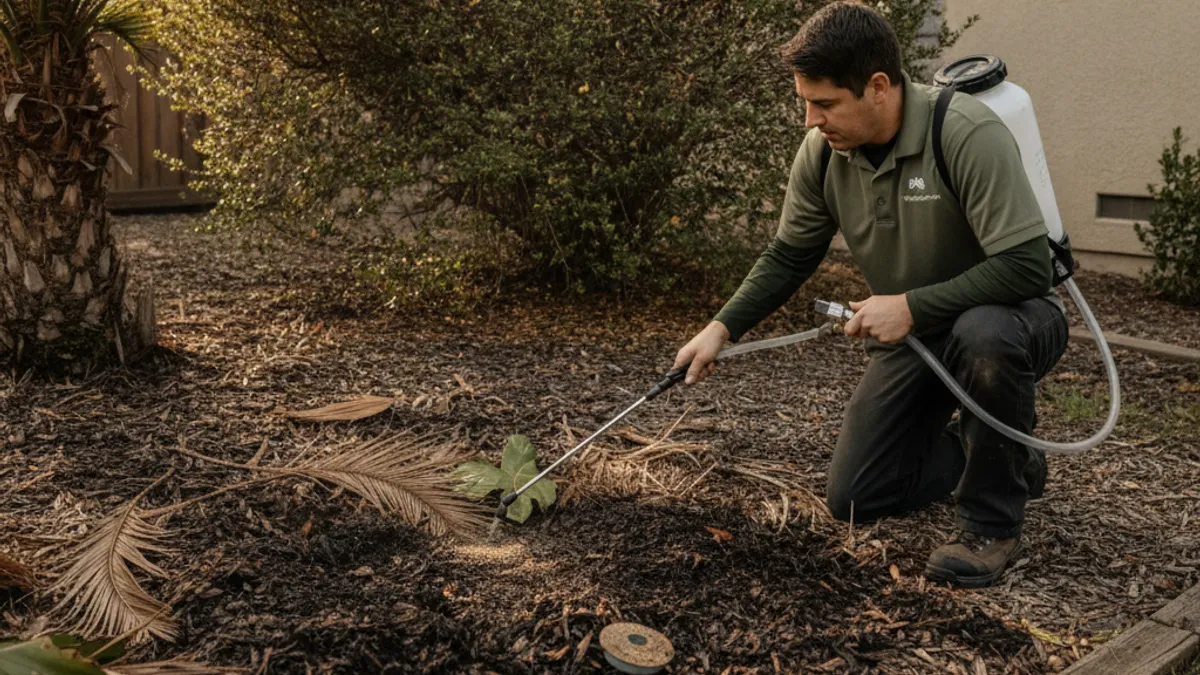
Look where they hide rather than counting what’s flying. UC IPM lists the daytime hiding places as dark, cool, moist spots: under loose clods of soil, boards, or dense growth of vines or weeds, and within flowers, vegetables, mulch, or weeds. It warns specifically to watch out for mulches, because they often harbor earwigs.
Indoors is a separate question with a separate trigger. UC IPM says earwigs may seek refuge indoors when conditions outside are too dry, hot, or cold, and that large accumulations can be annoying but present no health hazards. That covers a garage or laundry room in a cold snap as readily as a dry August.
Why this matters for prevention timing
Winter is a practical window for the exclusion work, because none of it depends on the season to be worth doing. UC IPM’s list for keeping earwigs out of a building is to seal cracks and entry points, remove harborage outside the perimeter such as ivy growing up walls, ground cover, bark mulches, leaf litter, wood piles and debris, and keep water and moisture away from the structure by repairing drain spouts, grading so water drains away, and ventilating crawl spaces.
It also rules out the shortcut most people reach for first: UC IPM states that indoor use of pesticides won’t prevent earwigs from entering, so it isn’t recommended.
Are winter earwigs any different from summer ones?
It’s the same insect. UC IPM describes the adult by the pair of prominent appendages that resemble forceps at the tail end of the body, used for defense, and notes that earwigs feed most actively at night and seek out dark, cool, moist places to hide during the day.
Diet doesn’t change either. UC IPM describes European earwigs feeding on a variety of dead and living organisms, including insects, mites, and growing shoots of plants, and calls them voracious feeders on soft-bodied insects such as aphids and insect eggs. That is why UC IPM says earwigs don’t need to be managed in many situations, and that in yards planted to turf with mature ornamentals, damage is unlikely to be of concern.
When it’s worth calling a professional in winter
A few earwigs under a flowerpot rarely need anything beyond yard cleanup and trapping. UC IPM’s own first line is trapping: a low-sided can sunk to soil level with half an inch of oil, or rolled newspaper, bamboo tubes, or a short piece of hose set out near plants before dark and emptied in the morning. Daily trapping will reduce earwig populations to tolerable levels.
It’s worth bringing in a licensed company if earwigs are consistently making their way indoors, if numbers stay high regardless of season, or if you’re not certain earwigs are what you’re finding. Our general pest control page is where a referral starts, and the licensed company you’re matched with inspects first and quotes in writing before any treatment begins. In California, the Structural Pest Control Board defines Branch 2 as the practice relating to the control of household pests excluding fumigation, and you can check any company at pestboard.ca.gov. Our full guide to earwigs in San Diego covers identification and control in more depth, and our San Diego pest season calendar breaks down what to expect from other pests month by month.
Frequently asked questions
Do earwigs die off in San Diego winters?
Not the way cold-climate guides describe. UC IPM reports that part of the earwig population hibernates during the winter as pairs buried in cells in the soil, and that in milder California climates, some remain active all year.
Where do earwigs hide around a San Diego home?
In dark, cool, moist places. UC IPM lists hiding places under loose clods of soil, boards, or dense growth of vines or weeds, and notes that earwigs hide within flowers, vegetables, mulch, or weeds during the day. It adds a specific warning about mulches, which often harbor earwigs.
Is winter a good time to earwig-proof my house?
It’s as good as any, and the work isn’t seasonal. UC IPM’s exclusion steps are to seal cracks and entry points, limit shelter such as mulch and leaves near buildings, remove debris from gutters, and keep water away from structures.
Do earwigs bite or sting people?
UC IPM says earwigs aren’t harmful to people and generally don’t attack humans, although they are capable of biting if trapped in clothing or sat upon. It also notes that large accumulations of earwigs can be annoying but present no health hazards.
If earwigs are showing up indoors this winter regardless of the season, or garden bed activity isn’t slowing down at all, call (858) 400-6561 for an inspection.