
Screen a San Diego pest company by current SPCB license and branch, a written scope before treatment, named products, and a written price. Any guarantee is that company’s contract language, not a Pest Pros requirement. If a company cannot show an active license or will not put the job in writing, keep looking.
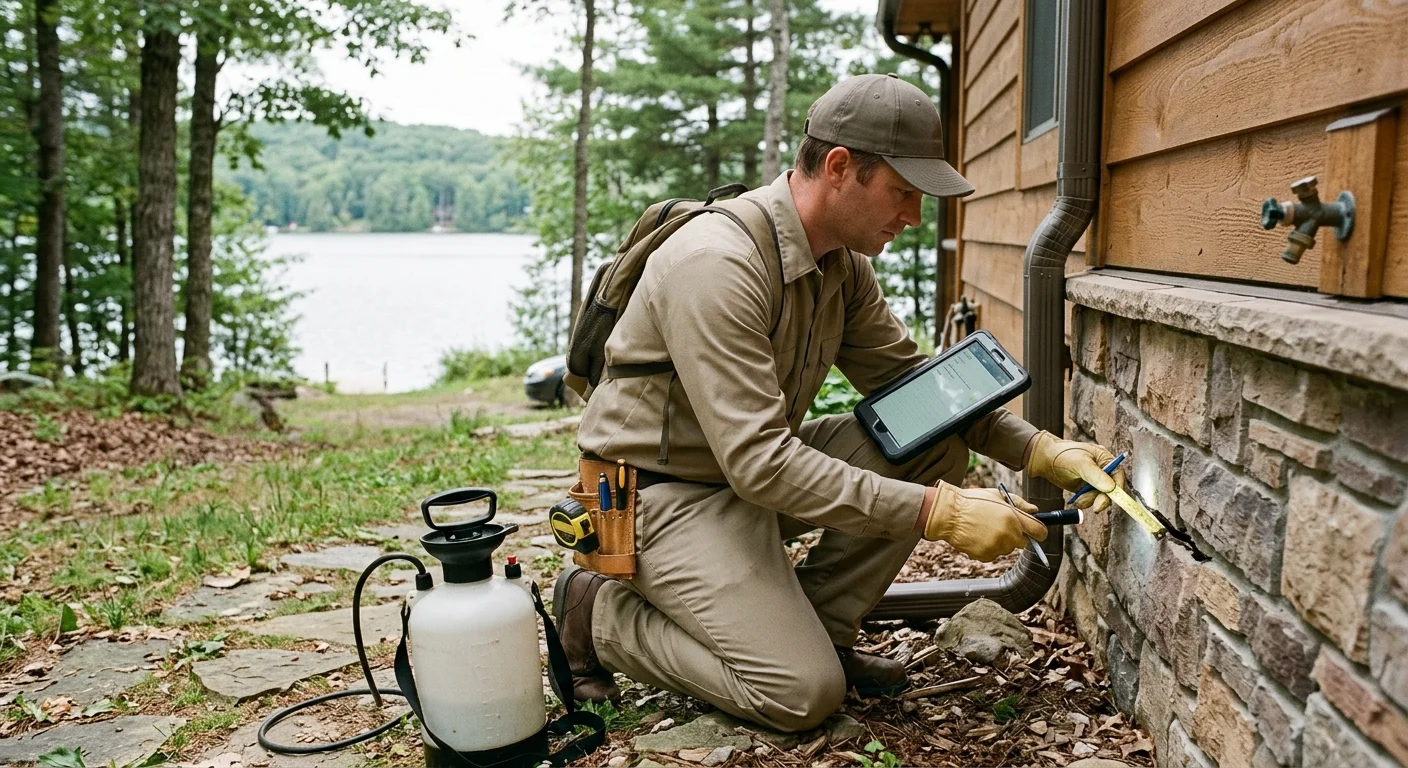
UC IPM: the western drywood termite is commonly found along the Pacific coastal region and into the Central Valley and deserts of Southern California. Household pests and wood-destroying work sit in different SPCB branches. A company that runs the same quarterly spray on every house is not adapting to what an inspection finds. Even routine general pest control should follow an inspection, not a script. This page is a hiring checklist. Pest Pros San Diego matches you with licensed companies. We do not inspect, treat, or underwrite their warranties.
The five things that separate a good company from a bad one
1. A current CA SPCB license in the right branch. California requires structural pest control operators to be licensed by the Structural Pest Control Board, part of the Department of Consumer Affairs. The three branches, in the Board’s own words:
- Branch 1: household and wood-destroying pests or organisms by fumigation with poisonous or lethal gases.
- Branch 2: the control of household pests, excluding fumigation with poisonous or lethal gases.
- Branch 3: wood-destroying pests or organisms by insecticides or structural repairs and corrections, excluding fumigation.
Branch 2 is not a wood-destroying license. Ants, cockroaches, rodents, and other household pests sit in Branch 2. Termite inspection reports and WDO treatment sit in Branch 3. Tent fumigation is Branch 1. Verify any license for free at pestboard.ca.gov. If a company hesitates when you ask for the number, walk away.
2. A written treatment plan, not a generic spray. Before treatment starts, you should have a written scope: target pest, product, where it goes, and what prep you do. A technician who heads for the sprayer without inspecting is a red flag. Subterranean termite work is not drywood work. An ant protocol that never looks for the colony will not hold.
3. Transparent pricing before you commit. Ask for the initial cost, any recurring cost, what triggers a return visit, and whether that return visit is included. For national benchmarks on related jobs, see what pest control costs in San Diego and termite inspection costs. Those pages name their guides. They are not this network’s price list.
4. The company’s own written terms, if it offers any. Some companies put re-treatment language in the contract. Read what pests are covered, for how long, and what you must do to keep it valid. Pest Pros does not require, sell, or honor a network-wide re-treatment guarantee. A verbal “satisfaction guaranteed” with nothing on paper is a sales phrase, not a term you can enforce.
5. Local route experience. Ask how the company inspects properties like yours. Neighborhood knowledge is useful. It is not a substitute for the license lookup.
Green flags vs. red flags: the decision table
| What to ask or check | Green flag | Red flag |
|---|---|---|
| ”Can I verify your SPCB license?” | Gives the license number, branch, and pestboard.ca.gov without hesitation | Deflects, or says licensing “isn’t required” |
| How did you inspect my property? | Walked the perimeter and checked accessible crawl, attic, and entry points before quoting | Quoted from the driveway or over the phone without visiting |
| What product are you applying and where? | Names the product, the target, and where it goes | Says “standard treatment” or will not specify |
| Is there a written scope of work? | Sends a written proposal before you sign | Only a verbal description, or a rush to sign at the door |
| What does any guarantee cover? | Written terms from that company: pest list, timeframe, your obligations | Vague “satisfaction guaranteed” with no paper |
| How is pricing structured? | Line items: initial service, recurrences, what a return visit costs | A range so wide it is meaningless, or a price only after you commit |
| How long have you worked this area? | Can speak to local pest pressure | A generic national script |
| Do you use a contract? | Explains length, cancellation, and how to stop | Locks you in at the door with no clear out |
One-time vs. recurring service: how to decide
Not every pest problem needs a monthly contract.
One-time treatment can fit an isolated wasp nest, a single ant trail from a gap you already found, a real-estate-related visit, or a contained one-room issue. Ask whether that visit includes any written follow-up from that company.
Recurring service can fit repeat infestations, heavy landscaping you cannot keep dry and clear, or a prevention schedule you actually want. One visit is not automatically enough for every household pest. That is a question for the inspection, not a sales closer.
If you are still deciding between DIY and a licensed visit, the DIY vs. professional pest control comparison walks through which situations each approach fits.
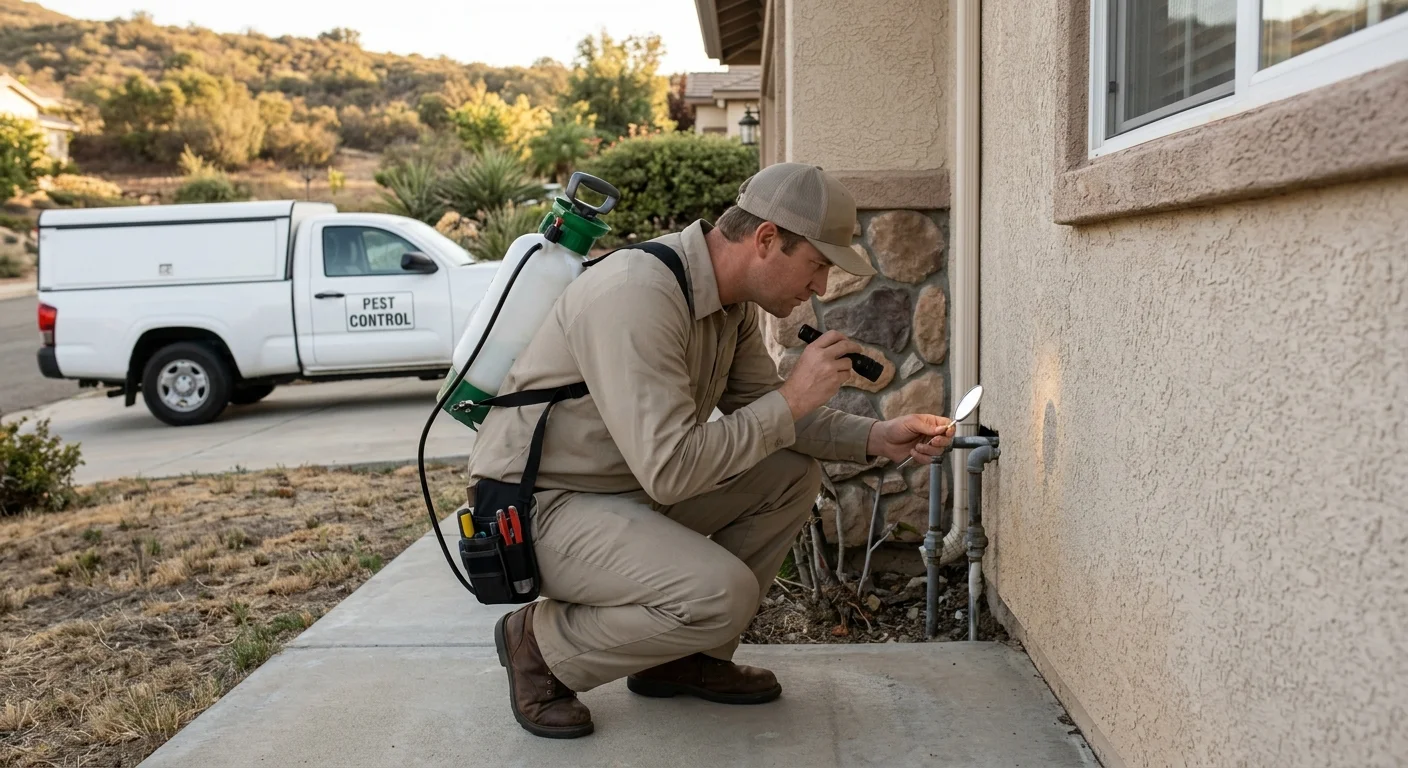
Door-to-door pest companies: a specific warning
If someone arrives unannounced and asks you to sign before you can compare, stop. Look up the SPCB license, read the written scope, and compare at least one other proposal. You can take the paperwork, wait, and call around. A current California license is required for structural pest work. It is not a reason to skip the lookup or sign at the door.
What to ask about termite-specific work
Termite companies use the same SPCB system, but the branch changes the legal work.
- Branch 1: fumigation (whole-structure tenting).
- Branch 2: household pests. Not WDO reports.
- Branch 3: wood-destroying pests by insecticides or structural repairs, excluding fumigation.
If you need a Wood-Destroying Pests and Organisms Inspection Report, confirm the company is Branch 3. For what that inspection covers and the named Fixr national inspection range, see termite inspection cost in San Diego.
For treatment, get more than one written proposal that starts from the report. Fumigation is not always the only drywood option. A company that pushes tenting without explaining localized limits is worth questioning. Compare reports, not just the bottom line.
Frequently asked questions
How do I verify a pest control company’s license in California?
Go to pestboard.ca.gov and search by company name or license number. You can see whether the license is active, which branch it covers, and whether disciplinary actions are on record.
What is a CA SPCB license and why does it matter?
The Structural Pest Control Board regulates structural pest control in California. Branch 1 is fumigation, Branch 2 is household pests excluding fumigation, and Branch 3 is wood-destroying work excluding fumigation. An unlicensed operator is not accountable to that Board. Verify before you sign.
What questions should I ask a pest control company before hiring?
Ask for the SPCB number and branch. Ask how they inspected and which pest they are treating. Ask what product goes where. Get a written price. Read any re-treatment language the company puts on paper. Ask about contract length and cancellation.
What are the biggest red flags when hiring a pest control company?
Door-to-door pressure to sign, quoting without an inspection, refusing to name the product, a price that appears only after you commit, and hesitation on the license number.
Should I choose a local San Diego company or a national chain?
Local route knowledge can help. License status, written scope, and a real inspection still matter more than the logo. National chains with local routes can be fine if those checks pass. If you are weighing a big name, the Terminix alternative in San Diego comparison lays licensing and contract terms side by side.
How much should pest control cost in San Diego?
It depends on the pest, the house, and the scope. Fixr puts a one-time termite inspection at $150 to $350, a national figure as of its January 31, 2025 update, not a San Diego survey. See the San Diego pest control cost guide for named-guide rows by service type. A quote far below similar work should make you ask what is missing.
If you want a no-pressure match to a licensed local company, call (858) 400-6561. We connect you with someone who can inspect, give you a written scope, and answer this list before you decide. Our pest control service area covers San Diego County.