
A narrow tube crossing a foundation can change a routine home check. It may point toward subterranean termites, but it doesn’t confirm active infestation by itself. A licensed inspection should identify the insect, trace the evidence, and define the affected areas before anyone chooses treatment.
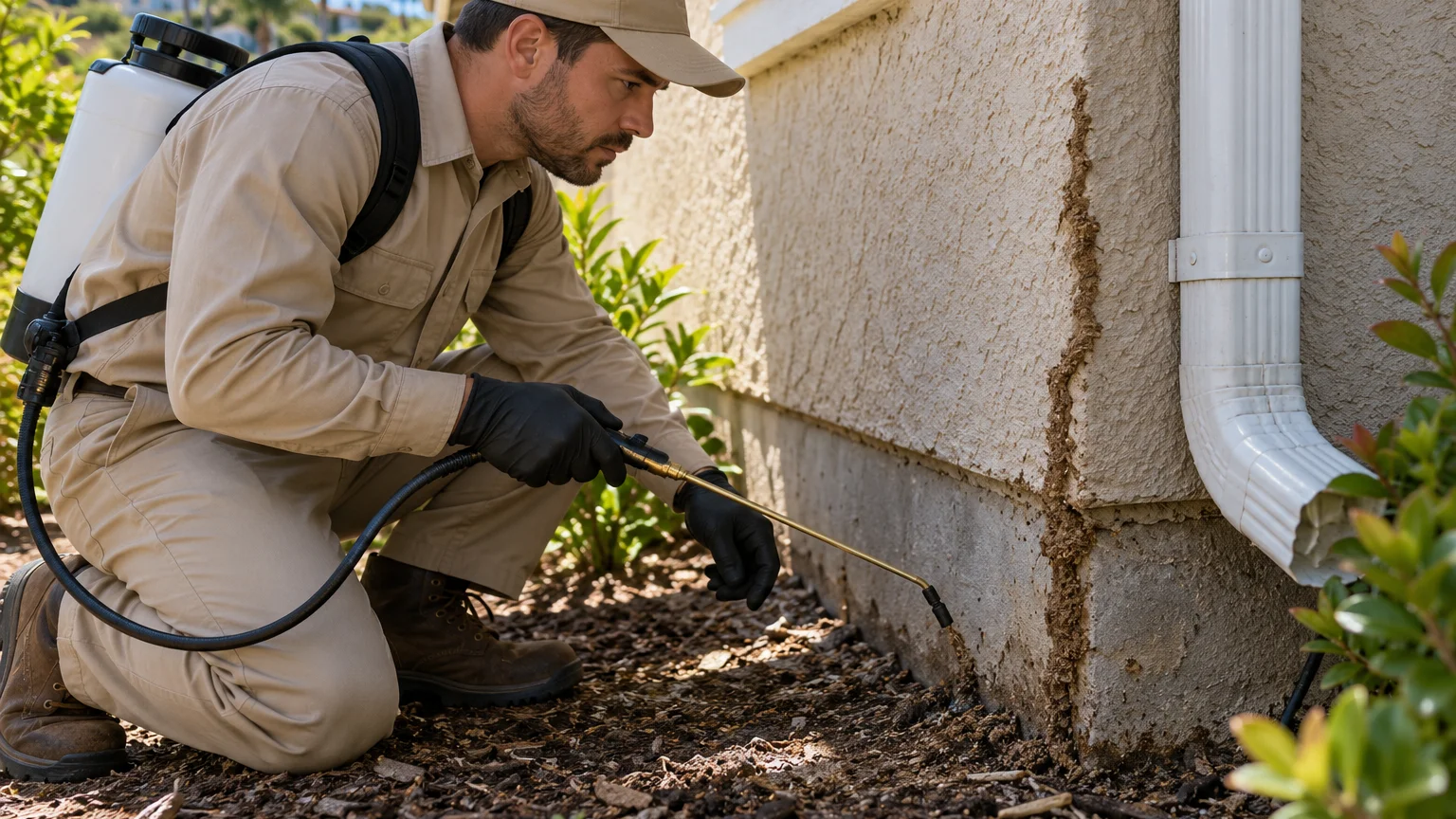
Which evidence may point to subterranean termites
Subterranean termites live in soil and depend on its moisture. According to UC IPM, they build shelter tubes between soil and wood structures. Those tubes can appear on foundation surfaces or around places where wood and soil meet.
A tube is useful evidence, not a complete diagnosis. Its appearance alone can’t establish whether termites are currently using it. It also can’t show how far activity extends into concealed areas. Avoid breaking, spraying, or covering suspected evidence before an inspection. Leaving it undisturbed gives the inspector more context.
Winged insects inside or near a home also deserve attention. A photograph may help with an initial conversation, but it may not capture the features needed for identification. Save an intact specimen when that can be done without handling pesticides or disturbing damaged material. Note where and when you found it.
Subterranean termites don’t leave the distinctive six-sided fecal pellets associated with drywood termites. Pellet piles therefore point the inspection in a different direction. Our guide to drywood versus subterranean termites in San Diego explains that distinction in more detail.
Other possible findings include damaged wood near soil access or evidence hidden beside plumbing penetrations and foundation joints. Those conditions still require interpretation. Damaged wood may have more than one cause, and visible evidence may represent only part of the affected area.
UC IPM reports that Reticulitermes occurs across nearly all regions of California, from coastal sand dunes to mountain elevations. It also reports that the Formosan termite remains restricted to a small area near San Diego. That limited finding doesn’t justify identifying every local subterranean termite as Formosan. Species identification belongs in the inspection process.
For a closer look at one important clue, see our guide to termite mud tubes on San Diego foundations.
How soil contact and moisture affect an inspection
A subterranean termite inspection follows possible connections between soil, moisture, and wood. These termites nest in soil, sometimes many feet below the surface. They can reach structural wood through shelter tubes or direct contact that isn’t obvious from the living space.
The inspector may examine the exterior foundation, accessible crawl spaces, attached wood, and other visible areas where soil and the structure meet. The exact scope depends on the property and access. Furniture, stored materials, finished walls, or low-clearance spaces can limit what’s visible.
Direct wood-to-soil contact matters because it can give termites a concealed route. Moisture matters because subterranean termites require it. The inspection may therefore consider leaks, drainage concerns, damp areas, and irrigation near the structure. Those conditions don’t prove termites are present. They help the licensed company decide where closer examination is warranted.
San Diego County includes coastal ground, inland communities, and mountain elevations. UC IPM’s statewide distribution information shows why subterranean termites can’t be treated as an issue limited to one local climate zone. The actual evidence at the property matters more than a broad neighborhood assumption.
Tell the inspector about repairs, additions, past termite work, recurring leaks, or areas you can’t access. If you have an earlier report, keep it available. That history may help distinguish a known condition from a new observation, but it doesn’t replace a current inspection.
A formal Wood Destroying Pests and Organisms report has a defined scope. A registered Branch 3 company issues it, and it covers visible and accessible areas. The report records whether evidence of wood-destroying pests or organisms was found and gives recommendations for correction. Concealed spaces remain an important limitation.
If you need that level of assessment, start with a professional termite inspection. Ask what areas will be examined, what access is needed, and how inaccessible locations will be documented.
Why identification comes before choosing treatment
Treatment should follow identification, not the other way around. Drywood and subterranean termites occupy different environments. A plan designed around pellets and dry wood may not address a colony connected to soil.
UC IPM describes subterranean termite colonies as having hundreds of thousands of foragers. They may forage throughout the year in California, with activity changing by season. Visible evidence in one location doesn’t define the colony’s full reach or prove that every nearby piece of wood is affected.
Professional approaches can include soil-applied insecticides, baiting systems, and habitat changes such as correcting moisture sources or wood-to-soil contact. UC IPM states that effective products for subterranean termite management are for professional use only. The correct option depends on the inspection findings, access, structure, and evidence.
Nonrepellent soil treatments may use active ingredients such as fipronil or imidacloprid. Bait systems use slow-acting insecticides that termites consume and share within the colony. These descriptions explain the treatment categories. They aren’t instructions for trenching, drilling, mixing, placing bait, or applying pesticides.
Don’t choose a method from a photo, a product name, or a neighbor’s treatment. A photograph can miss concealed access points. A product may not fit the structure or findings. Any pesticide use must follow its label and be handled by a properly credentialed company.
California divides structural pest control into licensed branches. Branch 3 covers wood-destroying pests through insecticides, structural repairs, and corrections, excluding fumigation with lethal gases. You can check a person or business through the California Structural Pest Control Board license search.
Fumigation is a separate Branch 1 activity and is commonly associated with whole-structure drywood termite work. Its existence doesn’t make it the automatic answer for subterranean termites. Identification and documented access conditions should drive the recommendation.
Our termite treatment guide explains how we connect property owners with licensed, insured local companies. The matched company, not Pest Pros San Diego, inspects the property and recommends the treatment.
What to compare in a licensed company’s written plan
A written plan should connect each recommendation to an inspection finding. Look for clear descriptions of the evidence, affected or suspected locations, inaccessible areas, proposed method, and preparation responsibilities. Vague phrases such as “treat the house” don’t explain what the company found or what its proposal covers.
Compare these points across written proposals:
- The pest identified and the evidence supporting that identification
- Areas inspected and areas that couldn’t be accessed
- Locations where shelter tubes, soil contact, moisture, or damaged wood were observed
- The proposed treatment category and its intended scope
- Any pesticide active ingredients named in the plan
- Structural corrections or moisture conditions assigned to the property owner
- Monitoring, follow-up, or renewal terms
- Warranty or retreatment terms in the company’s own agreement
- The company registration and applicable license information
- The full written price before treatment begins
Ask whether the proposal addresses only the visible location or a broader route connected to soil. If baiting is proposed, ask how the company will document monitoring. If a soil treatment is proposed, ask which areas are included and which physical conditions limit access. The licensed company should explain the plan without turning the conversation into homeowner application instructions.
Don’t assume two proposals cover the same work because they use similar treatment names. One may exclude inaccessible areas, repairs, monitoring, or follow-up. Another may assign specific preparation work to the owner. Read those differences before comparing the final totals.
Pest Pros San Diego has no treatment price list and doesn’t set company warranties. The company you’re matched with should inspect first and quote in writing before treatment begins. Any guarantee, renewal, cancellation, or retreatment language belongs to that company’s written agreement.
If the findings are unclear, ask for photographs, location notes, and a plain explanation of why the evidence points to subterranean termites. You can also seek another Branch 3 opinion before authorizing work. The goal isn’t the longest proposal. It’s a plan that connects verified evidence to a defined treatment scope.
When to call us
Call when you find suspected termite mud tubes, winged insects, or damaged wood near soil access. Licensed termite work should begin with identification and a property-specific inspection. Call us at (858) 400-6561 and we’ll match you with a licensed local pro.