
Termite mud tubes are raised pathways that subterranean termites build between soil and wood. A possible tube on your San Diego foundation deserves an inspection, but it doesn’t prove the infestation’s extent or determine treatment. Leave the material intact and document what you can see.
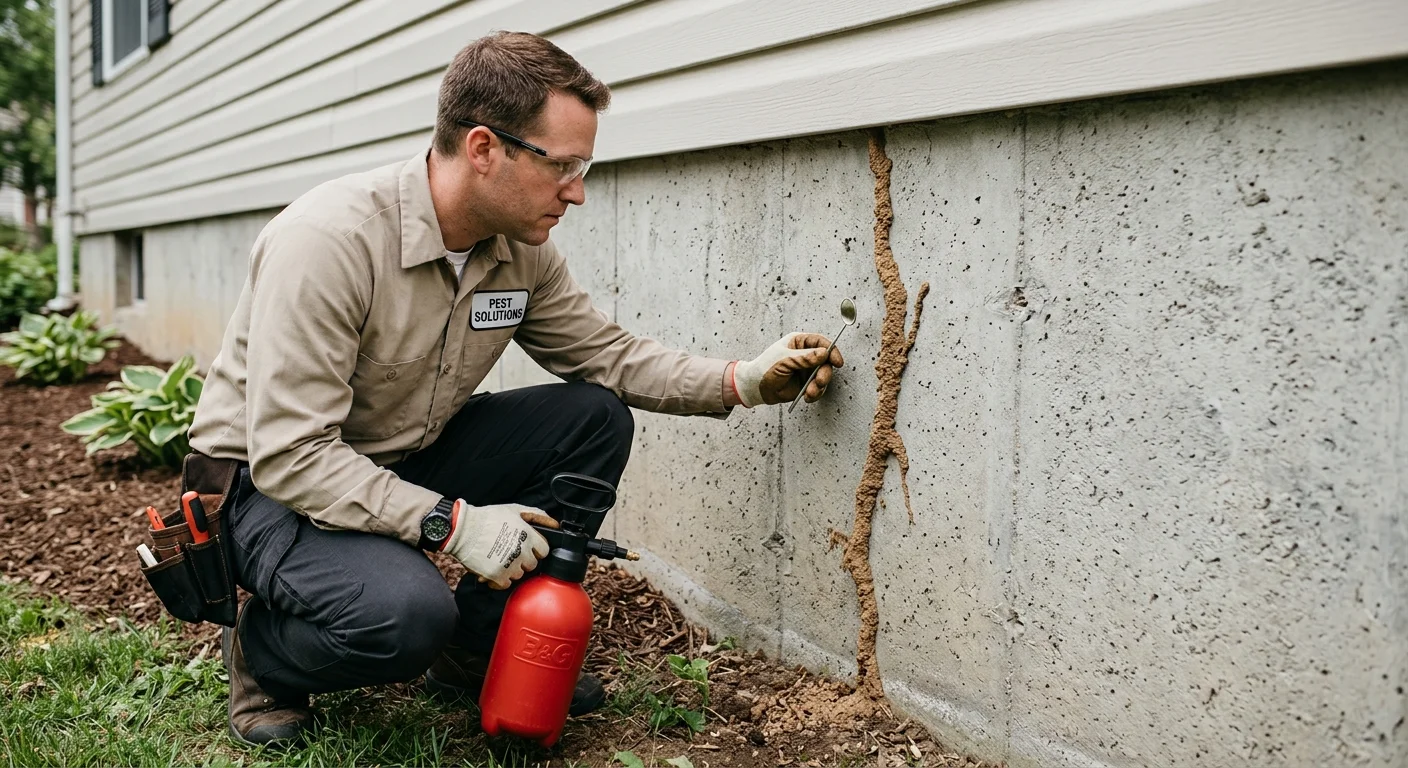
What a termite mud tube looks like
A possible shelter tube usually appears as a narrow, raised line of soil-like material. Look for a continuous path crossing an exposed foundation surface toward wood. The line may be easier to notice where the foundation contrasts with the material.
That pattern matters because subterranean termites nest in soil. According to UC Statewide IPM, they build shelter tubes between soil and wooden structures. A photograph can preserve that pattern, but it can’t confirm activity inside the tube. It also can’t show what may be happening behind finished walls.
Take one photograph showing the tube’s full route. Then take a closer photograph that preserves its surface detail. Include nearby framing, soil, or a recognizable foundation feature. That context helps the inspector find the same location later.
Don’t scrape, open, drill, or spray the possible tube. Disturbing it can remove useful evidence before a licensed inspector sees it. Mark the location with a removable note placed beside the material, not across it.
Termite mud tubes aren’t the same evidence associated with drywood termites. UC IPM identifies six-sided fecal pellets and small kickout holes as diagnostic drywood termite signs. Drywood termites don’t require soil contact. Our guide to drywood and subterranean termites in San Diego explains that distinction.
Other possible evidence may be present nearby. Wings, pellets, damaged wood, and flying termites require separate interpretation. Review the broader signs of termites in San Diego without treating any photograph as a final diagnosis.
Where foundation evidence may appear
Start with the visible route between soil and wooden parts of the structure. Useful places to photograph include exposed exterior foundation surfaces and accessible transitions near framing. You may also notice material along an interior foundation edge, near an accessible crawl-space opening, or beside a foundation penetration.
Stay focused on visible, reachable areas. You don’t need to remove siding, drywall, trim, or flooring. Don’t enter a confined area just to follow a suspected tube. Record where the visible evidence begins and where it disappears.
For each location, capture three details:
- The full section of foundation containing the possible tube
- The point nearest the soil
- The point where the material reaches wood or disappears from view
Add a short written note. Use a fixed feature such as a door, corner, garage wall, or utility opening. “North side near the rear door” gives the inspector more value than “outside wall.”
San Diego County’s geography doesn’t identify the termite for you. UC IPM reports that Reticulitermes, the state’s most common subterranean termite group, occurs across nearly all California regions. Its range extends from coastal sand dunes to higher mountain areas.
UC IPM also reports that the Formosan termite is restricted to a small area near San Diego. That wording matters. It doesn’t support treating every local tube as Formosan termite evidence. A city name, ZIP code, or coastal location can’t replace an inspection.
Drywood termite distribution adds another local complication. The western drywood termite is common along California’s Pacific coastal region and extends into inland valleys and Southern California deserts. San Diego properties can therefore present different termite evidence. The route from soil to wood remains the key reason a possible mud tube points toward a subterranean termite inspection.
Why one tube doesn’t determine treatment
One visible tube answers a limited question. It shows that a shelter-tube-like structure is present. It doesn’t show how far termites may have traveled, whether hidden evidence exists, or which treatment fits the property.
Subterranean termites nest in soil, sometimes well below the surface. UC IPM says their colonies can contain hundreds of thousands of foragers. A short visible section on one foundation wall can’t represent that full underground system.
Visible activity can also vary. UC IPM reports that subterranean termites may forage throughout the year in California. Activity is lowest from November through February and highest during summer. An empty-looking surface or quiet visit doesn’t clear the structure without a proper inspection.
The inspector must first separate the evidence from other material. The inspection should also check visible and accessible areas for additional shelter tubes, wood-to-soil contact, and moisture sources. Those findings help the licensed company explain why it recommends a particular next step.
Professional options for subterranean termites may include soil-applied insecticides, bait systems, and changes that address moisture or wood-to-soil contact. UC IPM states that effective subterranean termite products are for professional use only. It describes nonrepellent soil products and slow-acting baits as two professional approaches.
That doesn’t mean every possible tube calls for the same method. Treatment selection depends on the inspected conditions and the evidence found. It shouldn’t come from a photograph alone.
Fumigation also isn’t an automatic answer to termite tubes on a foundation. Whole-structure fumigation is associated with drywood termite management and may only be performed by an SPCB Branch 1 licensee. Non-fumigation termite work falls within Branch 3. The company you’re matched with should inspect first, explain the proposed scope, and provide its treatment quote in writing before work begins.
What a licensed inspector should document
Ask for documentation that separates observations from conclusions. The report should identify where each possible tube appeared and which areas were examined. It should also note areas that weren’t visible or accessible.
A useful inspection record should address:
- The exact location of each suspected shelter tube
- Whether other visible termite evidence was found nearby
- Where the apparent route begins and ends
- Conditions such as visible wood-to-soil contact or moisture sources
- Areas that couldn’t be inspected
- The recommended next step and the evidence supporting it
For a formal Wood Destroying Pests and Organisms report, California uses a more specific process. The Structural Pest Control Board says a properly registered Branch 3 company issues these reports. The report covers the presence or absence of evidence in visible and accessible areas. It also contains recommendations for correcting identified infestations.
That limitation belongs in the conversation. “Visible and accessible” doesn’t mean every concealed part of a building was examined. Ask the inspector to identify blocked or inaccessible locations instead of assuming they were clear.
WDO reports often matter during a property transaction. Most lending institutions require one before financing a California home loan. The state also provides a public property-address search for WDO activity filed within the prior two years. Your lender may set separate requirements for the report it will accept.
Before hiring, use the California Structural Pest Control Board license search. Select the Structural Pest Control Board and check the company or individual. Cancelled licenses and registrations don’t appear in the public results, so contact the board when that history matters.
Visit our termite inspection page to connect with a licensed, insured local company holding the appropriate credentials. If you’re comparing broader service options, this guide to choosing pest control in San Diego explains what to review before agreeing to work.
When to call us
Call when a possible tube connects soil and wood, disappears behind a finished surface, or appears with other termite evidence. Call us at (858) 400-6561 and we’ll match you with a licensed local pro.