
Finding termites in a San Diego home raises one practical question: what will treatment cost. The honest answer starts with a Branch 3 inspection report, not a blog range. Pest Pros San Diego matches you with licensed companies. We do not set prices or clear houses.
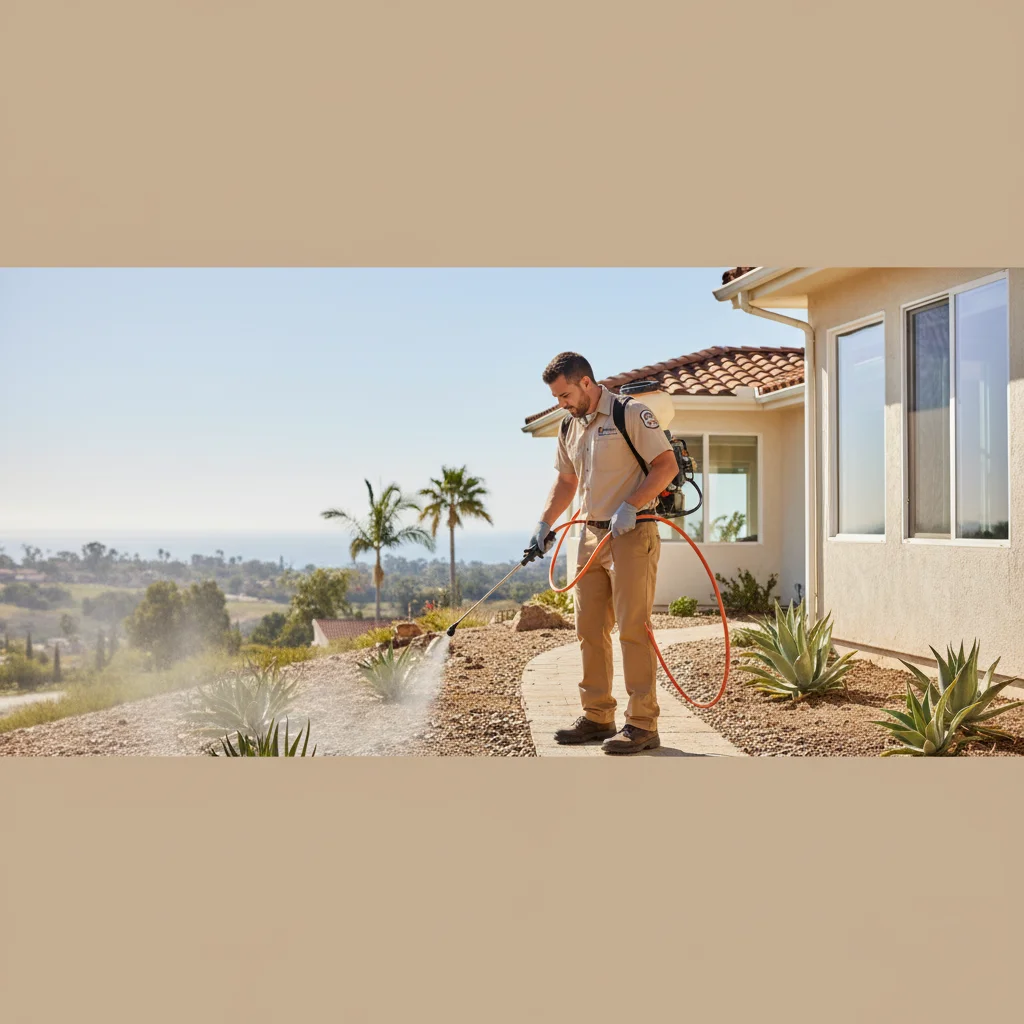
Understanding termite treatment costs in San Diego
San Diego’s climate supports termites year-round, which is why inspections matter. The cost is not a fixed San Diego number. It follows species, how far the infestation has gone, the size and construction of the building, and the method on the report.
A contained drywood find is a different job from a subterranean colony that needs soil work. A company quoting a firm number before a report is guessing at the scope. Start with a termite inspection. Inspection cost itself is covered on termite inspection cost in San Diego. This page does not repeat that article.
Fixr, updated January 31, 2025, puts a one-time termite inspection at $150 to $350. That is a national benchmark, not a San Diego survey and not a provider quote. The matched company inspects first and quotes in writing before any treatment begins.
Types of termites and their impact on cost
San Diego work is usually drywood or subterranean. Identification and method choice belong on the WDO report. See drywood vs. subterranean termites in San Diego.
Drywood termites live in the wood they eat. They do not need soil contact. Limited finds can be candidates for localized treatment. Widespread activity through a structure is why companies discuss whole-structure fumigation. UC IPM: whole-structure treatment aims at all infestations, accessible and hidden, at once. Localized treatment is more restrictive. Hidden galleries behind drywall leave doubt about colony boundaries.
Subterranean termites nest in soil and use mud tubes to reach wood. Treatment is usually a soil barrier, bait stations, or both, quoted from the report, not from a neighborhood rule.
Common termite treatment methods and their expenses
The method has to match the species and the findings. Compare written proposals that name the same report.
Localized treatments
For a small, contained drywood infestation, licensed localized treatment may be an option. UC IPM lists chemical and nonchemical localized methods and says home-use products are not effective. Effectiveness depends on finding the colony and putting the treatment on the termites. UC notes considerable variation in results across methods and applicators. Botanical products such as orange oil have been tried. UC states that recent university lab and field tests question the efficacy of at least d-limonene. This page does not sell orange oil as a natural contact kill.
Localized work is quoted after inspection, by the areas treated. It is not a few-hundred-dollar San Diego average.
Whole-structure fumigation (tenting)
When drywood activity is widespread, or several localized finds point to hidden galleries, fumigation is the whole-structure option. Occupants, pets, and plants leave for several days while the licensed Branch 1 fumigator applies the gas and aerates. Follow that company’s written packet.
Fixr puts fumigation, also called tenting, at $1 to $4 per square foot. On an 1,800 square foot example that is about $1,800 to $7,200. Present it per square foot. It is a national Fixr figure as of January 31, 2025, not a San Diego bid and not a clearance promise. Indirect costs (hotel, food bagging, time out of the house) are extra and come from the fumigator’s checklist.
Soil barrier treatments
For subterranean termites, companies often trench or drill and place a labeled liquid in the soil around the foundation. Cost tracks linear footage, access, and the product. There is no named San Diego dollar span this site can publish for that work. Ask for the linear footage and the warranty terms on the proposal.
Termite bait systems
Bait stations around the perimeter are another subterranean approach. Installation and monitoring are separate line items. Quote after inspection. Do not treat a blog as the monitoring fee.
What actually moves the quote
Building size and construction. Larger buildings take more material and time for fumigation or soil work. Slab versus crawl space changes access. That is a job-site fact, not a ZIP-code price.
Severity on the report. Early, contained activity can stay localized. Long-running activity costs more because the method changes. Knowing the signs of termites in San Diego can get you to an inspection sooner. Termite treatment is the service page for method overviews.
Do not use geography as a price. Coastal versus inland housing stock is not a published rate card. Pacific Beach, Coronado, or East County do not have a termite surcharge this site can cite. Ask which species the report found, then compare methods.
Warranty language belongs to the treating company. Read what is covered, for how long, and what a re-treatment costs. Pest Pros does not issue termite warranties or promise a clear WDO after treatment. A lender or buyer may still require a current report. That is their condition, not a result this blog can guarantee.
The inspection comes before the number
Without a thorough Branch 3 inspection, a treatment price is a guess. Some companies advertise free inspections. Ask what the visit includes, and whether any fee is credited if you proceed. Fixr’s national inspection range is above. Details and Civil Code / BPC limits live on the inspection-cost article, not here.
Early detection can keep a job localized. Waiting can push the same house into fumigation or soil work. That is a scope change, not a San Diego average.
Long-term protection without fake outcomes
After an active infestation is treated, moisture at the foundation, wood-to-soil contact, and skipped inspections still matter. Annual inspections are a common offer. They are a separate purchase. DIY products do not replace a licensed WDO program. See DIY vs. professional pest control in San Diego. Verify the company at pestboard.ca.gov. For household pests that are not wood-destroying, use general pest control.
Frequently asked questions
How much does termite treatment cost in San Diego?
There is no single San Diego figure. Price follows the species and the method on the inspection report. The only treatment dollar figures this page repeats are Fixr’s national fumigation range of $1 to $4 per square foot (about $1,800 to $7,200 on an 1,800 square foot example) as of January 31, 2025. Localized, soil, and bait jobs are quoted after inspection.
Why do two San Diego quotes differ?
Because the reports differ, or the methods differ. Coastal versus inland is not a published price cause. Compare species, method, square footage or linear footage, and warranty paper.
Is tenting always necessary for drywood termites?
No. UC IPM treats fumigation as a whole-structure option and localized work as more limited, with doubt about hidden infestations. Which one applies is an inspection decision. This page does not promise that localized work will clear a house for a sale.
Should I compare quotes from more than one termite company?
Yes. Compare the reports, not just the prices. Ask which species, which method, and what the warranty covers. Verify license status with the Structural Pest Control Board before signing.
When to call us
If you suspect termites, or it has been years since a WDO inspection, get a report before you shop treatment prices. Termite work is one line in a larger budget. See the San Diego pest control cost guide for other named-guide rows. Call (858) 400-6561 to get matched with a licensed local pro.