
Wasp repellent may change activity in a label-approved area. It won’t confirm that an active nest is gone. Repeated traffic through one opening calls for identification, not another unverified product or homemade mixture.
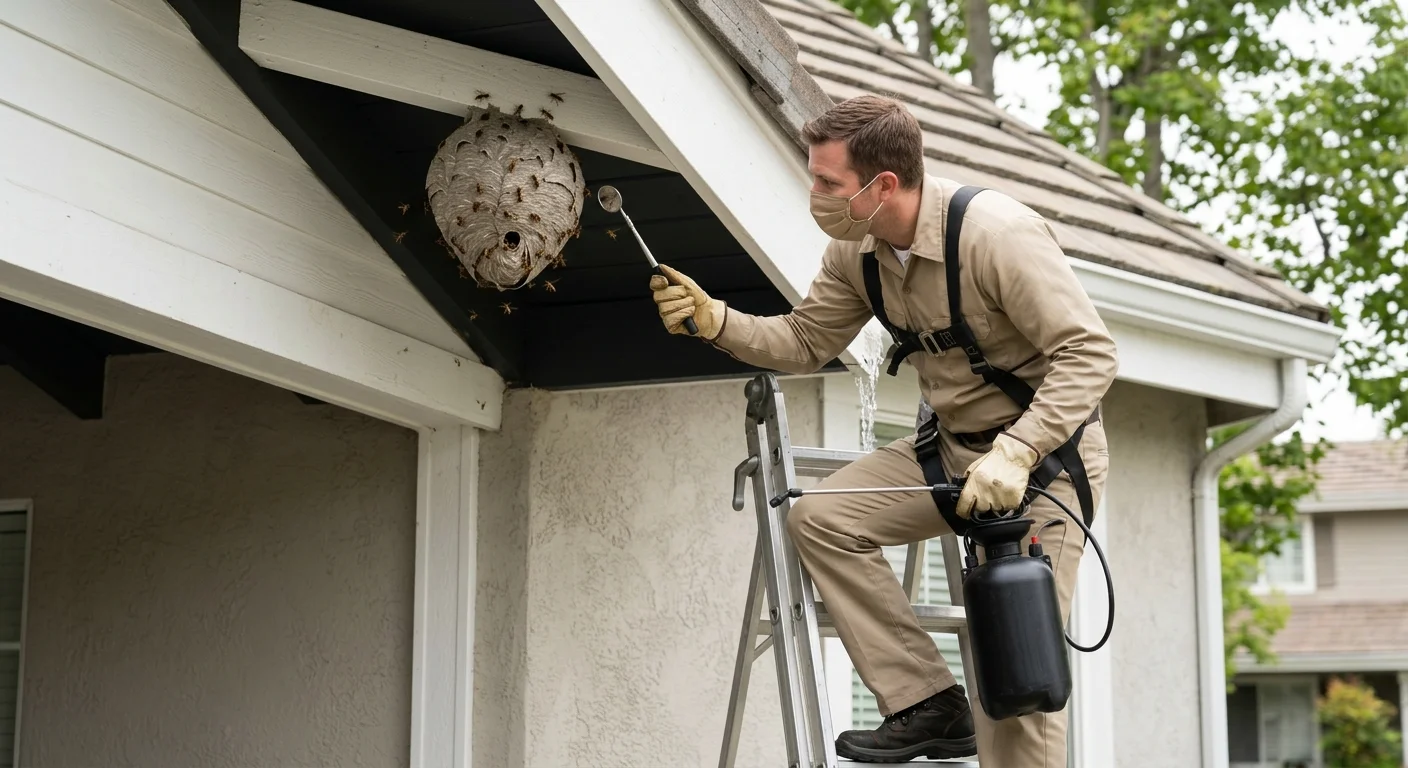
What repellents may change around a property
A wasp repellent should be judged by its label. Start with the exact pest, location, and purpose named there. A package may discuss deterring activity from a limited area. That’s different from locating, treating, or removing a nest.
If the product works as its label describes, you might notice less activity near one treated surface. That observation doesn’t establish what happened elsewhere. Wasps could still be entering a roof gap, landscape cavity, shed corner, or another concealed space. A repellent isn’t a nest-status test.
That distinction matters across San Diego County. A Point Loma balcony presents a different access problem than an El Cajon shed. A Chula Vista patio may be close to a shared fence. An Oceanside eave may sit beyond ordinary reach. The product label must match the actual site in front of you.
Treat “natural wasp repellent” with the same care. The word “natural” doesn’t answer the practical questions. Check which pest the label names, where the product belongs, and what result it claims. Don’t substitute a homemade mixture for those directions. A mixture without a registered product label gives you no clear use instructions to evaluate.
Keep the decision narrow. Repellents may fit prevention around a specific approved location. They don’t identify the insect, map hidden activity, or prove a nest has stopped. Our wasp and bee removal service connects San Diego County customers with licensed, insured local companies when the problem has moved beyond simple deterrence.
Why active nest traffic changes the decision
One wasp crossing a yard tells you little about its destination. Repeated movement through the same opening is more useful evidence. Watch from an ordinary walking area and note the location. Don’t move closer simply to get a better view.
Look for a repeatable pattern rather than chasing individual insects. Useful observations include:
- Regular entry and exit at one roofline, vent, wall gap, or landscape opening
- A visible nest-like structure attached beneath an eave or overhang
- Activity returning at the same point after a repellent was used elsewhere
- More than one possible opening around the same structural area
- A location involving a shared wall, rental property, or common area
These details change the next step because a surface product can’t tell you what occupies a concealed opening. It also can’t confirm whether the insects you see are the same type named on the package. Identification should come before anyone selects a nest-control approach.
Location also affects access. A low, fully visible structure isn’t the same problem as activity near a second-story roofline. Traffic beside a frequently used doorway differs from activity at the far edge of a property. In a City Heights apartment or South Bay townhome, the opening may involve space controlled by a landlord, manager, or association. Record that context before arranging service.
Don’t treat a hidden opening as an ordinary surface. Instead, document where activity begins, when you noticed it, and which products were already used. Our San Diego wasp nest removal guide explains the broader removal decision. If the insects appear connected to a ground or concealed cavity, review the yellow-jacket nest decision guide before contacting a company.
How to read a registered product label
Ignore the strongest phrase on the front panel for a moment. Turn to the detailed label and compare it with your situation. The goal isn’t to find a product that mentions outdoor pests generally. It’s to confirm that the written directions clearly address the pest and site you have.
Start with the target pest. Look for “wasp” rather than assuming every flying-insect product serves the same purpose. If you can’t identify the insect, the label can’t solve that uncertainty. Save the package information and ask a licensed company to identify what’s present.
Next, check the approved locations. “Outdoor use” alone may not answer whether the product is intended for eaves, patios, plants, wall openings, or occupied gathering areas. Read the complete site language. If your location isn’t clearly covered, don’t improvise an application method.
Then separate repellency from nest control. A repellent claim addresses deterrence within the label’s stated scope. It doesn’t automatically include nest treatment or removal. Packaging that names wasps may still describe a different job than the one you need.
Review the directions and precautions together. Don’t borrow instructions from another product, online video, or homemade recipe. The container in your hand is the source for that product’s intended use. The EPA’s pesticide safety guidance provides a starting point for household pesticide and label information.
Also note what the label doesn’t settle. It can’t verify the species at your property. It can’t confirm the number or location of nests. It can’t determine whether a roofline opening leads into a concealed space. Those are inspection questions.
If a product has already been used, keep its exact name and label available. Tell the company where it was applied and what you observed afterward. Don’t describe the product only as “spray” or “natural repellent.” Exact information gives the company a clearer starting point without guessing.
When a licensed company should identify the nest
Call a licensed company when activity stays tied to one location, the opening is concealed, or identification remains uncertain. Professional identification also makes sense when the suspected nest sits above normal reach or involves a shared part of a building.
The company should first identify the insect and inspect the accessible area. It can then explain whether you’re dealing with an exposed structure, concealed activity, or another flying insect. The proposed work should follow that finding, not the product already sitting in your garage.
This step matters when bees and wasps could be confused. Don’t select a removal method from color, size, or a quick photo alone. Ask the company to explain what it identified and which visible features support that conclusion. Our broader San Diego pest control guide covers what to expect when choosing local help.
Before work begins, ask four concrete questions:
- What insect did you identify?
- Where is the nest or suspected activity point?
- What approach are you proposing for that location?
- What preparation does the property require?
The matched company inspects first and quotes in writing before treatment begins. Any service terms or re-treatment conditions belong in that company’s written agreement. Pest Pros San Diego doesn’t perform applications, set prices, or issue treatment guarantees.
You can check a company or license through the California Structural Pest Control Board. We match customers across coastal North County, central San Diego, East County, and the South Bay with licensed, insured local pest control companies holding the appropriate California credentials.
When to call us
Bring in a licensed pest control pro when wasps keep using one opening, the suspected nest is concealed, or the insects haven’t been identified. We’ll connect you with a local company that can inspect the location and explain its proposed work. Call us at (858) 400-6561 and we’ll match you with a licensed local pro.