
If you searched “wasp nest removal near me” in San Diego, there is a nest on the property and you want it gone. The right move depends on nest type and location, not on a blog price. Hidden yellow jacket nests are a different job from an open paper-wasp comb. This page covers identification, why a store spray often fails on a hidden nest, and what to ask for in writing. Pest Pros San Diego matches you with a licensed company. We do not remove nests or promise a response time.
What a written wasp nest quote should include
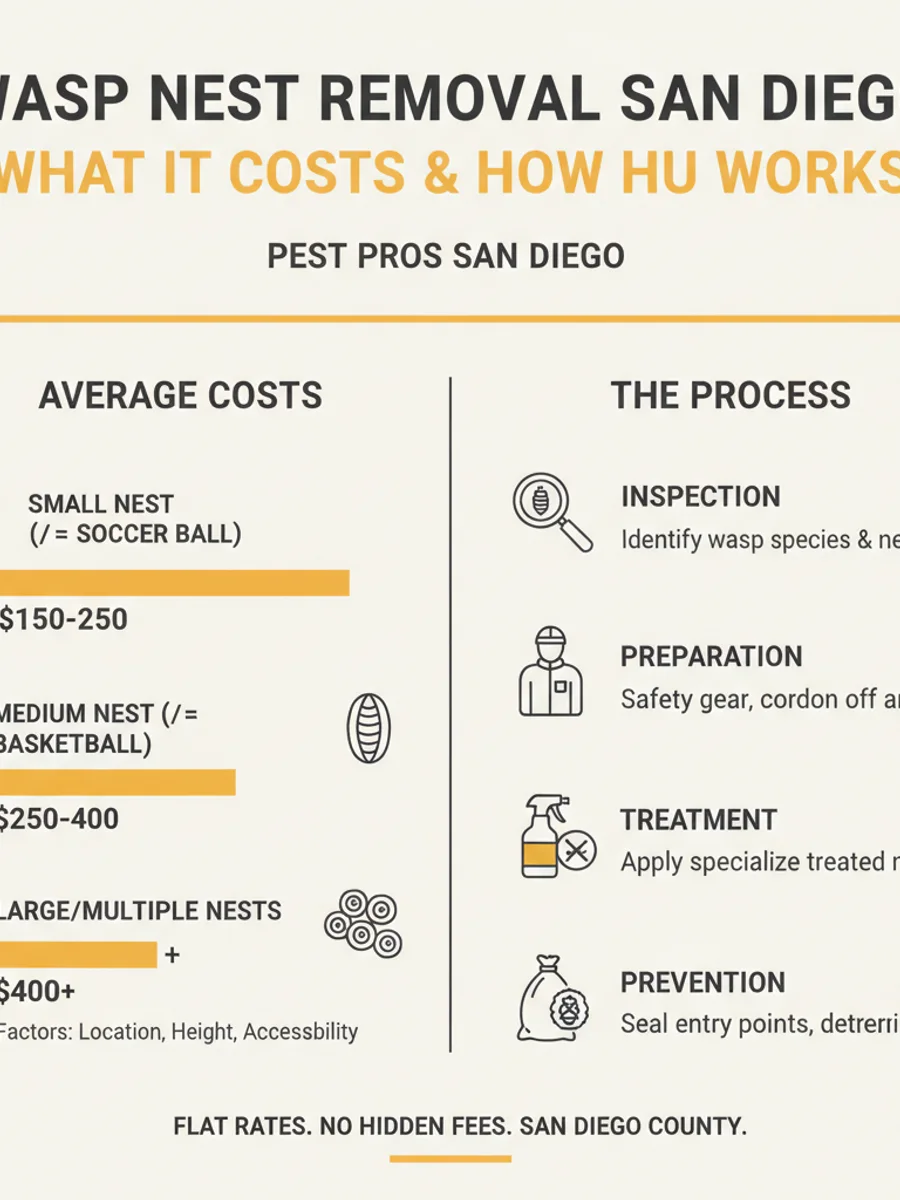
There is no named, currently verifiable dollar benchmark this site can print for San Diego wasp removal. Do not treat any figure on this page as a local rate.
Ask the company to put in writing: species or nest type, location (eave, ground, wall void), whether a return visit is included, travel, and what happens if the colony is still active. For how one-time versus recurring household service is structured, see general pest control. A quarterly plan is not automatically cheaper than one nest job.
Paper wasps or yellow jackets: which nest do you have?
The first question on the phone is what the nest looks like.
Paper wasps, per UC IPM, have long slender waists, build paper nests with many open cells under eaves, and are rarely aggressive.
Yellowjackets nest in holes in the ground, inside wall cavities, or in hanging nests totally enclosed in gray paper with a single entrance. They scavenge on food. UC: colonies begin each spring with a single reproductive female and can reach 1,500 to 15,000 individuals, depending on the species. If wasps stream in and out of a hole in the ground or a crack in stucco, treat that as a yellow jacket question until a licensee says otherwise. The University of California yellowjackets pest note is the identification reference.
Why yellow jacket nests need a pro, not a spray can
UC: aerosol nest sprays can be effective against yellowjackets and paper wasps, but they must be used with caution. Underground nests can be quite a distance from the visible entrance, and the spray might not get back far enough. Partially intoxicated, agitated wasps are likely to be encountered at some distance from the nest entrance, even the day after an insecticidal treatment. Hiring a pest control professional reduces risks to you and your family.
Do not spray the entrance of a ground or wall nest and assume the colony is dead. That is the failure mode UC describes. If anyone in the home has a sting allergy, or the nest is hidden, underground, or in a wall, this is licensed work, not a ladder and a can. See when to call a wasp exterminator.
What wasp nest removal looks like
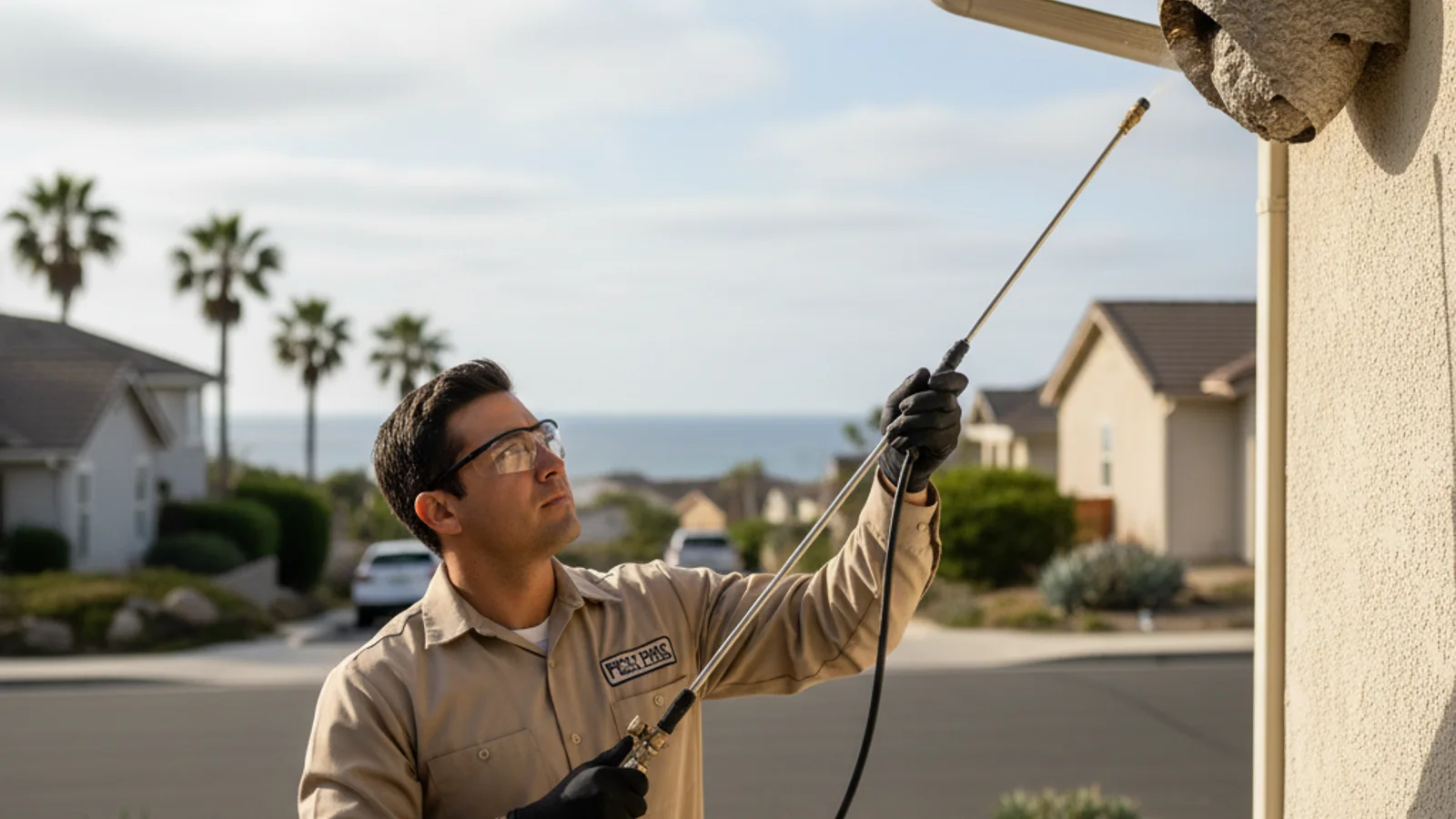
A licensed operator should work in protective gear. UC: paper wasp nests should not require treatment unless they are near people. Early in the season, knocking down a newly started paper wasp nest can send the founding female elsewhere. For yellowjackets, UC describes aerosol nest sprays used with extreme caution. Underground nests can sit far from the visible hole, so the spray may never reach the colony. Ask what the company will use on your nest. This matcher does not stock products or send a bee suit.
Verify the company at the California Structural Pest Control Board site.
Seasonal pressure, without invented call volume
UC: colonies start in spring. Late-season yellowjackets become persistent around food. That seasonal curve is why late summer stings around patios and trash cans feel worse. It is not a count of “most common calls” this network can publish, and it is not a county-wide priority list.
Earlier in the season the nest is smaller. That is colony biology, not a promise that June work is always easy. For neighborhood service-area pages, start at San Diego pest control. Those pages do not publish response times this article can repeat.
Keeping wasps from coming back
Removal handles today’s nest. UC: previously mated, overwintering yellowjacket and paper wasp queens begin nests in spring when the weather becomes warm.
Keep food, including pet food, covered or indoors. Outdoors, cover soda cans so wasps do not crawl in. Keep garbage in sealed cans and empty it regularly. Pick up and dispose of ripe fruit. Pair that with ordinary general pest control if you already have a household plan.
Frequently asked questions
How fast can you remove a wasp nest near me?
Pest Pros does not run a wasp queue or a county-wide response clock. Ask the matched company when it can be on site, and whether travel is in the quote.
What does a wasp exterminator do that a spray can won’t?
UC: a store stream may never reach an underground or wall colony, and agitated wasps can show up away from the entrance afterward. A licensee treats the nest as a colony. Paper wasp nests, per UC, should not require treatment unless they are near people.
Do you handle yellow jacket and hornet nests too?
The companies we match can quote yellow jackets, paper wasps, and other social wasps they are licensed for. Hidden and underground nests are ordinary licensed work. Confirm species on the proposal. If you need hornet work, ask whether that company treats that nest type.
Is there a published wasp nest removal cost for San Diego?
Not on this page. There is no currently verifiable named guide row we can print. Get the full price in writing before treatment starts.
When to call us
If the nest is large, hidden, underground, or you suspect yellow jackets, do not spray the hole. Professional wasp and bee removal is the licensed path.
Call (858) 400-6561 to get matched with a licensed local pro.