
Most people typing “tick spray for yard” into a search bar have already found one on a dog or a pant leg. The useful question isn’t which bottle to buy. It’s what a licensed company looks at before it recommends anything, because a yard treatment aimed at the wrong half of the property is money spent for nothing.
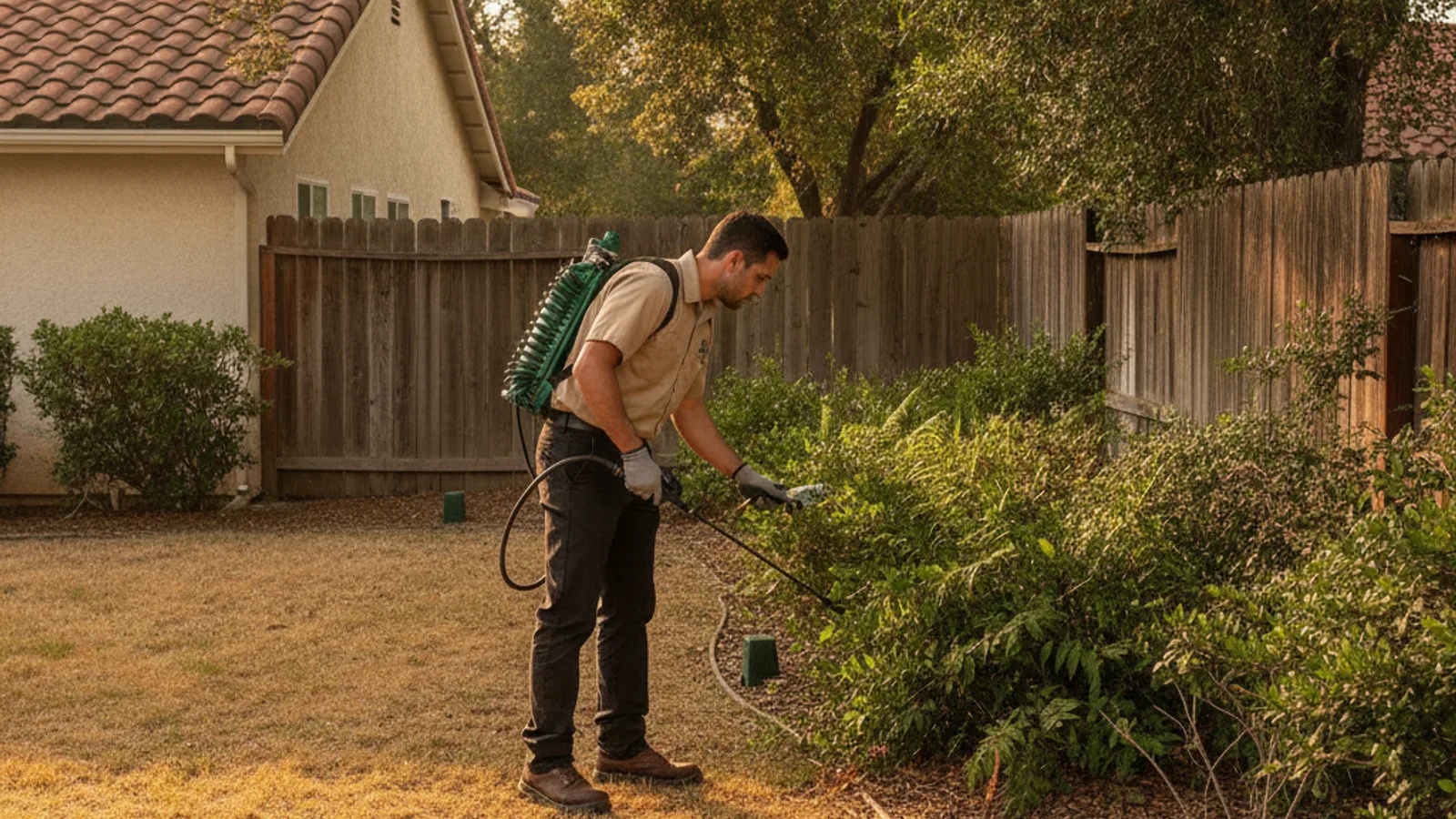
Confirming ticks before treating the yard
A yard plan starts with an identification, and an identification starts with a specimen. If you pulled a tick off a pet or a person, keep it. Seal it in a small clear container or a bag with tape over the opening, and note the date and where the pet or person had been. That object is worth more to an inspection than a description of it.
Save what you find, and don’t crush it. Body shape and markings are how one tick gets told from another, and a flattened specimen throws that away. Our comparison of the deer tick and the dog tick in San Diego covers why that distinction changes the conversation, and our broader guide to ticks in San Diego covers where local encounters usually happen.
There’s a second identification worth ruling out early. Fleas and ticks get bundled together in product marketing and treated as one problem, and they aren’t. Fleas concentrate indoors around pet resting areas, which pulls the work inside. If the pet is scratching and you’re finding activity in bedding and carpet rather than on the animal’s skin, read our guide to flea treatment in San Diego before you buy anything aimed at a yard.
What happens on the animal is a separate track from what happens on the property. Tick and flea preventives for a dog or a cat are a veterinarian’s call, not ours and not a pest control company’s. We won’t recommend one, and a company that offers to handle both the yard and the pet with the same product is telling you something about how carefully it reads labels.
For general tick biology and identification, UC IPM is the reference worth reading before the visit. The County of San Diego Vector Control Program also monitors ticks among the local vectors it tracks and runs public education on vector-borne disease. Its free on-site inspections cover rats and mosquitoes, not yard tick treatment, so don’t expect the county to spray a private yard.
Before the visit: habitat to map and tidy
CDC tick-prevention guidance lists landscaping steps to reduce blacklegged ticks in the yard. Treat that as habitat work to map before anyone sprays, not a substitute for a labeled pesticide. Ask whether the written proposal targets those edges instead of blanket coverage.
- Remove leaf litter from the areas people and pets actually use.
- Clear tall grasses and brush at the lawn edge and around the house.
- Note pet paths, fence lines, woodpiles, and where landscaping meets open space or canyon brush.
- Keep playground equipment, decks, and patios in mind as the high-use core, not the untreated wild edge.
- Photograph those boundaries so two companies are looking at the same yard.
CDC also lists mowing, a wood-chip or gravel strip between lawn and woods, stacking wood neatly in a dry area, and removing yard clutter that can hide ticks. You do not have to finish every landscaping change before an inspection. You do need to show the inspector the edge the dog uses and the brush you cannot clear.
How vegetation, pets, and wildlife affect the inspection
The walk matters more than the yard’s size. An inspector is mapping where the property meets something wilder, where it stays shaded and damp, and where pets and people actually spend time, because a treatment plan follows those lines rather than covering everything.
Expect the inspection to trace the fence line and both sides of it, the shaded edges under mature shrubs, leaf litter and mulch beds, the boundary where irrigated lawn meets dry brush, woodpiles and stored materials, and the paths a dog wears into the yard by habit. Where the property backs onto open space, the inspector is also looking for the gaps and worn runs that wildlife use to cross it.
San Diego County makes this genuinely different lot to lot. A half-acre in Alpine, Jamul, or Descanso that ends at chaparral gets a long perimeter walk, because the important part of that yard is the twenty feet where the landscaping stops. Inland North County properties in Ramona and Valley Center often add horse ground, outbuildings, and stored feed, which changes both the wildlife pressure and where a company can and can’t treat.
Coastal canyon lots in Encinitas, Del Mar, and Carlsbad have a narrower but wetter version of the same edge: dense ornamental planting, canyon rim vegetation, and shade that holds moisture through a dry August. Central-city yards in Kensington or Normal Heights are usually small and fully fenced, and the honest finding there is often that the yard isn’t the source and the dog picked the tick up on a trail. South Bay lots in Chula Vista and Imperial Beach tend to be compact and hardscaped, which shrinks the treatable area and puts more weight on the few shaded beds that remain.
A company that quotes over the phone without walking any of that hasn’t inspected anything. Ask for the findings in writing, with the areas named.
What the registered product label controls
Whatever product a licensed company proposes, the registered label decides how it may be used. The label names the pests it covers, the sites where application is permitted, the precautions around people and pets, and any interval before the area may be reentered. Nothing on this page overrides it, and neither does a company’s habit or a homeowner’s preference.
That’s also why we don’t publish mixing ratios, application rates, or a do-it-yourself procedure. Off-label use is a real legal problem and a real safety one, and a consumer product bought for a yard carries its own label that has to be read the same way. The EPA’s safe pest control pages are a fair overview of how pesticide labels work before you sit down with an estimate.
Read the estimate for four things: the product name, the areas to be treated, the label precautions the company is relying on, and any reentry instruction. If the estimate names no product, you can’t check any of it.
Cost usually comes up here, and it’s worth knowing the market frame. Fixr puts outdoor tick treatment at $150 to $600, with tick treatment generally at $50 to $150 per treatment and a national average of $125, in a guide last updated January 2025. That’s a national figure, not a San Diego quote and not our price. We set no prices at all. The company you are matched with inspects first and quotes in writing before any treatment begins.
One local rule worth knowing if the yard belongs to a school or a licensed child care center rather than a house.## Questions to ask a company about pet safety
The answer you want to a pet safety question is a label and a written instruction, not reassurance. Ask these, and write down what you’re told:
- Which product are you proposing, and can I read its current registered label before you apply it?
- What does that label say about pets and children in the treated area?
- What’s the reentry instruction, and does it differ for a dog that grazes or digs?
- Which areas will you treat, and which are you leaving alone?
- Are you treating for the tick I found, and how did you identify it?
- What do you want me to do with pet bedding, water bowls, and toys beforehand?
- What’s in writing about follow-up visits and re-treatment, and what does it cost?
We can’t tell you a product is safe around a dog, a cat, or a toddler. That depends on the specific product and its current label, and we don’t apply pesticides or hold a pest control license. What we can tell you is that a company unwilling to name the product or show you the label is not the company to hire.
Verify the license before the visit. California puts general household pest work, ticks included, under Structural Pest Control Board Branch 2, which covers household pest control excluding fumigation. Only a licensed field representative or operator may make inspections and identify infestations on behalf of a registered company. Check both the company and the person through the SPCB license search. Our flea and tick treatment referral service matches you with companies that hold the appropriate California credentials.
When to call us
Call when ticks keep turning up on a pet after correct label use, when the yard shares a boundary with open space you can’t clear yourself, or when you can’t identify what you pulled off. Identification and any pesticide application in a yard belong to a licensed company, and a written scope is how you compare two of them fairly. Call us at (858) 400-6561 and we’ll match you with a licensed local pro.