
Summer in Chula Vista is a beautiful time, but for many homeowners it also means more ant activity. You might see a few scouts at first, then trails across kitchen counters looking for crumbs and water. Store sprays often feel pointless because they hit the workers you can see, not the nest.
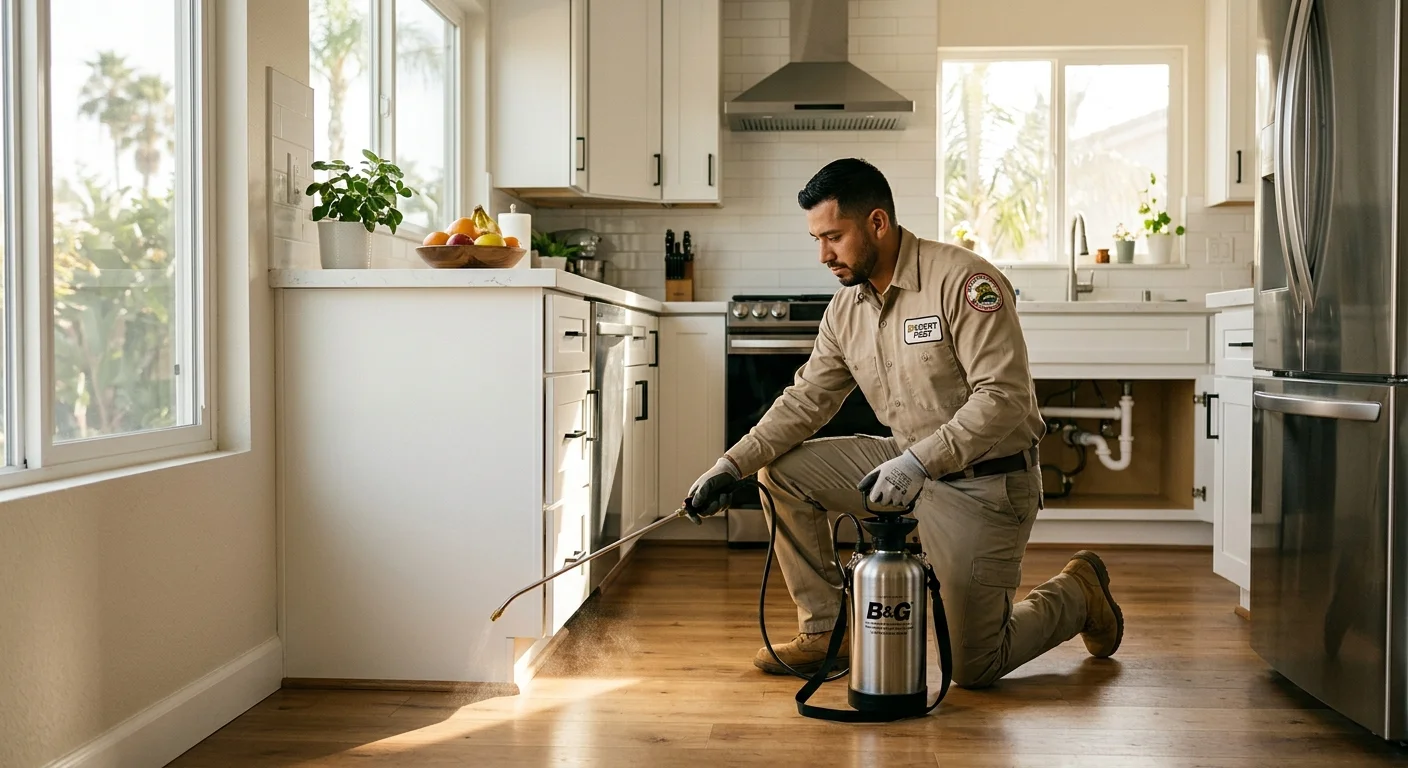
Heat and dry weather push ants indoors for food and water. Identifying the trail and closing the attractants is the first useful step. A licensed Branch 2 company can then inspect if the trail keeps returning.
Identifying Argentine ants vs. other common house ants
When you see ants in a Chula Vista kitchen, Argentine ants are a common candidate in San Diego County. UC IPM describes Argentine workers as about 1/8 inch long and dull brown, with wide foraging trails. Crushing them is not a reliable ID test. UC IPM also notes that Argentine ant colonies are linked into a supercolony with multiple queens, and newly mated queens leave with workers rather than founding a nest alone. For more on that species, see Argentine ants in San Diego.
Other ants you might see include:
- Odorous house ants: About 1/8 inch, dark brown to shiny black, named for a strong smell when crushed. They also trail.
- Pharaoh ants: About 1/16 inch, yellow or honey-colored to orange. UC IPM lists Pharaoh ants as the primary ant that nests indoors in California, often in warm, moist wall voids.
- Pavement ants: Dark brown to black, about 3/16 inch, usually emerging from pavement or foundation cracks.
Identification matters because bait and sanitation that fit one species can miss another. A Branch 2 inspection is how a licensed company names the ant before anyone treats.
Why store-bought ant sprays often fail in the long run
It is natural to grab a spray when a line of ants hits the kitchen. Visible ants die, then the trail returns. Contact sprays kill what you see. They do not reach queens or nests in shallow outdoor soil, under rocks, or in wall voids.
UC IPM does not treat spray-triggered “budding” as a documented Argentine ant fact. What it does say is that Argentine ants live in connected multi-queen supercolonies, that spraying ants indoors will not prevent more ants from entering, and that indoor sprays are usually unnecessary if you remove food, wipe trails, seal entry, and use baits at the entry points. On occasion, barrier sprays make the situation worse by trapping ants indoors.
Baits can work when workers take them back to the nest, but a bait that is too fast, the wrong food type, or placed away from the trail will be ignored. That is why a summer of spraying can feel like a loop.
What a Branch 2 ant visit actually covers
Pest Pros San Diego is a referral matcher. We do not inspect, bait, or treat. If a Chula Vista trail keeps returning after sanitation, the useful next step is a match with a licensed Branch 2 company (household pests, not fumigation). Branch 3 is wood-destroying organisms. Ants in a kitchen are Branch 2 work. Confirm the company at pestboard.ca.gov.
A Branch 2 inspection typically looks for trails, entry points, moisture, food access, and outdoor nest sites. UC IPM describes Argentine nests as often shallow in soil, deeper when it is dry, and sometimes under debris or next to buildings. Slow baits and non-repellent products, when a company uses them, are meant to move through the colony rather than only kill foragers. That is the company’s method, not a Pest Pros protocol, and it is not a promise that every queen in a block-wide supercolony will be gone.
Tips for keeping ants out of your Chula Vista kitchen
These steps are worth doing whether or not you later book a licensed inspection:
- Sanitation: Wipe spills and crumbs. Store food, including pet food, in sealed containers. Do not leave dirty dishes in the sink. Sweep and mop kitchen floors.
- Moisture: Fix leaky faucets, pipes, and irrigation. Improve drainage at the foundation. Empty pet water bowls at night.
- Exclusion: Caulk gaps around windows, doors, and utility penetrations. Repair torn screens.
- Outdoor attractants: Trim plants so they do not touch the house. Move leaf litter, wood piles, and trash away from the foundation. Keep outdoor cans closed.
- Pet food: Do not leave bowls out overnight. Wash them.
These measures cut the reason ants enter. They do not replace a Branch 2 inspection when a supercolony is feeding from next door.
Frequently asked questions
Why does spraying make ants worse in Chula Vista?
UC IPM: spraying ants indoors will not prevent more ants from entering, and indoor sprays are usually unnecessary if you wipe trails, seal entry, and bait at the points where ants come in. On occasion, barrier sprays trap ants indoors. Argentine ants also live in connected multi-queen colonies, so killing the line on the counter does not settle the outdoor nest.
Why do ants keep coming back even after treatment?
Chula Vista lots share fences, irrigation, and soil with neighbors. Argentine ant supercolonies can span more than one property. Treating indoor trails without sanitation and exclusion, or treating one yard while the next yard still feeds the colony, lets the perimeter refill. A licensed company should explain what is in writing on the scope, not promise a block-wide kill.
Do home remedies like vinegar or cinnamon work on ants?
They can mask a scent trail for a short time. They do not reach the nest. The trail usually re-forms.
How do I check that a pest control company is licensed in California?
Look the company up with the California Structural Pest Control Board at pestboard.ca.gov before signing anything. Branch 1 is fumigation with lethal gases. Branch 2 is household pests, excluding that fumigation. Branch 3 is wood-destroying pests by insecticide or structural repair, excluding fumigation. The name on the record should match the name on the proposal.
When to call us
If kitchen trails keep returning after you have cleaned, dried, and sealed what you can, call (858) 400-6561 to get matched with a licensed local pro. Ask for a Branch 2 company that will inspect before it quotes.
Ants are one of many pests that show up locally. See our Chula Vista pest control service page.