
Bat bugs and bed bugs are close enough in appearance that identification often needs a hand lens. UC IPM says the useful mark is the length of the hairs on the pronotum compared with the diameter of the eye: shorter than the eye on a bed bug, longer on a bat bug. The difference that actually matters for treatment is the host. A bed bug problem starts with a mattress or secondhand furniture. A bat bug problem starts with bats roosting in or on the building. Treating one like the other does not fix the source.
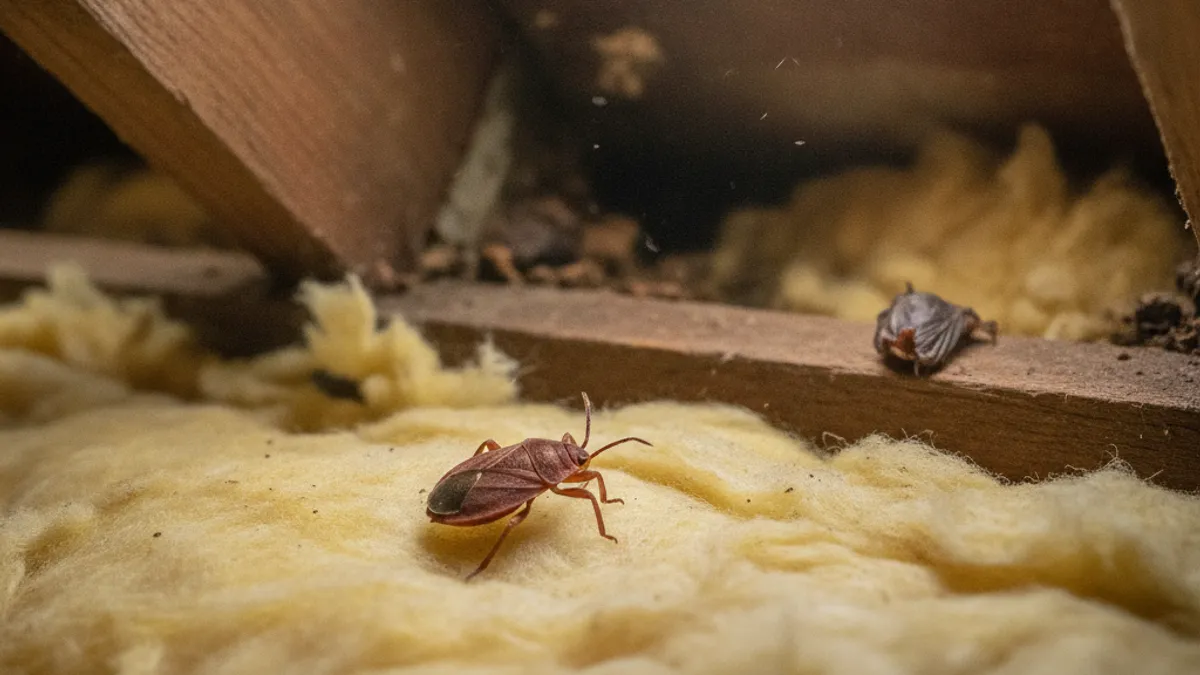
Why an attic can create this mix-up
Older San Diego houses can have original attic vents, gaps under eaves, and roof lines that have settled. Those openings are worth checking if you are finding bed-bug-like insects in an upper room. Do not treat 1950s-to-1980s construction, or a named bat species, as a fact about your lot. Ask whether anything is using the attic, chimney, or soffit, and look for droppings, staining, or dusk flight from a gap.
Bat bugs feed on bats as their primary host. Purdue’s diagnostic lab notes that bat bug populations cannot persist and reproduce without that host. If bats leave, die, or are excluded, leftover bugs may move into living space and bite people, which is when they get mistaken for bed bugs.
Telling the two apart
Visually, bat bugs and bed bugs are both flat, oval, reddish-brown insects roughly the size of an apple seed, and to the naked eye they look almost identical. UC IPM’s field mark is the fringe of hair on the pronotum, the shield-shaped plate right behind the head. Those hairs are longer than the eye diameter on bat bugs and shorter on bed bugs. Seeing that difference reliably takes a hand lens or microscope, not a quick glance. Pest Pros San Diego does not identify specimens.
Since looks alone often can’t settle it, location does the heavier lifting:
- Where you’re finding them: Bed bugs cluster in mattress seams, box springs, and headboards, close to where a person sleeps for hours. Bat bugs tend to show up in upper rooms, near ceiling fixtures, attic access points, or along walls that share space with the attic, since that’s the shortest path from where the bat colony was.
- Whether there’s an obvious source: A bed bug problem usually traces to travel, a hotel stay, or secondhand furniture. A bat bug problem usually comes with other bat signs: scratching or chittering sounds in the attic at night, a musty ammonia smell, or small dark droppings along an attic entry point.
- How the bites cluster: Both bite, and both leave similar-looking welts, so bite pattern alone won’t distinguish them reliably.
Why treating it like a bed bug problem doesn’t work
Standard bed bug treatment, heat or targeted insecticide application to mattresses, box springs, and bedroom cracks, is built around eliminating an established population that’s feeding on a sleeping person every night. Bat bugs in a bedroom usually aren’t established there at all. They’re refugees from an attic colony, feeding opportunistically because their real host is gone or scarce. Treat the bedroom and ignore the attic, and the source keeps producing more bugs looking for a new blood meal.
The actual fix has to start at the source: identifying and addressing the bat colony itself. Purdue: controlling bat bugs first requires excluding bats that are present, by sealing entrance points after the bats are out so they cannot return. That is often work for trained animal control professionals, not a mattress heat job. After exclusion, leftover bugs still need to be intercepted. We do not have a sourced California wildlife-protection calendar or a number of weeks for leftover bugs to die on their own, so do not wait on a calendar.
What to check first
If you’re finding small reddish-brown insects in an upper room and you’re not sure if it’s bed bugs or something else, a few questions narrow it down fast: Do you hear scratching in the attic at dusk, when bats typically leave to feed? Is there a musty or ammonia smell near a vent or soffit? Are the insects showing up along a wall or ceiling rather than in the bed itself? A yes to any of those points toward bats, not a standard bed bug infestation.
If it’s genuinely confined to the bed, mattress seams, and headboard with no attic activity, our bed bug treatment page explains how a Branch 2 match request works. Our guide to what bed bugs actually look like has more detail on look-alikes, including carpet beetles. For a broader look when the source isn’t obvious, our general pest control page covers how matching works. Neither page means Pest Pros will ID the insect or treat the house.
Frequently asked questions
Do bat bugs bite people?
Yes, but only when their preferred host, bats, isn’t available. If a bat colony has left an attic or its numbers have dropped, bat bugs will feed on people in the home instead, which is usually when they get noticed and mistaken for bed bugs.
How do I know if I have bats in my attic?
Listen for scratching, rustling, or high-pitched chittering near dusk, when bats typically leave to feed. Look for small, dark, rice-shaped droppings along attic entry points, and check for a musty or ammonia-like smell near vents or soffits. Seeing bats fly out from under an eave at dusk is the clearest confirmation.
Can I just spray for bat bugs without dealing with the bats?
You can reduce the bugs temporarily, but leftover insects can keep appearing while bats remain. The lasting fix is addressing the bat colony and sealing entry points. Purdue notes bat bugs need bats to persist. We do not publish a die-off calendar.
Are bat bugs as common as bed bugs in San Diego?
No. Bed bugs are far more common overall since they spread through travel and furniture. Bat bugs show up when a home has, or recently had, bats in the attic or eaves. That is a specific situation, not a county ranking.
If you’re finding bug bites in an upper room and hearing activity in the attic, call (858) 400-6561 to request a match. The matched licensed company can inspect. Pest Pros San Diego does not identify insects or recommend a treatment plan from this page.