
There isn’t one product that solves a mosquito problem in a San Diego yard, because personal repellents, yard treatments, and standing-water control each handle a different part of the problem. Here’s what actually works in each category, what’s mostly marketing, and when the DIY layer stops being enough.
Why San Diego yards need more than one approach
The County of San Diego says invasive Aedes mosquitoes, or “ankle biter” mosquitoes, bite during the day, especially around the legs and ankles, can bite aggressively and multiple times, and lay eggs in small containers of water. UC IPM says to reduce time outdoors particularly in early morning and evening hours, when host-seeking Culex mosquitoes are most active, and notes that some mosquito species are active at dawn and dusk, others throughout the day. So the biting window depends on which mosquito you have. A repellent that works well on skin does nothing about a breeding site in your side yard, and a yard spray does nothing for the bites you pick up at a neighbor’s barbecue.
Personal repellents: what actually reduces bites
UC IPM says to use insect repellents containing DEET or picaridin, and that oil of lemon eucalyptus is another effective repellent derived from natural materials. It lists the synthetic form of oil of lemon eucalyptus and IR3535 as two recommended biopesticide repellents. UC IPM adds that DEET is the most effective mosquito repellent if you will be out for long periods where mosquitoes are abundant, and that there are many other products containing other active ingredients that may be less effective and must be reapplied frequently. Always follow label directions.
UC IPM says the insecticide permethrin functions as a repellent when applied to clothing, but that it should never be applied directly to skin.
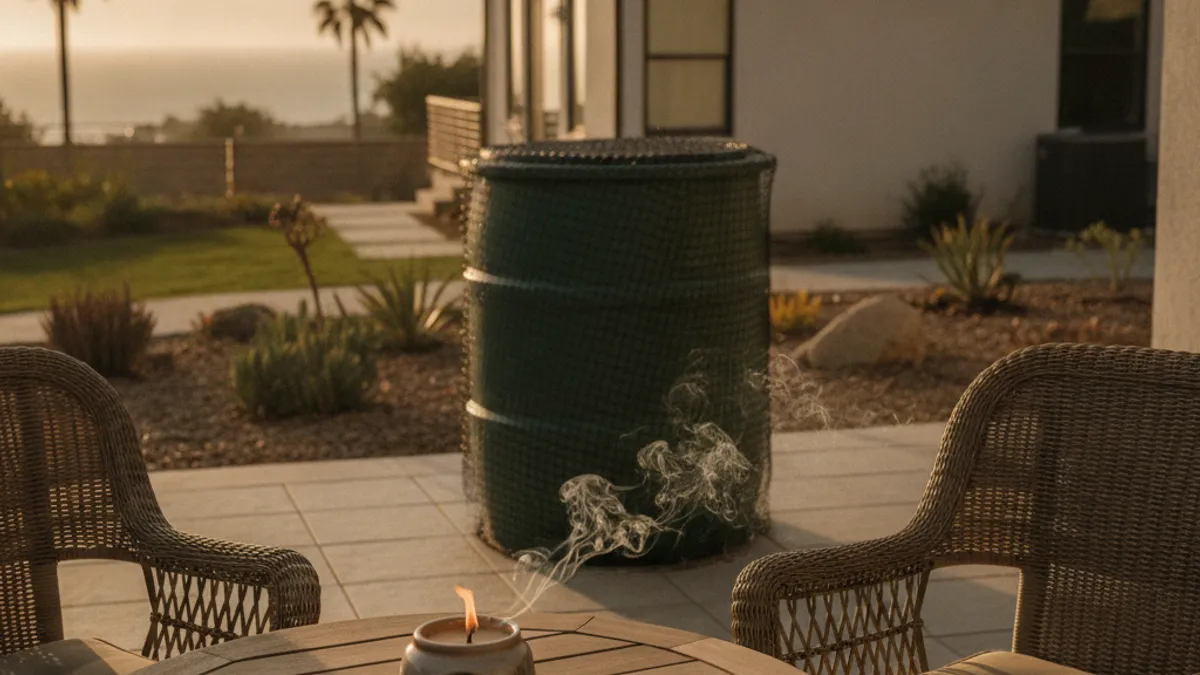
UC IPM says burning citronella candles or mosquito coils containing allethrin works best if there is relatively little air movement, and that these products are only for use outdoors.
Standing-water control: the step people skip
The County of San Diego says invasive Aedes mosquitoes like to lay their eggs in small containers of standing water, often in your backyard, and that even 1/4 inch of water is enough. It adds that their eggs can survive for months in dry containers, then are ready to hatch when water is added, and that it takes about one week for them to grow in the water and turn into biting adults. The County’s instruction is to dump out standing water sources both inside and outside at least once a week, checking places like buckets, birdbaths, potted plant saucers, and children’s toys.
For water features that can’t simply be dumped, UC IPM points to Bacillus thuringiensis subspecies israelensis (Bti), a bacterium whose spores produce proteins toxic to mosquito larvae. UC IPM says Bti is highly selective, killing only mosquitoes and the larvae of a few other related flies, and that it isn’t effective against pupae, since they don’t feed. UC IPM notes Bti is marketed in several formulations for the homeowner, the most common being Mosquito Dunks, which last for about 30 days in water. For ponds specifically, UC IPM also lists removing excess vegetation and stocking with mosquito-eating fish.
Yard barrier treatments: where the DIY layer runs out
A spray aimed at adult mosquitoes doesn’t touch the part of the problem that keeps producing them. The County of San Diego makes the point directly: if you are getting bitten, the mosquitoes are probably coming from somewhere close by. That is a source-finding job, not a spraying job.
A professional yard treatment covers both the adults and the breeding sites, with a more complete inspection of the property including the shaded, overgrown, or hard-to-reach spots a homeowner walkthrough misses. That’s the point where calling in a pro makes sense.
Putting it together
The realistic approach layers all three: dump standing water at least once a week as the baseline, use a labeled personal repellent when you’re outdoors, and treat any water feature that can’t be emptied with a labeled Bti product. The County’s line is the one to hold onto: if you are getting bitten, the mosquitoes are probably coming from somewhere close by. Our full mosquito control guide covers professional treatment options, and our Aedes mosquito establishment data for San Diego page covers the county detection record.
Frequently asked questions
Do bug zappers actually reduce mosquito bites?
UC IPM says electric bug zappers used to kill pest insects are counterproductive, because many of the insects these traps kill are those that prey on mosquitoes.
Are natural repellents like citronella as effective as DEET or picaridin?
UC IPM says burning citronella candles or mosquito coils outdoors works best if there is relatively little air movement, and that these products are only for use outdoors. On skin, UC IPM says DEET is the most effective mosquito repellent if you will be out for long periods where mosquitoes are abundant, and that DEET and picaridin are used most commonly to repel mosquitoes.
How often do I need to check for standing water in my yard?
The County of San Diego says to dump out standing water sources both inside and outside at least once a week. That interval matches the biology: the County says it takes about one week for invasive Aedes to grow in the water and turn into biting adults, and UC IPM says that in summer the entire life cycle, from egg to adult, can be completed in a week or less depending upon water temperature.
When should I stop trying DIY methods and call a professional?
If you’re dumping standing water weekly and still getting bitten, the County’s guidance points at the answer: the mosquitoes are probably coming from somewhere close by. That’s the point where a full property inspection makes more sense than reapplying store-bought products.
Once repellents stop being enough, we match you with a licensed local company that can inspect the property for the breeding sources behind the adults you can see.
If DIY mosquito control isn’t holding and you want a full yard assessment, call (858) 400-6561 to request a match with a licensed local company. That company inspects, schedules and quotes. Pest Pros San Diego does not.