
Finding a black insect or scattered dark wings indoors deserves a closer look. Color alone can’t confirm a termite, its species, an active colony, or structural damage.
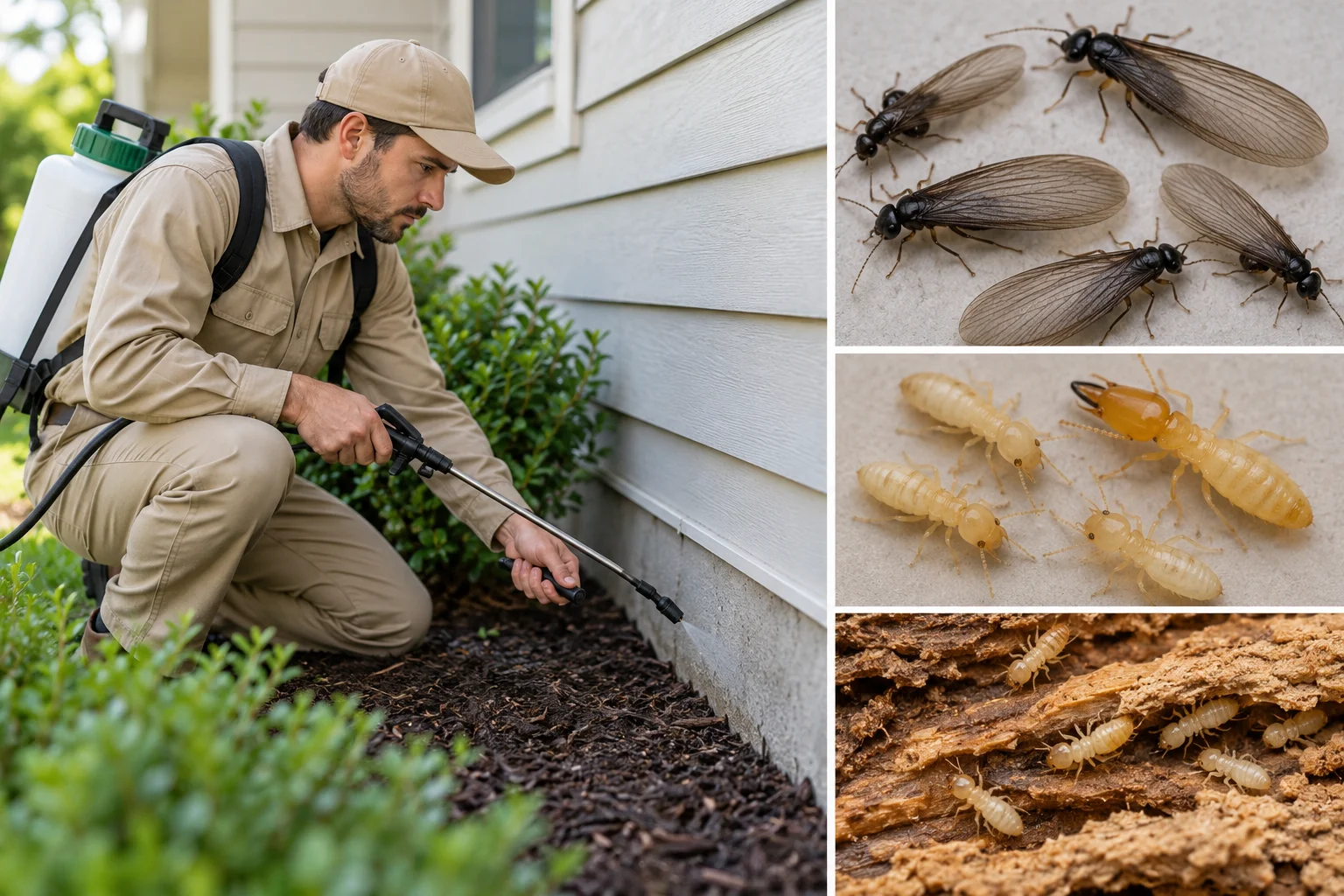
“Black termite” is a visual description, not a confirmed identification. The useful next step is documenting the insect, where it appeared, and any evidence nearby.
Why dark color alone doesn’t confirm a termite
A dark insect can be a termite candidate. Its color doesn’t make the identification certain.
Lighting changes how an insect appears. So do shadows, flooring, camera exposure, and a specimen’s condition. A dark brown insect can look black in a phone photo. A damaged specimen may also be missing the features needed for identification.
Location adds context, but it isn’t proof. A dark insect near a window may have flown indoors. One found beside a baseboard may have crawled there from elsewhere. Neither location, by itself, establishes a termite colony inside the building.
Look beyond color and record:
- Whether the insect has wings
- Whether loose wings are present nearby
- Its approximate size
- Its body and waist shape
- The shape of its antennae
- The room and exact discovery point
- Nearby pellets, holes, tubes, or damaged-looking wood
Don’t crush or discard the specimen if you can avoid it. Place it in a closed container and note when and where you found it. Take clear photos from above and from the side. Include a ruler or common object for scale.
Those steps preserve useful evidence. They still don’t turn a photograph into a termite report. Our broader guide to what termites look like in San Diego explains the visual features an inspector considers.
Odor isn’t a dependable shortcut here. The approved termite research doesn’t confirm a household smell that identifies termites or reliably drives them away. Don’t treat a scented product, essential oil, or missing odor as an identification test.
Which termite life stages may appear dark
The termite life stage matters because one colony can contain insects with different roles and appearances. Still, the approved local research doesn’t establish “black termite” as a specific San Diego species.
The dark, winged insect people notice indoors may prompt an inspector to consider a reproductive termite. UC IPM confirms that adult western drywood termites fly during daytime in summer and fall. That species occurs along California’s Pacific coastal region and extends into Southern California’s valleys and deserts.
That fact answers a common timing question. Termites don’t need darkness to emerge. A daytime discovery can still warrant inspection, especially when several winged insects appear together. It doesn’t prove that every dark insect seen after sunset is something else.
Workers and soldiers generally remain less visible because termite activity can occur within wood, soil, or protected routes. The approved research doesn’t provide a color-only test for those castes. Avoid identifying a pale body, dark head, or black specimen without examining other evidence.
San Diego County also has more than one relevant termite group. Western drywood termites live in wood without needing soil contact. Subterranean termites nest in soil and build shelter tubes between soil and wood. UC IPM says Reticulitermes subterranean termites occur across nearly all California regions. It also reports Formosan termites in a small area near San Diego, not throughout the county.
That variety is why a dark specimen can’t establish the species or treatment. See the local guide to signs of termites in San Diego before interpreting nearby wood or debris.
What ants and other insects can resemble
Ants are a common source of confusion when dark, winged insects appear indoors. San Diego County buildings can also contain unrelated insects whose size or color looks convincing in a quick photo.
Argentine ants deserve consideration locally. According to UC IPM, they are dull brown and about 1/8 inch long. Their color can range from light to dark brown. That means an Argentine ant photographed in poor light may be described as black.
Don’t decide between termites and ants from color alone. An inspector can examine the full specimen, including its waist, antennae, wings, and body structure. Our focused termites versus flying ants comparison covers those differences without relying on shade.
Discovery patterns also help direct the inspection. Record whether you found:
- One intact insect or many
- Winged and wingless insects together
- Loose wings without bodies
- Insects emerging from a specific gap
- Activity near wood, soil, plumbing, or a window
- Pellets, small openings, or shelter tubes nearby
These observations aren’t interchangeable. Six-sided fecal pellets are diagnostic evidence associated with drywood termites, according to UC IPM. Drywood termites can expel them through kickout holes smaller than 2 millimeters. Subterranean termites don’t produce those distinctive drywood pellets. They instead use shelter tubes between soil and wood.
Even those signs need context. Pellets can remain after earlier activity, and a photograph can’t show everything inside wood. A tube-like mark also needs hands-on examination. Don’t open walls or disturb suspected routes merely to improve a photo.
What a licensed termite inspection should document
A useful termite inspection goes beyond naming a dark insect. It connects the specimen to physical evidence and records where that evidence was accessible.
In California, termite and other wood-destroying work falls under Structural Pest Control Board Branch 3 when it involves insecticides, structural repairs, or corrections without lethal-gas fumigation. Only Branch 1 licensees may perform structural fumigation. Pest Pros San Diego doesn’t inspect, treat, or fumigate. We match customers with licensed, insured local pest control companies holding the appropriate credentials.
A formal Wood Destroying Pests and Organisms inspection report comes from a properly registered Branch 3 company. The state form records whether evidence of wood-destroying pests or organisms was found in visible and accessible areas. It also contains recommendations for correcting identified infestations.
That limitation matters. “Visible and accessible” doesn’t mean every wall void, enclosed beam, or concealed framing member was examined. Ask the inspecting company to explain which areas couldn’t be reached.
The written findings should let you understand:
- What organism or evidence the inspector identified
- Where each finding was located
- Which areas were visible and accessible
- Which areas weren’t inspected or couldn’t be accessed
- What corrective work the company recommends
- Whether further examination is needed
You can verify a company or individual through the California Structural Pest Control Board license search. Select the Structural Pest Control Board and review the license type and status. Cancelled licenses and registrations don’t appear in the public search results.
If you’re preparing for an appointment, our termite inspection service page explains how we connect you with a local company. Keep the specimen, photos, discovery notes, and any loose wings available. Don’t clean away pellets or suspected tubes until they have been documented.
A treatment recommendation should follow identification and inspection. Color can’t determine whether the issue involves drywood termites, subterranean termites, ants, or another insect. It also can’t establish the infestation’s extent.
When to call us
Call when several dark insects appear together, loose wings collect indoors, or suspicious evidence is present near wood. A licensed termite pro can inspect the specimen, its discovery point, and accessible parts of the structure.
Call us at (858) 400-6561 and we’ll match you with a licensed local pro.