
Carpenter bees look a lot like bumble bees. The easy tell is the abdomen: UC IPM describes females as about 5/8 to 1 inch long, shiny black or metallic blue, with abdomens shinier than a bumble bee’s. Males hover and dart but can’t sting. Females sting only if provoked or handled. The problem is the wood. UC IPM says they bore tunnels about 1/2 inch across and 6 to 10 inches deep in sound, unpainted wood.
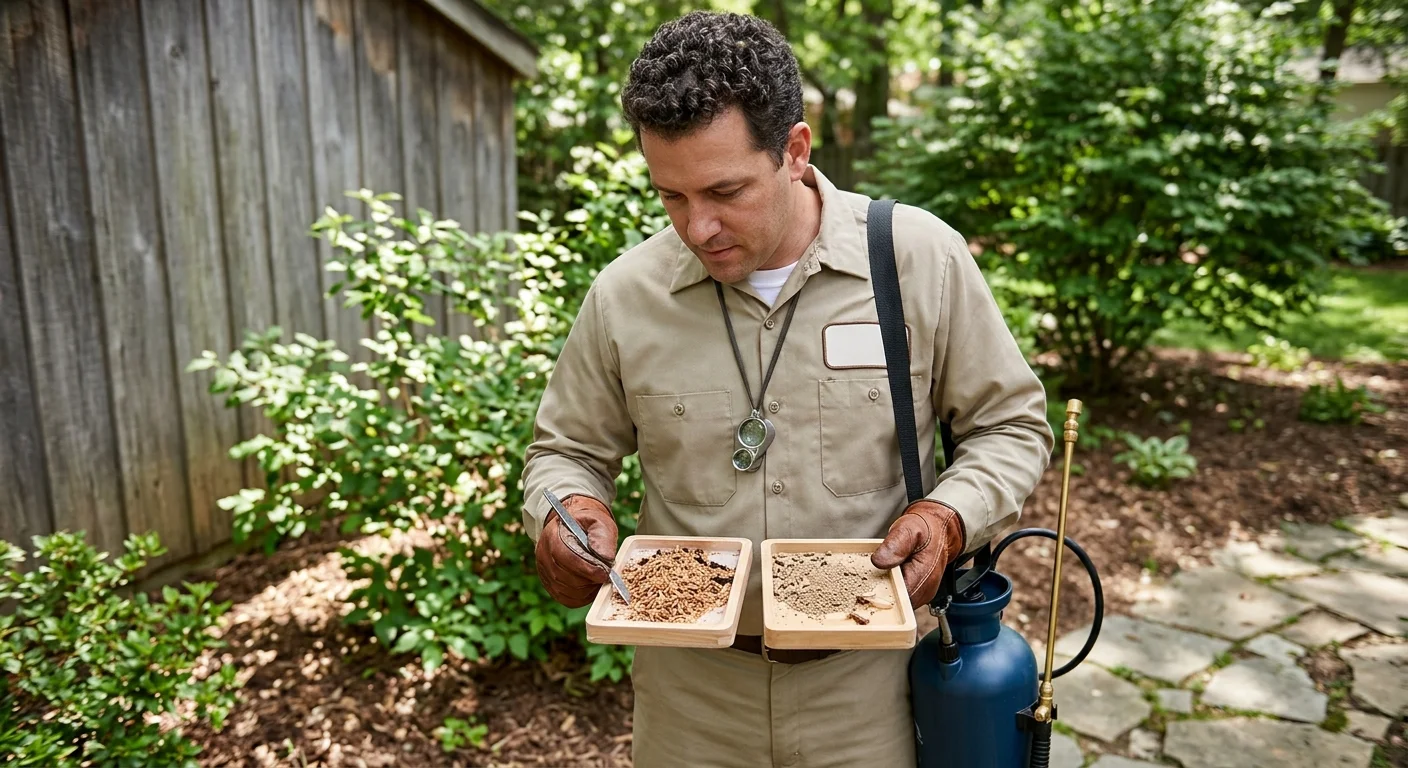
The bee buzzing your head on the patio probably can’t hurt you. The deck it keeps landing on is another story. This guide covers identification, the damage, where they target San Diego homes, and what to do without treating a honey bee swarm as the same problem.
Carpenter bee, bumble bee, or honey bee
People mix these up, and the response is different for each. A tight cluster of thousands of bees on a branch is a honey bee swarm. That’s a beekeeper situation. A round hole in fascia is a carpenter bee situation.
| Trait | Carpenter bee | Bumble bee | Honey bee |
|---|---|---|---|
| Abdomen | Shiny, black or metallic, less hairy than a bumble bee | Fuzzy, yellow-and-black bands | Amber-brown, lightly fuzzy, striped |
| Size | Large (UC: females about 5/8 to 1 inch) | Large, similar to carpenter bees | Smaller than carpenter-bee females |
| Nesting | Tunnels in bare wood | Underground or in cavities, in colonies | Wax comb in hollows, hives, walls |
| Behavior | Solitary nesters; males hover and dart | Social; busy on flowers | Social; swarms when relocating |
| Sting | Females only if provoked; males cannot | Will sting if provoked | Will sting to defend the hive |
If the back half looks polished, you’re looking at a carpenter bee. If it’s fuzzy all over, it’s a bumble bee, and bumble bees don’t drill decks. Honey bees are smaller and travel in groups.
If you’re seeing a swarm, use bee removal in San Diego. That’s not carpenter bees.
The damage carpenter bees cause
UC IPM: nests are usually tunnels 1/2 inch in diameter and 6 to 10 inches deep, partitioned into chambers with an egg and pollen. Bees reuse old tunnels and sometimes enlarge them. Several bees may share one entry. Over a long period, tunnels can run much farther into a timber. That’s cumulative weakening, not one harmless hole.
They pick sound, undecayed wood without paint or bark. Unpainted redwood, cedar, pine, and similar softwoods used for decks, fences, fascia, and patio beams in San Diego fit that list. You’ll see round entry holes and yellowish staining below them.
Where carpenter bees target San Diego homes
Favorite targets are unfinished deck, fence, fascia, rafter tails, railings, and the undersides of decks. Paint or varnish is the prevention UC IPM leads with.
UC IPM describes one generation a year: new adults emerge in late summer, overwinter (often in old tunnels), then emerge in spring to mate and nest. Development from egg to adult can take about three months. Don’t treat San Diego as a place with extra generations just because winters are mild. The long warm season still means more months when you’ll see them working wood.
Prevention, plugging, and when to ask for a licensed look
The reliable defense is taking away bare wood. UC IPM: paint or varnish exposed surfaces regularly. Seal fascia, rail tops, and beam ends.
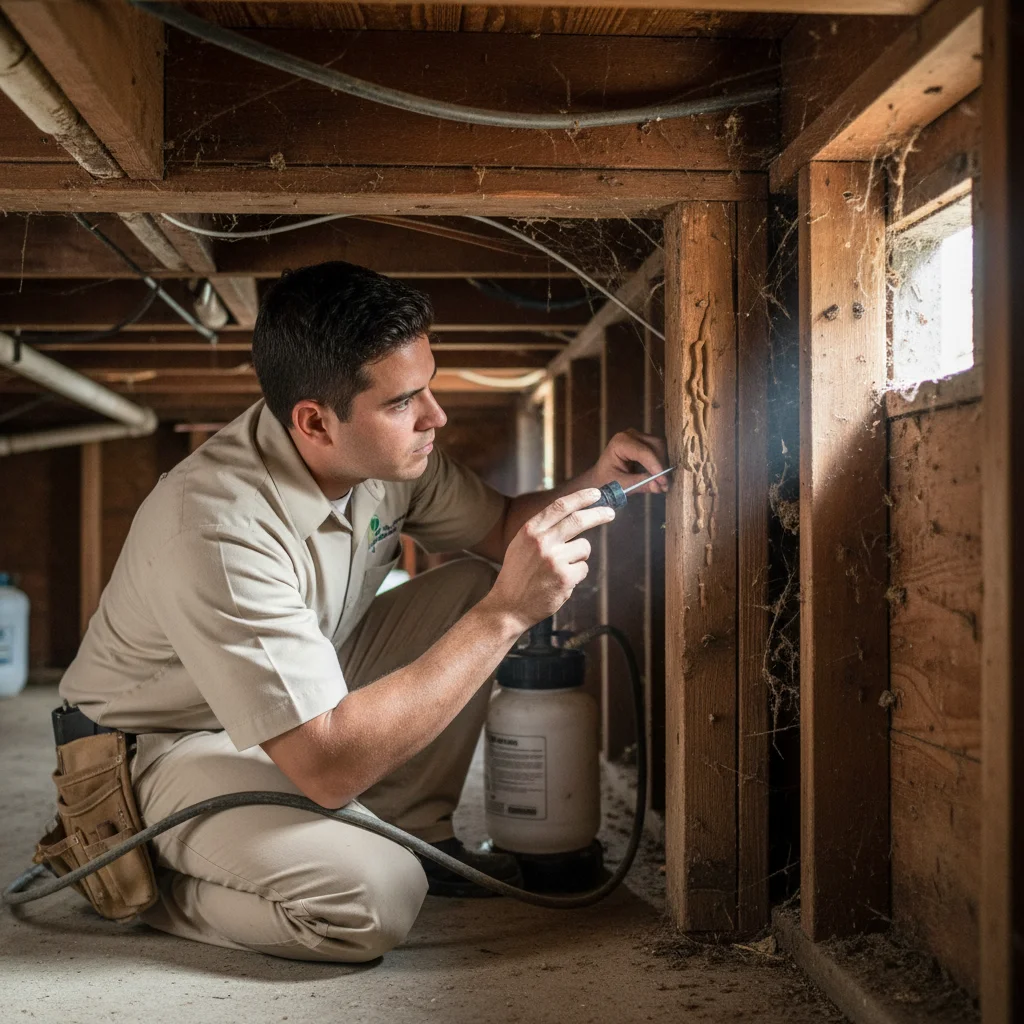
UC IPM: fill unoccupied holes with steel wool and caulk so they aren’t reused. Wait until after bees have emerged before filling tunnels. Then paint or varnish the repair. Plugging a live gallery in spring can send the bee out a new hole. This page does not tell you to dust or spray inside a live tunnel. Insecticidal dusts into nest holes are labeled work for people who hold the right license and the right product. Pest Pros doesn’t apply them.
Spraying the air where males hover does almost nothing. They’re attached to the wood, not to a hive you can fog.
If holes are high in fascia you can’t reach safely, or the timber is already riddled, that’s when to ask a licensed company what they recommend. Carpenter bees can fall under wasp and bee removal depending on the company’s license and whether pesticides are used. Live capture of bees without pesticides has its own rules. Check pestboard.ca.gov for the company you hire.
Protect the pollinators while you protect your wood
Carpenter bees pollinate. The goal is to keep them out of structures, not to wipe them from the yard. Honey bees and many native bees are in a different legal and ecological category. Seal and paint the wood. Leave the bees on flowers alone.
For county coverage, see pest control services in San Diego or call (858) 400-6561 to get matched with a licensed local pro.
Frequently asked questions
Are carpenter bees in San Diego dangerous?
Not to people, for the most part. Males hover and dart but can’t sting. Females sting only if provoked or handled. The damage is to unfinished wood.
How do I tell a carpenter bee from a bumble bee?
Look at the abdomen. Carpenter bees are shinier and less hairy there. Bumble bees are fuzzy all over. Carpenter bees nest in wood. Bumble bees nest in the ground or cavities and don’t bore your fascia.
What damage do carpenter bees cause?
UC IPM: 1/2-inch tunnels, usually 6 to 10 inches deep, reused and sometimes enlarged. Holes, stains, and weakened boards.
How do I get rid of carpenter bees?
Don’t treat live galleries as a DIY spray job. Wait until bees have emerged, then fill unoccupied holes and paint. Sealing all the bare wood is the lasting fix. For active galleries you can’t reach, ask a licensed company. Don’t follow a blog dust recipe.
When are carpenter bees active in San Diego?
UC IPM: adults emerge in late summer, overwinter, then nest in spring. One generation a year. You’ll see them in warm months; that isn’t extra generations.
Do carpenter bees come back every year?
They reuse old tunnels. Painting and filling unoccupied holes is how you break that reuse. New bees can still start in any unfinished wood you leave.