
For Alpine pest control, choose the company that identifies the pest, inspects the full property, and puts the service scope in writing. Compare what each company will examine and do, not slogans or a phone quote. Your photos, dates, and locations give each inspector the same starting point.
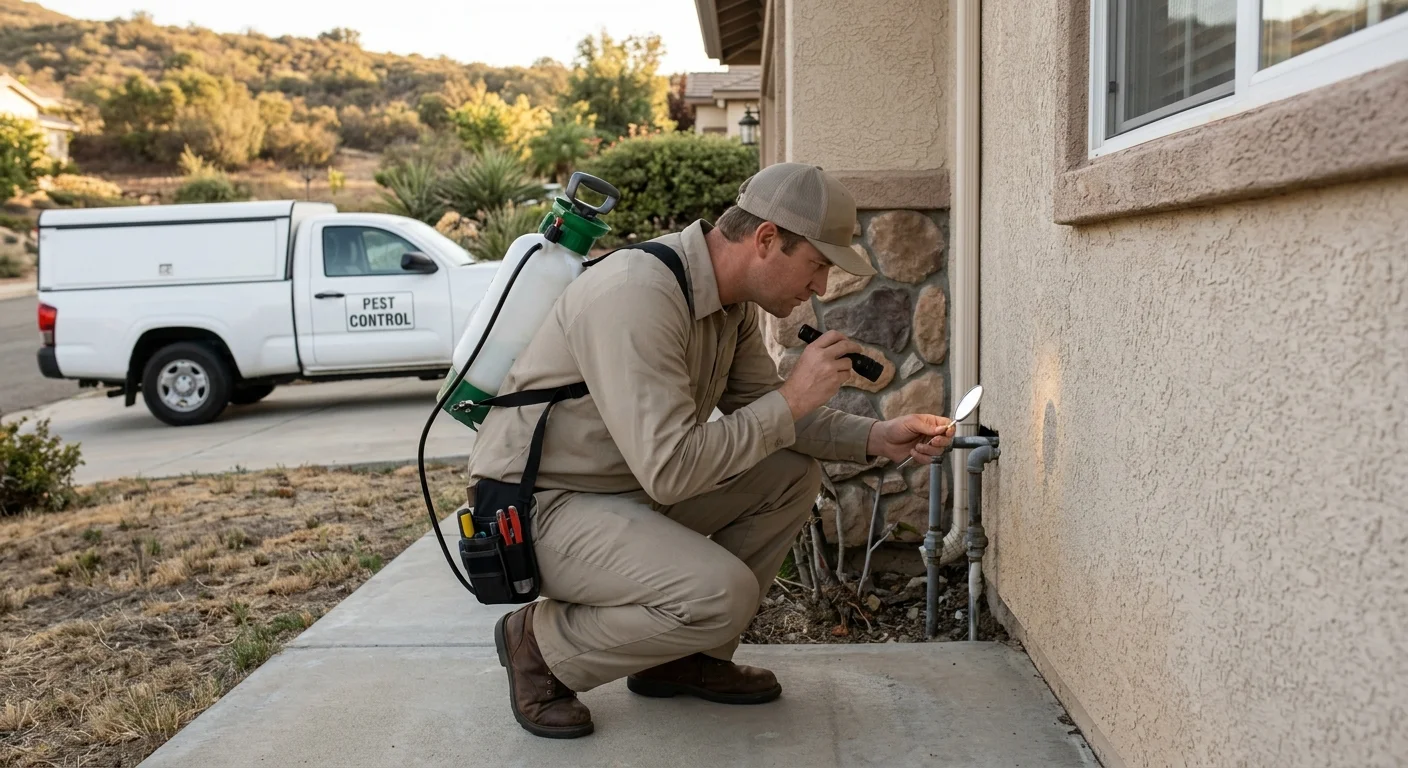
Which pest evidence to document before calling
Good company comparisons start with the same evidence. Otherwise, one company may discuss ants while another plans for termites. Create a short log before you call, even if the pest remains unknown.
Record these details:
- The exact room, wall, cabinet, doorway, tree, or outbuilding
- The date and time you noticed activity
- Whether the evidence appeared once or kept returning
- The insect’s color, shape, wings, and approximate size
- Droppings, shed skins, webbing, pellets, mud tubes, gnawing, or damaged wood
- Recent changes, such as irrigation, deliveries, stored materials, or remodeling
- Products, traps, or cleanup steps already tried
Take a close photo and a wider location photo. Add a familiar object for scale without touching the material. Photograph evidence before routine cleanup when that can be done safely. Don’t collect an unknown insect or disturb a nest just to improve the picture.
Keep the description literal. “Small brown insects under the kitchen sink” helps more than a guessed species. Note where they travel and where they disappear. If activity occurs outside, mark the side of the house and nearby feature. A company can then decide which areas deserve closer inspection.
Timing also matters, but it doesn’t prove the species. Our San Diego pest season calendar can help you organize timing clues. Use it as a discussion aid, not a diagnosis.
Share the same log with every company you compare. Ask each one what the evidence suggests, what remains uncertain, and how an inspection would confirm it. The strongest answer explains the next inspection step. It doesn’t jump straight from a blurry photo to a treatment plan.
How Alpine’s setting changes the inspection
Alpine isn’t one compact neighborhood with identical lots. Lot size, slope, and how much open land sits behind the property all change what an inspection has to cover. Those are inspection differences, not automatic pest diagnoses. A home near Alpine Boulevard may have a compact lot, an attached garage, and close utility runs. A semi-rural property may add sheds, detached garages, fences, animal areas, or stored materials. A sloped lot may require a careful look at grading, drainage, retaining walls, crawlspace access, and wood near soil.
Tell the company what exists beyond the main house. Include guest spaces, workshops, storage buildings, decks, gates, and areas that need special access. If part of the lot borders open land, clarify the property line on the proposal. A company shouldn’t assume every nearby slope is part of your service area, and you shouldn’t pay for ground you don’t own.
The inspection should also follow the evidence across transitions. That means inside to outside, garage to living space, and foundation to slope. Ask how the inspector will handle inaccessible areas. Locked outbuildings, tight crawlspaces, heavy storage, and vegetation against a wall can limit what gets seen.
General location context isn’t a pest explanation. Give the exact address, gate instructions, parking limits, and outbuilding count. That information helps the company plan the property visit around the actual Alpine lot, rather than a generic suburban checklist.
What a licensed company should inspect first
A sound Alpine pest management proposal begins with identification. The company you’re matched with should inspect before recommending treatment. It should explain what evidence supports the identification and what still needs confirmation.
The first pass should cover the activity area and likely paths around it. Ask for these points in the inspection notes:
- The pest identified, or the method needed to identify it
- Areas with current evidence and areas showing older signs
- Interior and exterior routes connected to the activity
- Openings, moisture, food access, hiding places, and stored materials
- Rooms, voids, roofs, crawlspaces, or structures that weren’t accessible
- Conditions the homeowner should correct before or after service
The inspection must match the service category. California’s Structural Pest Control Board license search lets you check a business or license holder. Branch 2 covers general household pest work without fumigation. Branch 3 covers wood-destroying pests through nonfumigation methods or structural corrections. Only Branch 1 licensees may perform fumigation.
That distinction matters when the evidence changes. Ant trails and cockroach activity usually start as general pest questions. Pellets, damaged wood, or shelter tubes call for a wood-destroying pest inspection. A fumigation recommendation requires the properly licensed fumigation company. Ask the company to state which credential applies and verify the exact business name before agreeing.
Inspection priorities should also be species-specific. For German cockroach evidence, UC IPM says pesticides alone won’t solve the problem. It recommends sanitation, exclusion, monitoring, and targeted control together. A proposal that only names a product leaves key conditions unexplained.
Our general pest control referral service connects you with licensed local companies. We don’t inspect, apply products, or set the treatment. The matched company should define those details after seeing your property.
How to compare a written service scope
A written scope turns separate sales conversations into comparable offers. Ask every company to use your evidence log and the same property boundaries. Then read each proposal line by line.
The scope should identify:
- The target pest and the evidence supporting that identification
- Every included interior, exterior, and detached area
- Inspection-only areas and areas planned for treatment
- The treatment method, product type, and intended placement
- Preparation steps for occupants, pets, food, and belongings
- Areas that won’t be treated and the reason
- Monitoring, follow-up conditions, and who decides more work is needed
- Exclusion, sanitation, moisture, or storage tasks assigned to you
- The full price, possible add-ons, payment timing, and cancellation terms
- Any warranty or re-treatment language from that company
Don’t accept “whole property” without a definition. On an Alpine lot, that phrase might exclude a shed, slope, fence line, crawlspace, or detached garage. Name each structure and boundary in writing. Also ask what happens if the inspector finds a different pest than the one discussed by phone.
For pesticide questions, request the active ingredient, target pest, application areas, and written preparation directions. Ask how the company handles children, pets, edible plants, and occupied rooms. The written instructions and product label should control the work, not a casual verbal summary.
Pest Pros San Diego has no price list. The matched company inspects first and quotes in writing before treatment begins. Compare the complete scope, not the lowest headline figure.
Read warranty language with the same care. Check its term, covered pest, exclusions, homeowner duties, and re-treatment conditions. Those terms belong to the company doing the work. They aren’t promises from this referral service.
For a wider comparison framework, use our San Diego pest control guide. Your final choice should fit the evidence, Alpine property layout, applicable license, and written terms. Specificity is a better signal than a long service list.
When to call us
Call when the pest isn’t identified, activity keeps returning, or the property needs a licensed inspection and written plan. We can connect you with a company suited to the pest and the Alpine property. Call us at (858) 400-6561 and we’ll match you with a licensed local pro.